Blog
China Top 10 Power Distribution Unit Manufacturers
China’s power infrastructure market is expanding alongside data centers, telecom networks, factories, and commercial buildings. The International Energy Agency’s Electricity 2024 report estimates that data centers, artificial intelligence, and cryptocurrency used about 460 terawatt-hours of electricity in 2022. Their combined consumption could exceed 1,000 terawatt-hours by 2026. That figure covers several digital workloads, not data centers alone, but it shows why reliable power management matters.
A Power Distribution Unit (PDU) does more than divide a supply among equipment. Depending on its design, it can provide branch-circuit protection, outlet-level monitoring, remote switching, and power-use data. In a server room, these features help teams track load across racks and spot uneven demand. Details matter. Outlet types, rated current, monitoring accuracy, communication protocols, and local service support can differ substantially between models.
This guide introduces ten manufacturers serving China’s power distribution market. It is not a definitive ranking: product ranges, certification coverage, and after-sales capabilities should be checked against each project’s requirements. Uptime Institute’s Global Data Center Survey also highlights power availability and infrastructure planning as continuing operator concerns. Yet published surveys cannot replace a site assessment. A buyer still needs to confirm electrical compatibility, installation conditions, and maintenance arrangements with qualified professionals. That practical step is easy to overlook. The companies below offer a starting point for comparing products, not a substitute for technical due diligence.

Understanding Power Distribution Units and Their Core Functions
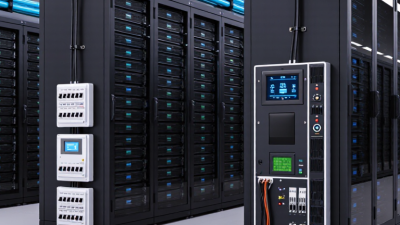
A power distribution unit (PDU) delivers electrical power from a facility source to multiple devices, often within a server rack. Basic models provide outlets; metered units display power use, while switched models allow individual outlets to be controlled remotely. Some units also offer circuit protection, temperature monitoring, or alarms for overloads and excess heat. Their purpose is simple: keep power organized and easier to monitor.
Small details matter.
When choosing a PDU, check its input voltage, current rating, outlet types, and mounting direction. Match its capacity to the equipment, not just the rack’s available space.
For example, a technician can use outlet-level readings to spot an unexpected rise in server demand before it affects other devices. A vertical unit may preserve rack space, while a horizontal unit can be easier to reach.
Yet remote control is not a substitute for sound maintenance. A tidy front panel can still conceal overloaded circuits or loose connections.
Leave headroom. Qualified personnel should verify the installation and load calculations, since actual operating conditions can differ from a neat specification sheet.
Key Criteria for Evaluating Chinese PDU Manufacturers
When evaluating Chinese PDU manufacturers, start with evidence that can be checked: rated current, voltage range, short-circuit withstand capacity, temperature-rise results, and protection-device coordination. Ask for test reports tied to the exact product configuration, not just a generic certificate. Inspect how clearly each unit labels circuits and whether meters show useful readings at the rack. Small details matter. A crowded panel can slow maintenance.
Power density makes these checks more important. The International Energy Agency’s Electricity 2024 report estimates data-center electricity use at about 460 TWh in 2022 and projects 620–1,050 TWh by 2026. That forecast is broad, but it highlights the need to assess load headroom and monitoring. Uptime Institute’s 2024 Global Data Center Survey reported an average PUE of 1.56; PUE measures facility-wide efficiency, not PDU quality, so it should not be treated as a product score. Compare suppliers through witnessed load tests, calibration records, component traceability, and clear warranty terms. Ask how they handle a failed meter or breaker after installation. Paperwork can look polished. Field service may be less so.
China Top 10 Power Distribution Unit Manufacturers — Key Criteria for Evaluating Chinese PDU Manufacturers
Connector current ratings are a practical specification to check when evaluating PDU outlet compatibility.
Typical IEC 60320 ratings shown: C13, 10 A; C19, 16 A. Confirm the ratings of the complete PDU, power cords, and local certifications in the manufacturer’s documentation.
Profiles of 10 Notable Power Distribution Unit Manufacturers in China
Profiles of ten notable power distribution unit manufacturers in China are most useful when they reveal what each company actually builds. Compare basic rack PDUs with metered, switched, and intelligent models. Look for details on outlet layouts, input ratings, monitoring functions, and customization. A clear factory test process matters, too. Product brochures alone are not enough.
Demand makes careful comparison timely. The IEA’s Electricity 2024 report estimates data centres, AI, and cryptocurrency used about 460 TWh of electricity in 2022; high-growth projections put consumption above 1,000 TWh by 2026. This is global context, not a China-only market forecast. For each manufacturer, check applicable IEC standards, test documentation, warranty terms, and service capacity. Ask how temperature, overload, and remote alerts are tested. One weakness in many comparisons: claimed features are easier to find than independent evidence of long-term reliability.
Tips: Request a sample unit and verify its labels, cable fit, and monitoring interface. Confirm that the quoted configuration matches the installation; small differences can cause real delays.
China Top 10 Power Distribution Unit Manufacturers - Profiles of 10 Notable Power Distribution Unit Manufacturers in China
An anonymized overview of common PDU product segments and features. The profiles below describe market-level product categories, not verified specifications or rankings for ten individually identified manufacturers.
| Profile | Product Segment | Typical Features | Common Applications | Selection Considerations |
|---|---|---|---|---|
| 01 | Basic rack PDU | Distributes power to rack-mounted equipment; outlet count, input connection, and mounting format vary by model. | Server racks, network cabinets, and small equipment rooms. | Check supply voltage, current rating, plug type, outlet type, and rack space. |
| 02 | Metered rack PDU | Provides local electrical measurements, commonly including current and voltage; available measurement points differ by design. | Data-center racks and installations where operators monitor load. | Confirm measurement accuracy, display details, and whether readings are provided per unit, phase, or outlet. |
| 03 | Monitored rack PDU | Adds remote monitoring and communications to power measurements; supported protocols and sensors are model-dependent. | Managed data centers and remote equipment sites. | Review network interfaces, management software compatibility, alert functions, and security requirements. |
| 04 | Switched rack PDU | Enables remote switching of outlets on supported models, often alongside monitoring features. | Unattended racks and environments requiring remote power cycling. | Check outlet-level control, switching sequence options, access controls, and restart safeguards. |
| 05 | Three-phase rack PDU | Designed for three-phase power distribution; configurations depend on the local supply and product rating. | Higher-density racks and larger technical facilities. | Verify phase arrangement, line voltage, connector compatibility, and phase-load balancing needs. |
| 06 | High-density rack PDU | Uses a rack-oriented layout intended to serve multiple devices; outlet layout and capacity vary by model. | Compute, storage, and networking racks with many power connections. | Assess total load, connector spacing, cable routing, heat clearance, and rack depth. |
| 07 | Horizontal rack PDU | Mounts across rack rails, commonly in a horizontal rack-unit format; available lengths and outlet layouts vary. | Cabinets with available horizontal rack space or short-depth equipment. | Confirm rack-unit allowance, mounting hardware, outlet orientation, and cable clearance. |
| 08 | Vertical rack PDU | Mounts along the side or rear of a rack; many designs aim to preserve horizontal rack space. | Full-height cabinets and installations with limited rack-unit space. | Check mounting points, cabinet dimensions, outlet access, and the path of the input cable. |
| 09 | Industrial power distribution unit | Configuration may include enclosure, protection, and connector choices suited to a particular installation environment. | Industrial control areas, test facilities, and equipment rooms. | Specify environmental conditions, enclosure requirements, load characteristics, and applicable local standards. |
| 10 | Custom-configured PDU | Can be configured around project requirements such as input connection, outlet combination, cable length, or enclosure format. | OEM projects, specialized cabinets, and installations with non-standard requirements. | Document the electrical specification, drawings, testing requirements, and approval process before ordering. |
Note: Electrical ratings, certifications, communications options, and product availability must be confirmed against the specific product datasheet and applicable standards.
PDU Product Types, Features, and Technical Specifications
Power distribution units vary from basic rack strips to intelligent models with remote monitoring and outlet control. Basic PDUs distribute power without reporting load data. Metered versions show current locally, while monitored units send readings to management systems. Switched models can control individual outlets, which helps technicians restart equipment without visiting the rack. Small differences matter.
When comparing manufacturers in China, check the electrical details rather than relying on product labels. Common specifications include single- or three-phase input, rated voltage, maximum current, outlet type, and cord length. A 16-amp unit and a 32-amp unit are not interchangeable. Confirm connector compatibility and available circuit protection for the intended installation. Fit is crucial.
Intelligent models may report voltage, current, power, and energy use through network interfaces such as Ethernet or serial connections. Ask about measurement accuracy, update intervals, alarm thresholds, and supported communication protocols. Also review operating temperature, humidity limits, enclosure materials, and test documentation. These details affect performance in a crowded cabinet. They are easy to overlook. Product specifications can be confusing, and a neat table does not guarantee a suitable configuration. Request drawings and sample test records, then verify the chosen unit against the rack layout and site power conditions.
Industry Applications and Factors for Choosing a Manufacturer
Power distribution units support data centers, factory control rooms, telecom facilities, and testing laboratories. In a server rack, operators may need outlet-level monitoring and alarms. A production line may instead prioritize dependable branch protection and clear circuit labeling. Small details matter: cable entry direction, mounting depth, and access to reset switches can affect daily maintenance. Heat matters. Dust does too. The right configuration depends on the load, environment, and service routine, not just the product category.
When comparing manufacturers, check rated voltage, current capacity, outlet types, protection options, and monitoring accuracy against the actual installation plan. Ask how units are tested under load and how component changes are controlled. Relevant safety certifications should match the destination market and intended use; request documentation rather than relying on a catalog statement. Also examine sample build quality, wiring consistency, labeling, and communication support. A neat specification sheet can still hide awkward cable access. I would not treat the longest feature list as the best choice. Confirm lead times, customization limits, spare-part availability, and technical response procedures before ordering. One awkward point remains: forecasts change, so avoid sizing solely from today’s rack load. A practical manufacturer helps document those trade-offs clearly.
Related Posts
-
What Are the Top Power Distribution Unit Types in 2026?
-

China Top 10 Power Distribution Unit Suppliers?
-
Best 12V Power Supply Types in 2026
-

Unlocking Quality: Strategies to Source Premium Pure Sine Wave Inverter Suppliers
-

10 Power Inverter Buying Tips for Global Buyers
-
Exploring the 2025 Tech Evolution in Power Solutions How Best 12v To 240v Inverters Will Transform Energy Use