
Best 12V Power Supply Types in 2026
Choosing the right 12v Power Supply starts with the equipment it must support, not a product label or price tag. A small router, LED strip, and industrial controller place very different demands on a supply. Check the required voltage, continuous current, connector, and operating environment before comparing designs. For example, a sealed adapter may suit a desk, while a DIN-rail unit fits a control cabinet. That matters. Yet “best” depends on the installation, and it deserves scrutiny. A unit with extra capacity can help manage startup demand, but oversizing is not automatically better. Heat, ventilation, and cable length still affect reliable operation.
This guide introduces common 12V supply types, including desktop adapters, enclosed AC-DC units, open-frame models, DIN-rail supplies, and weather-resistant designs. It explains where each type may fit and which specifications deserve a closer look. A printed current rating is only one clue. Check whether the rating applies at the expected temperature and whether protection features are clearly documented. In a cabinet, a few millimeters of clearance can affect airflow; outdoors, the enclosure rating and cable entry need attention. Those details are easy to miss. I would not treat any single specification as a guarantee, either. Compare the manufacturer’s documentation with the actual load and surroundings. The practical choice balances safety, fit, efficiency, and service life. Some trade-offs remain, and careful selection cannot remove every uncertainty.
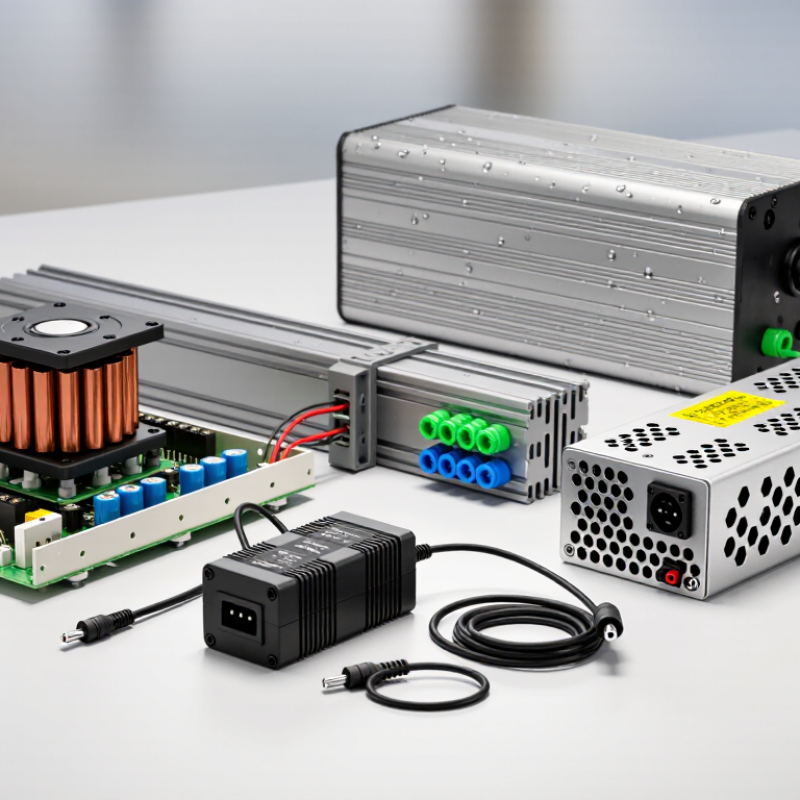
How 12V Power Supplies Convert and Deliver Electrical Power
A 12V power supply takes energy from an input source and converts it into a steadier output for compatible equipment. In many common designs, incoming AC passes through a transformer or switching circuit, then a rectifier turns it into pulsating DC. Capacitors smooth those pulses. A control circuit adjusts the output when the input or connected load changes. The result should stay close to 12 volts, though no supply is perfectly stable. Small variations matter to sensitive devices.
Different supply types handle conversion in different ways. Linear supplies can be quiet, but often waste more energy as heat. Switching supplies are typically smaller and more efficient, though their electrical noise may need attention. Look at the output current rating, not voltage alone: a device drawing 3 amps needs a supply rated for at least that load. Leave some headroom. A warm casing is common, but blocked vents or a hot connector deserve investigation. I still find connector polarity easy to overlook; check the markings before connecting equipment. For a real installation, verify the input range, protections, and temperature limits in the product documentation. A tidy label helps, but it does not replace testing.
Best 12V Power Supply Types in 2026 - How 12V Power Supplies Convert and Deliver Electrical Power
The right 12V source depends on the input available, required current, isolation, portability, and load. Efficiency figures below are broad, indicative ranges for suitable designs and operating conditions—not guaranteed ratings.
| Power Supply Type | How It Converts and Delivers Power | Typical Input | 12V Output Behavior | Indicative Efficiency | Common Uses | Important Selection Checks |
|---|---|---|---|---|---|---|
| Isolated AC-to-DC switching power supply | Rectifies AC, switches it at high frequency, transfers energy through an isolation transformer, then rectifies and regulates the output. | Typically mains AC; the acceptable voltage and frequency range depend on the unit. | Provides a regulated 12V DC output within its rated current and operating limits. | Often about 80–95% at suitable loads; varies with design and load. | LED systems, electronics, communications equipment, and general-purpose 12V loads. | Check input range, output current, ripple and noise, protection features, cooling, and whether the output is isolated. |
| Linear AC-to-DC power supply | Typically uses a mains-frequency transformer, rectifier, smoothing capacitors, and a linear regulator to reduce and stabilize voltage. | Mains AC matched to the transformer and supply rating. | Can provide a low-noise regulated 12V output, but may dissipate substantial heat when reducing voltage or supplying high current. | Usually lower than a comparable switching design; strongly dependent on input voltage, load, and circuit design. | Low-noise analog circuits, test setups, and applications where simplicity or low electrical noise is important. | Check regulator heat dissipation, transformer capacity, voltage regulation, and current rating. |
| Buck DC-to-DC converter | Uses high-frequency switching and energy-storage components to step a higher DC input voltage down to a lower output voltage. | DC input must be higher than 12V by enough margin for the converter to regulate. | Provides regulated 12V when the input remains within the specified range and the load stays within the rating. | Often about 80–95% at suitable loads. | Vehicles with higher-voltage electrical systems, industrial equipment, and battery-powered devices. | Check input range, maximum output current, startup behavior, thermal limits, ripple, and input/output grounding. |
| Boost DC-to-DC converter | Switches and stores energy in an inductor to raise a lower DC input voltage to a higher output voltage. | DC input below 12V, within the converter’s specified operating range. | Can produce regulated 12V, but input current may be much higher than output current when the input voltage is low. | Often about 80–95% at suitable loads. | Battery-powered equipment and systems that need a 12V rail from a lower-voltage source. | Check low-input current demand, battery limits, converter power rating, heat, and output behavior during startup. |
| Buck-boost DC-to-DC converter | Switching circuitry can step DC voltage up or down, depending on the input voltage and converter topology. | DC input that may be below, near, or above 12V, within the stated range. | Maintains a regulated 12V output across a wider input-voltage range than a buck-only or boost-only converter. | Often about 80–95% at suitable loads; performance varies with conversion ratio and load. | Battery systems whose voltage changes significantly during use, and equipment requiring a stable 12V rail. | Check the full input range, maximum input and output currents, transition behavior, thermal rating, and electromagnetic noise. |
| USB-C Power Delivery source with a 12V converter | A USB-C Power Delivery source negotiates a supported voltage with a compatible controller; a DC-to-DC stage can then provide regulated 12V if needed. | USB-C PD input from a compatible source; available voltage and power depend on the source, cable, and negotiated profile. | USB-C PD does not guarantee a native 12V output. A compatible converter may be required to create a stable 12V rail. | Often about 80–95% for the DC-to-DC conversion stage at suitable loads; total system efficiency also depends on the source and converter. | Portable electronics, development equipment, and compact setups powered by compatible USB-C sources. | Verify the negotiated voltage and power, cable capability, converter rating, connector polarity, and whether a PD controller is included. |
| Battery source with a regulated 12V converter | A battery supplies DC, while a buck, boost, or buck-boost converter regulates it to 12V as the battery voltage changes. | Battery voltage depends on chemistry, cell count, state of charge, temperature, and load. | A regulated converter can hold the output near 12V within its specified input and load limits; a battery alone is not necessarily a fixed 12V source. | Often about 80–95% for the converter at suitable loads; battery and system losses are additional. | Portable equipment, backup systems, and off-grid applications. | Check battery chemistry, charge and discharge limits, protection circuitry, fuse requirements, runtime, and converter input range. |
| Unregulated 12V-class source | Supplies rectified or battery DC without active regulation, so output voltage changes with input conditions and load. | Depends on the transformer, rectifier, battery, or other source used. | May be above or below 12V in operation; the label “12V” does not by itself guarantee a steady 12V output. | Not directly comparable; losses depend on the source and circuit. | Loads designed to tolerate a broad input range, or systems with a separate downstream regulator. | Measure or check the full voltage range under no-load and loaded conditions; confirm the connected equipment can tolerate it. |
Related Posts
-

Ultimate Guide to Choosing the Right 12v Power Supply for Your Business Needs
-
China Top 12V DC Power Supply Suppliers?
-
What Is a 12V Power Supply and How Does It Work?
-
Top Battery Backup Power Supply Types for Home and Business
-
Top 10 Chinese Manufacturers of 12V to 240V Inverters at the 137th Canton Fair
-
7 Tips for Choosing a UPS Battery Backup?