Blog

Top Battery Backup Power Supply Types for Home and Business

A sudden outage can turn a quiet evening into a scramble: the router goes dark, the refrigerator stops humming, and essential equipment loses power. A Battery Backup Power Supply can bridge that gap, but different systems suit different needs. A compact uninterruptible power supply (UPS) can keep a modem, computer, or point-of-sale terminal running long enough for a safe shutdown. Larger battery systems may support selected home circuits or business equipment for longer periods.

The right choice depends on more than battery capacity. Consider the appliances you need to power, their startup demand, the expected backup time, and how the system will recharge. A small UPS is often practical for electronics; a portable power station can offer flexible outlets for occasional use; and a professionally designed home or commercial battery system may provide broader, integrated backup. Details matter. Check the manufacturer’s runtime estimates, output limits, battery lifespan, and maintenance guidance, then compare them with your actual loads. If critical circuits need to be connected to a building’s electrical system, ask a qualified professional to assess the installation.

No battery can cover every outage at every load. That is easy to overlook. This guide compares common battery backup types, explains where each tends to fit, and highlights trade-offs in runtime, portability, cost, and upkeep. The goal is a dependable choice, not the biggest system on paper.
Top Battery Backup Power Supply Types for Home and Business

What a Battery Backup Power Supply Is

A battery backup power supply stores electricity in rechargeable cells and releases it when grid power fails. A home system usually pairs a battery with an inverter, controls, and a transfer switch. The inverter changes stored direct current into the alternating current used by household outlets. Think of a refrigerator and router staying on while lights elsewhere go dark. It is not a generator. It makes no fuel-powered noise, but runtime depends on capacity, load, temperature, and battery age.

The U.S. Energy Information Administration’s Electric Power Annual reported roughly 5.5 hours of average customer interruptions in 2022, including major events. That figure shows why backup duration matters more than a headline capacity number. The National Renewable Energy Laboratory’s Annual Technology Baseline uses about 85% round-trip efficiency for utility-scale battery storage; household results vary with equipment and conditions.

In practice, a 10-kilowatt-hour battery will not deliver 10 kilowatt-hours to appliances. Conversion losses and reserve settings reduce usable energy. A small system might support a modem, lights, and a medical refrigerator for hours, while electric heating can drain it quickly. Check the continuous output rating as well as capacity. I would not size a system from one outage story alone. Loads vary.

How Battery Backup Systems Store and Deliver Power

Battery backup systems store electricity as chemical energy inside cells. During charging, a charger controls incoming power, while a battery management system monitors voltage and temperature. When the grid fails, an inverter converts the battery’s direct current into household alternating current. A transfer switch then directs power to selected circuits, such as a refrigerator, modem, or medical device. Small systems may power a few outlets; larger installations can support essential home or business loads.

NREL’s 2024 Annual Technology Baseline uses about 85% round-trip efficiency for utility-scale lithium-ion storage. This means some energy is lost during charging and delivery; residential performance varies with equipment, temperature, and load. In practical terms, a battery rated at 10 kilowatt-hours will not deliver all 10 kilowatt-hours to appliances. Cold garages, aging cells, and simultaneous high-power loads can reduce runtime. Real installations are less tidy than a rating sheet suggests.

Tips: List the devices you need during an outage and check their wattage, including motor-starting surges from pumps or refrigerators. Leave a reserve for unexpected needs. Test the system under load occasionally; a display showing “full” is not proof that every circuit will run as planned.

Main Types of Battery Backup Supplies for Home and Business

Top Battery Backup Power Supply Types for Home and Business

Battery backup supplies differ in how much power they deliver, how long they run, and how they connect. An uninterruptible power supply, or UPS, is suited to brief outages and voltage dips. It can keep a router, desktop computer, or point-of-sale terminal running while users save work or shut equipment down safely. Most models are not intended to power a whole building for hours.

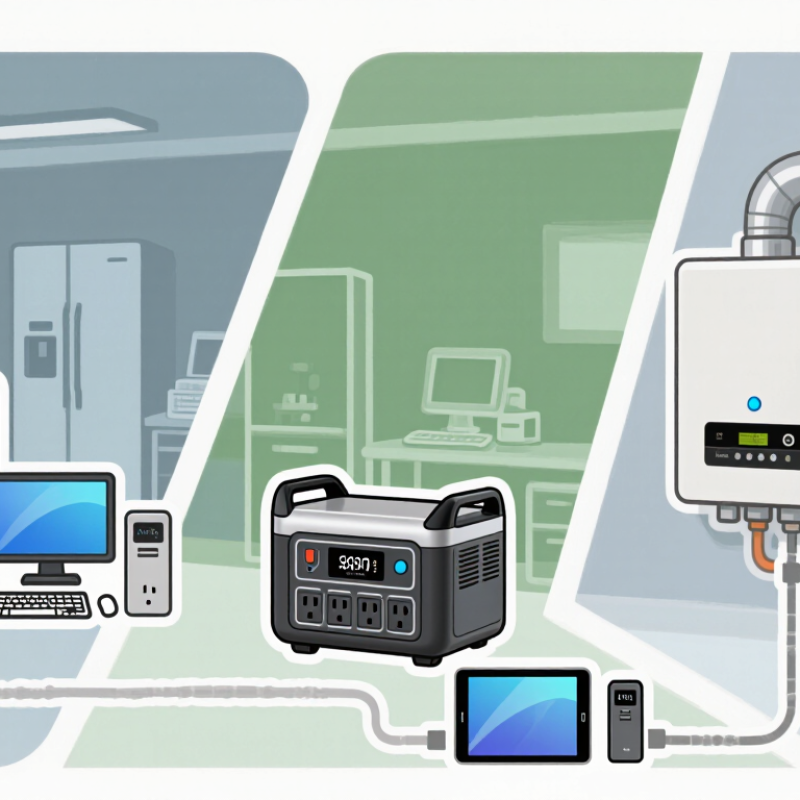
Portable power stations use rechargeable batteries and built-in inverters. They can run selected devices, such as a laptop, modem, or small refrigerator, depending on their capacity and output rating. Home battery systems usually connect to an inverter and may support chosen household circuits during longer interruptions. Businesses may use larger modular battery cabinets for servers or essential equipment. Installation, ventilation, load planning, and maintenance matter; a system that looks ample on paper may run short under real demand.

Tips: List the devices you need to keep running and check their wattage and startup needs. Estimate runtime with realistic loads, not just the battery’s advertised capacity. Leave room for future demand. I’ve seen people overlook a modem or pump, then regret the choice. Use a qualified installer for fixed systems, and test backups periodically so problems surface before an outage.

Top Battery Backup Power Supply Types for Home and Business

Backup Supply Type Typical Capacity or Rating Typical Backup Duration Power Protection and Transfer Common Applications Key Considerations
Standby (Offline) UPS About 300–1,500 VA; actual usable output is lower and depends on the unit’s watt rating. Usually several minutes at moderate load; runtime varies with battery size, load, and battery condition. Switches to battery after detecting an input-power problem. Basic models generally provide surge protection and limited voltage correction. Home routers, modems, desktop computers, and small office equipment. Cost-effective for routine outages, but the brief transfer interval may not suit equipment that requires continuous, conditioned power.
Line-Interactive UPS Commonly about 500–3,000 VA; check the specified watt output for the intended load. Often several minutes to tens of minutes, depending on load and battery capacity. Typically includes automatic voltage regulation and transfers to battery during significant power interruptions. Office workstations, network devices, point-of-sale systems, and small servers. Voltage regulation can reduce unnecessary battery use during minor voltage fluctuations. Runtime may be extended on models designed for external battery packs.
Online (Double-Conversion) UPS Commonly available from around 1,000 VA to much larger ratings for equipment rooms and facilities. Often designed for short ride-through time; external battery cabinets can provide longer runtime. Continuously converts incoming AC power to DC and back to AC, so connected equipment is generally isolated from many input-power disturbances without a typical transfer gap. Critical servers, data-center equipment, medical or laboratory systems, and sensitive business loads. Provides strong power conditioning but generally costs more and can use more energy than simpler UPS designs. Correct sizing and ventilation are important.
Portable Battery Power Station Often about 0.3–3 kWh of stored energy, with AC output commonly ranging from several hundred watts to a few kilowatts. From less than an hour to many hours, depending on the connected load and usable battery energy. Provides battery-powered AC and/or DC outlets. Most units are not a substitute for a dedicated UPS unless they specifically support an appropriate uninterruptible-power function. Temporary home backup, small appliances, communications equipment, outdoor work, and mobile business operations. Check continuous and surge output, recharge time, battery chemistry, usable capacity, and whether the intended devices can be safely connected.
Residential Battery Energy Storage System Commonly about 5–20 kWh per system; multiple units may be combined where supported by the system design. Hours or longer for selected circuits; duration depends on usable capacity, household demand, and any solar or generator charging. Works with a compatible inverter and transfer equipment to supply selected circuits or, in some configurations, a larger portion of a home. Home backup for lighting, refrigeration, communications, selected outlets, and other planned loads. Requires appropriate installation and electrical planning. Whole-home backup depends on system power output, circuit selection, and local requirements.
Commercial or Industrial Battery Energy Storage Designed to order, from tens of kWh to multi-MWh installations; power output is specified separately in kW. Typically configured for a planned operating period, such as minutes to hours, according to load and project requirements. Integrated with power-conversion equipment, protection systems, controls, and facility electrical infrastructure. Business continuity, critical facility loads, peak-demand management, and support for renewable-energy integration. Requires engineering assessment, safety controls, installation planning, and compliance with applicable electrical and fire-safety requirements.

Note: Figures are typical illustrative ranges, not guaranteed specifications. Actual capacity, output, runtime, transfer behavior, and installation requirements vary by equipment and operating conditions. UPS ratings in VA and watts are not interchangeable; select a unit based on both the load’s power demand and required runtime.

Key Differences in Capacity, Runtime, and Output

Portable power stations, home battery systems, and uninterruptible power supplies differ in capacity, runtime, and output. A small UPS may keep a router and computer running briefly, while a larger system can support selected household circuits. Portable units are easier to move, but their AC output and surge rating may limit which appliances they can start. Check both continuous watts and peak watts. A refrigerator’s compressor can briefly draw more power than its normal running load.

Capacity is measured in kilowatt-hours; output is measured in watts. A 1 kWh battery running a 200 W load lasts about five hours before losses, though usable capacity varies. NREL’s 2024 Annual Technology Baseline uses roughly 85% round-trip efficiency for lithium-ion storage cases, a useful reminder that stored energy is not delivered energy. Runtime is not guaranteed. EIA’s Electric Power Annual reports that U.S. customers experienced roughly five and a half hours of interruptions on average in 2022, but a single home’s outage can be much longer. I still find it easy to underestimate the small loads: a modem, lights, and a refrigerator running together can drain a battery faster than expected. Compare usable capacity, transfer time, outlet type, and sustained output against the devices you actually need.

How to Match a Backup Power Supply to Your Needs

Choosing a backup power supply starts with the equipment you cannot afford to lose. List essential devices, such as a router, refrigerator, medical equipment, or point-of-sale terminal. Check each device’s running watts and startup surge. A refrigerator may briefly draw much more power when its compressor starts. Add the loads you expect to run together, then estimate how many hours they must stay on. Battery capacity is measured in watt-hours, but real runtime is lower because of conversion losses and operating conditions.

Tips: Keep a simple load list. Leave room for startup surges. Test the setup before an outage, not during one.

A portable battery unit can suit quiet, indoor use and short outages. A larger battery system may support selected home circuits or business equipment for longer, depending on capacity. For extended outages, some users consider a generator, but fuel, ventilation, noise, and maintenance matter. Never run a fuel-burning generator indoors or in an enclosed space. For fixed wiring or automatic transfer equipment, consult a qualified electrician. The right choice is rarely the biggest unit; it is the one that reliably covers priority loads. Still, outage length is hard to predict, so revisit your plan when your equipment or needs change.

Top Battery Backup Power Supply Types for Home and Business

Compare typical nominal energy capacity to find a backup system that fits your needs.

A small UPS can bridge short outages for computers and network equipment. Portable power stations suit mobile use and essential devices, while home batteries and commercial battery systems provide larger reserves. Values shown are approximate examples, not standardized limits; actual usable capacity and runtime vary by system, load, and installation.