Blog
China Top 10 Power Distribution Unit Suppliers?
China has become a major manufacturing base for data center and industrial power infrastructure. This guide examines China’s top 10 Power Distribution Unit suppliers through practical, technical, and commercial criteria. It considers product design, factory capability, testing procedures, customization, certifications, delivery performance, and after-sales support.
A reliable supplier should offer more than a competitive quotation. Its Power Distribution Unit should provide stable current distribution, clear circuit labeling, suitable protection, and dependable monitoring options. In a real server room, small details matter. Cable access must remain organized. Breakers should be easy to identify. Heat, vibration, and repeated maintenance can expose weak designs quickly.
This review also considers experience across data centers, telecommunications facilities, manufacturing plants, and commercial buildings. Supplier credibility depends on documented projects, engineering communication, and transparent quality controls. Factory audits, sample testing, and inspection records can strengthen purchasing decisions. However, public information is not always complete. No ranking is flawless. Some suppliers may perform well in custom projects but receive less online visibility.
Readers should compare technical specifications carefully. Input voltage, output sockets, phase configuration, rated current, monitoring functions, enclosure materials, and installation methods can differ significantly. Pricing alone cannot measure long-term value. A low-cost unit may create higher maintenance demands later.
The selected companies are presented as candidates for further evaluation, not automatic choices. Buyers should confirm current certifications, production capacity, warranty terms, and export documentation directly. Practical verification remains essential. That step is sometimes overlooked.

What Is a Power Distribution Unit?
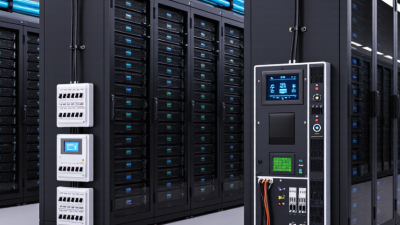
A power distribution unit, or PDU, delivers electrical power from an upstream source to multiple devices. In data centers, it commonly sits inside a server rack. It may include circuit protection, outlets, metering, remote monitoring, and switching controls. A PDU does not replace a UPS. The UPS protects continuity, while the PDU distributes power safely and visibly.
This distinction matters as computing demand rises. The International Energy Agency’s Electricity 2024 report estimates that data centers consumed about 460 TWh globally in 2022. It also projects consumption could exceed 1,000 TWh by 2026. A suitable PDU helps operators track rack-level loads, identify overloaded circuits, and balance equipment across power phases. IEC 60364 principles also support careful protection, grounding, and installation practices. However, specifications on paper can look better than real operation. Heat, loose connections, inaccurate sensors, and poor cable access still create practical weaknesses.
Tips: When comparing suppliers, request calibration records, thermal test results, outlet diagrams, and sample monitoring data. Check input voltage, phase design, breaker ratings, socket types, and network security. Ask how alarms behave during a failed sensor or lost network connection. A cheap PDU can become expensive when visibility is missing. Also, “smart” does not always mean reliable. Test the actual unit under a realistic rack load before large-scale deployment.
China’s Power Distribution Unit Market and Supplier Landscape
China’s power distribution unit market has grown with data centers, factories, commercial buildings, and expanding digital infrastructure. Demand is moving beyond basic socket assemblies. Buyers now expect modular designs, remote monitoring, overload protection, and clearer maintenance access. Supplier competition is intense, but product quality can vary between impressive samples and stable mass production. That difference deserves attention.
The strongest Chinese suppliers usually combine engineering depth, controlled assembly, and responsive technical service. They may offer rack-mounted, cabinet-integrated, or industrial PDU configurations. Experienced buyers should examine circuit protection, conductor materials, thermal performance, enclosure strength, and test records. Compliance documents are useful, but they should match the exact model ordered. A polished certificate cannot replace practical inspection. Factory audits, sample testing, and production consistency still matter.
Tips: Request a detailed bill of materials and a traceable test report. Check socket standards, input ratings, cable lengths, and communication options. Ask how defects are handled after delivery. Also compare tooling charges, minimum order quantities, replacement parts, and lead times. A low quotation may hide costly customization or weak support. When reviewing China’s supplier landscape, do not rely only on online rankings. Speak with engineers, verify production capacity, and test units under realistic loads. Some suppliers communicate quickly but document poorly. Others provide strong records but respond slowly. This trade-off is easy to overlook.
Top 10 Power Distribution Unit Suppliers in China
China’s top 10 power distribution unit suppliers should be assessed through verified performance, not advertising claims. Buyers should examine factory audits, IEC 61439-1 compliance, thermal testing, and traceable quality records. Experience matters when a PDU operates beside high-density servers, where a loose terminal can create heat, downtime, and expensive maintenance.
Market data shows why this sector is becoming more demanding. The International Energy Agency’s Electricity 2024 report estimates that data centers consumed about 460 TWh globally in 2022. It expects consumption to exceed 1,000 TWh by 2026. China’s expanding cloud and colocation infrastructure will increase demand for intelligent PDUs, remote monitoring, and accurate energy metering. The Uptime Institute’s 2024 Global Data Center Survey also reported that 53% of respondents experienced an outage during the previous three years. Power distribution remains a practical risk.
A reliable China supplier should provide load-bank test results, circuit-level measurement accuracy, surge protection options, and clear after-sales procedures. Certifications alone are not enough. Some specifications look impressive but lack field evidence. Buyers should request sample units, wiring diagrams, calibration certificates, and references from comparable facilities. The best shortlist balances price, delivery capability, customization, and long-term support. Small details matter. A lower purchase price may hide weaker connectors, limited firmware updates, or difficult spare-parts access.
Key Products and Capabilities of the Top Suppliers
China’s leading power distribution unit suppliers offer more than standard rack strips. Their product ranges usually include basic, metered, monitored, and switched PDUs for data centers, telecom rooms, and industrial cabinets. Common options include single-phase and three-phase models, vertical 0U designs, horizontal units, and high-density outlets.
Key capabilities include custom outlet layouts, input plug selection, circuit protection, remote monitoring, and environmental sensors. Advanced models can measure voltage, current, power factor, and energy use at outlet or circuit level. Some manufacturers also develop busbar systems, automatic transfer solutions, and cabinet-integrated power modules. Factory testing should cover insulation resistance, temperature rise, overload response, and communication stability. Details matter.
Reliable suppliers normally support engineering drawings, sample approval, small-batch customization, and international compliance documentation. Their production teams may use automated wiring, barcode traceability, and aging tests before shipment. However, supplier claims are not always equally clear. A polished website cannot replace test records, component certificates, or a practical service agreement. Buyers should compare alarm accuracy, firmware update control, spare-part availability, and response times under real operating conditions.
One weakness deserves attention. Customized PDUs can create longer lead times and more complicated maintenance. A cheaper unit may also use less accessible components. Procurement teams should request wiring diagrams, inspection reports, warranty terms, and installation guidance before approving a supplier.
This benchmark summarizes the number of suppliers in a ten-supplier China-based PDU sample publicly offering each capability. Basic rack PDUs and customized OEM/ODM manufacturing are the most widely available, while intelligent monitoring and automatic transfer switching are more specialized.
How to Select a Reliable Chinese PDU Supplier
China Top 10 Power Distribution Unit Suppliers? How to Select a Reliable Chinese PDU Supplier
Choosing a Chinese PDU supplier requires more than comparing prices. In practical sourcing, inspect the factory, not only the website. The Uptime Institute’s 2023 Global Data Center Survey reported that 60% of respondents experienced an outage during the previous three years. This makes power protection, testing, and traceability essential purchasing criteria.
Request test records for load performance, temperature rise, grounding, socket durability, and remote monitoring. Check whether production follows relevant IEC requirements and whether quality systems align with ISO 9001. Ask for serial-number traceability from incoming components to final inspection. A supplier should also provide clear details about breakers, cables, connectors, firmware, and replacement parts.
Look closely.
Evaluate a sample under realistic conditions. Connect servers, measure heat near the sockets, and verify alarm accuracy. Ask for production lead times, inspection procedures, failure rates, and warranty response times. Independent laboratory reports are more useful than attractive certificates with unclear scope. The Uptime Institute’s 2024 Annual Outage Analysis again identified power-related issues among major data-center outage causes, reinforcing the need for documented controls.
A polished audit file is not proof. I have seen technically impressive samples fail during rushed production. Therefore, review a pilot order before signing a long-term contract. Compare communication speed, corrective-action quality, packaging protection, and after-sales accountability. The cheapest quotation may hide weak testing or expensive downtime. Supplier selection should remain evidence-based, even when the sales team sounds convincing.
China Top 10 Power Distribution Unit Suppliers? - How to Select a Reliable Chinese PDU Supplier
| No. | Evaluation Dimension | Recommended Benchmark | Verification Evidence | Why It Matters |
|---|---|---|---|---|
| 1 | Electrical Safety Compliance | Products should be designed and tested against applicable requirements such as IEC 62368-1, IEC 60320, and relevant national electrical safety regulations. | Required Test reports, certificates, wiring diagrams, and product safety files. |
Reduces the risk of electric shock, overheating, insulation failure, and unsafe installation. |
| 2 | Rated Voltage and Current | Common rack PDU configurations include 100–240 V AC input ranges and 10–32 A rated current, depending on the regional power system and model. | Confirm nameplate data, circuit diagrams, terminal ratings, plug type, and derating rules. | Ensures compatibility with the target data center, cabinet, and branch circuit. |
| 3 | Outlet Configuration | Outlet quantity, socket standard, spacing, orientation, and locking options should match the intended rack equipment and installation method. | Review detailed drawings, outlet layout, socket certifications, and sample assemblies. | Prevents plug interference and improves equipment installation efficiency. |
| 4 | Overload Protection | Each model should specify the protection method, such as circuit breakers, fuses, thermal protection, or electronic current protection. | Request protection curves, trip ratings, reset procedures, and overload test records. | Helps protect cables, connected loads, and PDU components from excessive current. |
| 5 | Surge Protection | When surge protection is required, the supplier should identify the protective device type, maximum continuous operating voltage, and surge-current rating in accordance with IEC 61643 principles. | Check surge protection specifications, replacement indication, test reports, and grounding requirements. | Provides additional protection against transient overvoltage events. |
| 6 | Metering and Monitoring | Basic models may provide local current or voltage display; monitored models can add outlet-level data, alarms, network access, and environmental sensors. | Validate measurement accuracy, communication protocol, alarm thresholds, firmware functions, and cybersecurity controls. | Supports capacity planning, remote maintenance, and early fault detection. |
| 7 | Material and Environmental Compliance | Materials should meet applicable requirements such as EU RoHS Directive 2011/65/EU and REACH Regulation (EC) No. 1907/2006 when products are supplied to those markets. | Request material declarations, restricted-substance test reports, supplier declarations, and component traceability. | Reduces regulatory, recycling, and restricted-substance risks in international markets. |
| 8 | Manufacturing Quality System | A documented quality management system, preferably certified to ISO 9001, should cover incoming inspection, process control, final testing, and corrective action. | Review certificate validity, audit records, inspection plans, nonconformance procedures, and batch records. | Shows whether production quality is controlled consistently rather than checked only after assembly. |
| 9 | Customization and Engineering Capability | The supplier should be able to support outlet layouts, cable lengths, plug types, mounting brackets, labeling, colors, metering functions, and regional requirements. | Evaluate engineering drawings, sample-development process, change-control procedure, and prototype lead time. | Reliable customization reduces installation modifications and project delays. |
| 10 | Delivery, Warranty, and After-Sales Support | Procurement terms should define sample lead time, production lead time, minimum order quantity, warranty period, spare-parts policy, and response time for technical issues. | Use a written quotation, quality agreement, service-level terms, inspection rules, and documented reference projects. | Clear commercial and service commitments improve supply continuity and total ownership cost. |
Related Posts
-
What Are the Top Power Distribution Unit Types in 2026?
-

What is an Uninterruptible Power Supply and How Does It Work?
-
Premium Power Inverters for Trucks from Leading Chinese Manufacturers Driving Global Excellence
-

Top 10 Sine Wave Inverters for Global Buyers 2026 Guide?
-
Understanding the Advantages of Choosing the Best Dc Power Supply for Your Needs
-
Top Tips for Choosing the Best Power Inverter for Car Use?