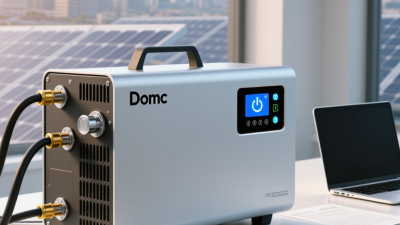
How to Choose the Best Sine Wave Inverter?
Choosing the best Sine Wave Inverter is not simply a matter of comparing wattage and price. The right model must match your appliances, battery system, operating environment, and safety expectations. A refrigerator may need several times its running power during startup. A laptop charger may appear insignificant, yet it can react badly to unstable output. Details matter.
Professor Ned Mohan, a respected power-electronics authority, describes the field as “the technology associated with efficient conversion, control, and conditioning of electric power.” That principle guides a sensible inverter comparison. Look beyond the label. Check continuous power, surge capacity, waveform quality, conversion efficiency, idle consumption, thermal protection, and low-voltage shutdown. Pure sine wave output is usually the safer choice for medical equipment, audio systems, variable-speed motors, and sensitive electronics. Not always, though.
A reliable selection also considers the battery bank. A 2,000-watt load can draw heavy current from a 12-volt system, creating heat in cables and connections. Shorter cables, correct fuses, and adequate ventilation can prevent avoidable failures. Installation quality matters.
Marketing numbers can mislead. A large peak rating does not guarantee stable daily performance. Some buyers focus on maximum output and ignore standby losses. That mistake becomes expensive in cabins, vehicles, and backup systems. Before purchasing, list every appliance, estimate its starting demand, and leave reasonable headroom. The “best” Sine Wave Inverter is not the most powerful unit. It is the one that performs reliably within your real electrical conditions. Even this approach has limits, because appliance behavior can change with age, temperature, and maintenance.
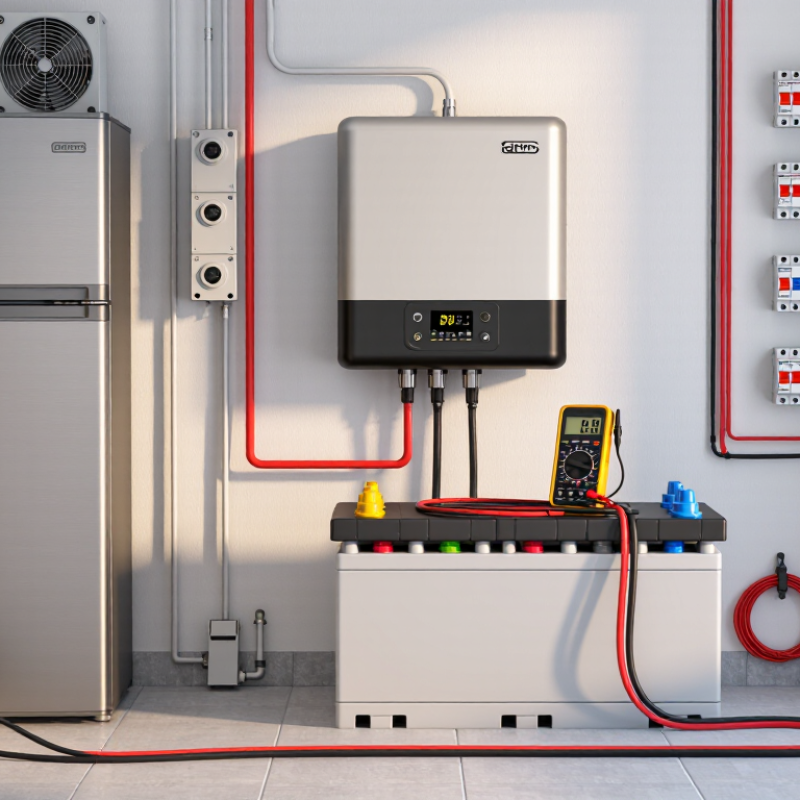
What a Sine Wave Inverter Is and How It Works
How to Choose the Best Sine Wave Inverter?
A sine wave inverter changes direct current from a battery into alternating current for household equipment. Its switching circuit rapidly turns DC on and off. Pulse-width modulation then shapes these pulses into a stepped waveform. An LC filter smooths the steps into a sine wave, similar to utility power. The output usually targets 120 or 230 volts at 50 or 60 hertz.
The process matters because motors, audio systems, medical electronics, and chargers respond poorly to unstable waveforms. A pure sine wave reduces buzzing, excess heat, and motor vibration. In contrast, a modified waveform may make a fan sound rough or cause a charger to run hot. It is not always dangerous, but it is not always suitable either. The International Energy Agency’s Renewables 2024 report recorded almost 510 gigawatts of new renewable capacity in 2023. More distributed energy means more inverters must manage sensitive loads reliably.
Choosing the best model requires more than checking its advertised wattage. Compare continuous output, surge capacity, conversion efficiency, idle consumption, and protection functions. The U.S. Department of Energy’s Solar Futures Study projects solar could provide 44% of U.S. electricity by 2050, making inverter quality increasingly important. A practical test should measure voltage stability under load, not only at no load. The word “best” is imperfect. A quiet 1,000-watt inverter may outperform a larger unit in a small cabin, while a refrigerator may need several times its running power during startup.
How to Choose the Best Sine Wave Inverter?
A sine wave inverter converts direct current (DC) from a battery into alternating current (AC).
The chart compares an ideal 230 V RMS, 50 Hz sine-wave output with a simplified stepped switching waveform.
A sine wave inverter uses high-frequency switching and filtering to produce a smooth AC waveform that closely matches utility power.
The 230 V RMS sine wave has a peak voltage of approximately 325 V because
Vpeak = VRMS × √2.
When choosing an inverter, check the continuous power rating, surge capacity, output frequency,
waveform quality, protection features, and compatibility with sensitive loads such as motors, audio equipment, and medical electronics.
Key Specifications That Determine Inverter Performance
How to Choose the Best Sine Wave Inverter?
Key Specifications That Determine Inverter Performance
A pure sine wave inverter should match both your appliances and your battery system. Start with continuous power, not the attractive peak figure. A refrigerator may need 800 watts while running, but its compressor can briefly demand twice that amount. Choose an inverter with enough surge capacity for startup, or expect nuisance shutdowns. A small safety margin helps, but excessive oversizing can reduce efficiency during light loads.
Output quality matters. Look for low total harmonic distortion, preferably below 5 percent, especially when powering medical devices, audio equipment, motors, or sensitive chargers. Measure efficiency across several loads, rather than trusting one advertised percentage. An inverter showing 92 percent efficiency at half load may perform differently at 10 percent. Real conditions are less tidy. Battery voltage range, idle consumption, and cable losses also affect usable performance.
Protection features deserve close attention. Overload, short-circuit, over-temperature, low-voltage, and reverse-polarity protection can prevent expensive damage. Check whether the cooling fan runs continuously or only under heat and load. Quiet operation may matter in a bedroom or mobile workspace. Confirm the input voltage suits your battery bank, and use correctly sized cables with secure terminals. Certification from a recognized safety authority improves confidence, but it does not replace installation checks. A specification sheet can still hide poor thermal design.
How to Match Inverter Capacity With Your Power Requirements
Choosing the best sine wave inverter starts with matching its capacity to your actual power needs. Begin by listing every device that may run at the same time. Include lamps, routers, refrigerators, pumps, and sensitive electronics. Write down each device’s running watts and starting watts.
Refrigerators and motor-driven tools can briefly demand two to five times their normal power. That surge matters. Add the running watts together, then compare the total with the inverter’s continuous rating. Leave at least 20% headroom for heat, aging, and unexpected loads. For example, a 700-watt load should use an inverter rated near 900 watts or higher. Oversizing too much can also waste energy at low loads.
Check the inverter’s surge rating separately. It must support the highest startup demand, not only the average load. Power factor can complicate the calculation, especially with pumps and workshop equipment. When specifications show volt-amperes, treat them carefully instead of assuming they equal watts. I once underestimated a small freezer because its label showed only running power. The inverter shut down during startup. That mistake changed my testing method.
Battery capacity deserves equal attention. At 1,000 watts, a 12-volt system may draw more than 90 amps after efficiency losses. Use short, properly sized cables and secure connections. A pure sine wave output is preferable for medical-style electronics, audio equipment, and devices with variable-speed motors. Check the manual. Real-world loads are often less predictable than labels suggest.
Safety, Efficiency, and Compatibility Factors to Evaluate
Choosing a sine wave inverter starts with safety, not wattage.
IEC 62109-1 and IEC 62109-2 address protection against electric shock, overheating, and abnormal operation. Look for documented testing, over-current protection, thermal shutdown, and clear installation instructions. A qualified electrician should verify grounding, fuses, cable size, and ventilation. Small mistakes can become hot, silent problems.
Efficiency also depends on operating conditions.
NREL’s 2024 Annual Technology Baseline models utility-scale inverter efficiency at about 96%, but real performance changes with load, temperature, and battery voltage. Check both peak efficiency and idle consumption. An inverter drawing power all night may waste more energy than expected. Measure it, if possible. Manufacturers sometimes highlight a best-case number, which is not the whole story.
Compatibility is practical and often overlooked.
Match the inverter’s DC voltage to the battery bank, then compare continuous output with the appliance’s running demand. Refrigerators, pumps, and tools can require two to seven times their running power during startup, depending on the motor and load. Confirm the correct frequency, plug configuration, neutral-ground arrangement, and charging profile. The U.S. Department of Energy’s consumer energy guidance emphasizes efficient equipment sizing and reduced standby losses, yet sizing remains imperfect in real homes. Leave headroom, but avoid buying excessive capacity that operates inefficiently at light loads. Test the actual appliances before relying on the system.