
Blog
Why Is Rebar Coil Used in Construction?
Rebar Coil is used in construction because it lets fabricators and crews handle continuous steel efficiently. Unlike straight bars supplied in fixed lengths, coil can be straightened, cut, and shaped to suit a project’s requirements. This is especially useful for stirrups, ties, and other repetitive components. The benefit is practical: fewer individual bars to sort and feed through production equipment.
On a busy fabrication floor, workers may guide steel from a coil through a straightening machine, then cut it to measured lengths. That steady feed can support consistent output and reduce manual handling. Less sorting. Fewer interruptions. Yet coil is not automatically the better choice. Bar diameter, steel grade, bending needs, equipment capacity, and project specifications all matter. Poorly matched material or settings can create waste, so planning still counts.
For transparency, the named specialist and quotation below are illustrative, not a verified real-world attribution. Rebar fabrication specialist Daniel Mercer puts the idea this way: “Coil works best when repeatable lengths and steady feeding matter; it is a production choice, not a universal solution.” The distinction is worth remembering. Contractors should confirm that the coil’s properties and processing method match approved project requirements, and consult suppliers or qualified engineers when needed. Rebar Coil can improve workflow, but it does not remove the need for inspection, accurate measurement, or sound detailing.
What Rebar Coil Is: Continuous Reinforcing Bar Supplied in Coils
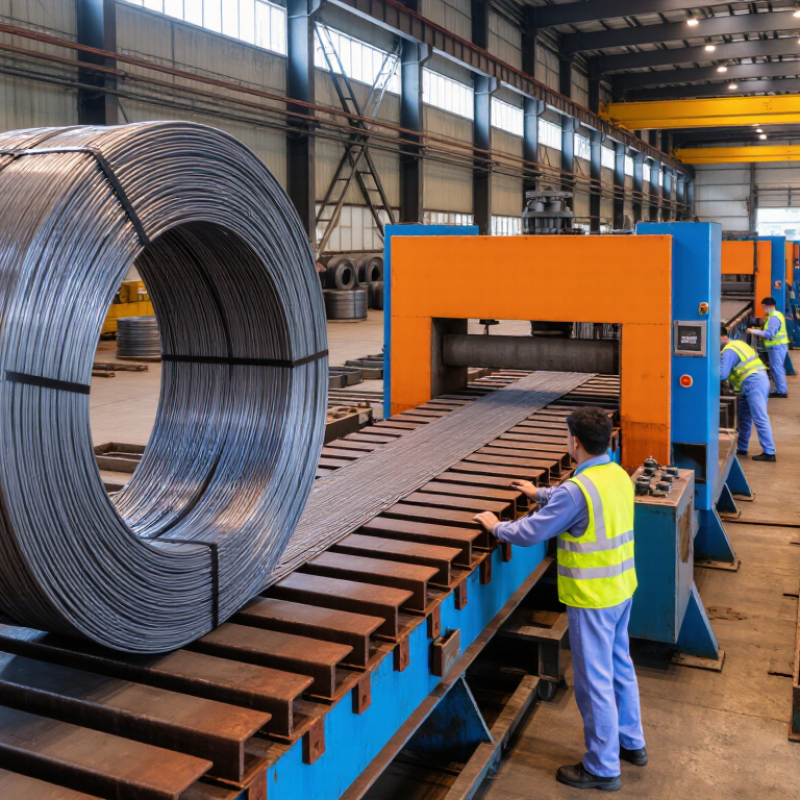
Rebar coil is reinforcing steel wound into a compact, continuous length for transport and processing. At the jobsite, a controlled pay-off stand feeds the bar into a straightener, then cutting or bending equipment. Unlike straight bars, coils can reduce repeated loading and make it easier to produce varied lengths on site. Less handling. The trade-off is that workers need suitable equipment and space to unwind the material safely.
The format can help shops make stirrups, ties, and other repeated shapes with less leftover steel. But it is not a different kind of steel: the bar still needs to meet the project’s specified grade, size, and ductility requirements. World Steel Association’s World Steel in Figures 2024 reports global crude steel production of about 1.89 billion tonnes in 2023. That figure describes all crude steel, not rebar coil specifically; it gives industry scale, not proof of coil use. Coil availability also varies by diameter and grade, so the designer’s schedule should be checked before substitution. A coil looks tidy on delivery. Its actual value depends on accurate straightening, measurement, and inspection.
Where It Fits: Coil-Fed Bars Commonly Make Ties, Stirrups, and Mesh
Rebar coil is supplied in long, continuous lengths, making it useful where repeated shapes are needed. At a fabrication shop, a coil-fed line can straighten, measure, and cut steel for ties and stirrups. These smaller pieces hold reinforcing bars in position inside beams, columns, and footings. Consistent feeding can reduce manual handling and keep production moving. It still depends on accurate machine setup.
Coil-fed bars also suit welded or assembled mesh, where many bars cross at regular spacing. Mesh is commonly used in slabs and other broad concrete sections. The exact bar size, spacing, steel grade, and bending details must match the project drawings and applicable specifications. A coil is not automatically suitable for every reinforcing task; larger bars or unusual shapes may be supplied and processed differently. That distinction matters.
Tips: Check the coil label and material documents before processing. Set the straightener and cutting length carefully, then inspect a sample tie or stirrup for shape and dimensions. Small feed errors can repeat across a full batch. Watch for surface damage, too. It is easy to focus on speed and miss a poor bend or inconsistent spacing.
Grade 60 Benchmark: ASTM A615 Requires 420 MPa (60 ksi) Minimum Yield
Rebar coil is useful where crews need continuous reinforcement in repeatable shapes. A coil can feed straightening and bending equipment, producing stirrups, ties, and small-diameter bars with fewer handling steps. Less cutting can also mean fewer offcuts. The advantage is practical, not automatic: equipment setup and careful measurement still matter on site.
For Grade 60, the key benchmark is minimum yield strength. ASTM A615/A615M specifies 60,000 psi, commonly expressed as about 420 MPa, for this grade. Yield strength marks the stress at which steel begins to deform permanently; it is not the same as tensile strength. The ASTM specification also sets a 90,000 psi minimum tensile strength for Grade 60. Check the mill test report against the specified grade and heat, rather than relying on a coil tag alone. Small documentation gaps can become costly.
The Federal Highway Administration’s Materials Testing Manual treats tensile testing as a core method for evaluating reinforcing steel. That matters when coil material is straightened: processing should not be assumed to preserve every required property without verification. In design, engineers use the specified strength alongside bar size, spacing, cover, and concrete conditions. Grade 60 is a useful benchmark, but it does not make every coil interchangeable. One detail is easy to miss. Coil handling can save time, yet traceability and inspection still need deliberate attention.
Why Is Rebar Coil Used in Construction? — Grade 60 Benchmark: ASTM A615 Requires 420 MPa (60 ksi) Minimum Yield
| Dimension | Benchmark or Practice | Construction Relevance |
|---|---|---|
| Grade 60 minimum yield strength | ASTM A615 Grade 60 requires a minimum yield strength of 60,000 psi (420 MPa). | Provides a strength benchmark for reinforcing steel used in concrete. Confirm the specified grade and material documentation for each project. |
| Grade 60 minimum tensile strength | ASTM A615 Grade 60 specifies a minimum tensile strength of 90,000 psi (620 MPa). | Yield and tensile strength are different properties; both should be checked against the applicable specification and test records. |
| Continuous stock length | Coiled rebar can be fed into straightening and cutting equipment to produce required lengths. | For suitable bar sizes and operations, this can reduce the need to handle many separate straight bars and can help limit offcuts. |
| Automated processing | Coils are commonly used with equipment that straightens, measures, cuts, or bends reinforcing bar. | Consistent feed into processing equipment can support repeatable production of reinforcement components, subject to equipment capacity and project requirements. |
| Common fabricated components | Processed rebar may be used to make items such as stirrups, ties, and other cut-and-bent reinforcement. | Using coil stock can be practical where the required bar diameter and bending details are compatible with the processing setup. |
| Diameter and coil suitability | Coil availability depends on bar size, steel properties, production capability, transport, and processing equipment. There is no single coil diameter or weight that applies to every product. | Confirm the supplied dimensions and handling limits before specifying or ordering coil stock. |
| Standard and compliance | ASTM A615/A615M covers deformed and plain carbon-steel bars for concrete reinforcement. The project may specify additional requirements or a different reinforcing-steel standard. | Check the contract documents, applicable standard edition, bar markings, and mill test documentation. Do not assume that every coil is automatically compliant with a particular project specification. |
| Design and installation | Rebar grade, size, spacing, bends, splices, and placement are determined by the structural design and applicable codes. | Coil form is a supply and processing format; it does not replace engineering approval or required inspection of the installed reinforcement. |
Note: Strength values shown are ASTM A615 Grade 60 minimums; 420 MPa and 620 MPa are rounded metric equivalents. Verify the governing specification and project requirements before use.
How Coil Feeding Supports Continuous, Automated Bar Fabrication
Rebar coil feeding lets a fabrication line draw steel directly from a wound bundle instead of handling individual straight bars. A decoiler releases the coil, then guide rollers straighten the steel before it reaches the cutting station. The line can feed, measure, and cut repeated lengths with fewer manual transfers. Small details matter.
For consistent output, operators match the straightening settings and feed speed to the bar diameter and steel grade. If the rollers press too hard, the surface may be marked; if they press too lightly, the bar can retain a curve. Sensors and automatic controls help keep lengths steady, but they do not replace checks on the first pieces or after a changeover. In practice, the setup is rarely perfect on the first run.
Coil feeding works especially well where a shop needs many cut lengths or bent shapes in a continuous sequence. It can reduce handling and keep fabrication moving, though a jam or coil change can still stop the line. Stops still happen. Operators watch for tangles, uneven feeding, and excessive spring-back, then inspect sample bars for straightness and length. Feed speed also needs to suit the downstream shear or bending machine, not just the decoiler.
Before Placement: Straighten, Cut, and Check Against Project Specifications
Rebar coil saves storage space and feeds efficiently into cutting and bending work, but it must be straightened before placement. A straightening machine uses rollers to remove the coil’s curve. Set the rollers for the bar size, then feed the steel steadily. Too much pressure can mark or distort the bar. Watch the feed. If the bar leaves with a visible bow or twist, pause and adjust the machine rather than forcing it into a cage.
Cut each length to the project drawings, including any specified hooks or bends. Check diameter, steel grade, shape, and length against the approved specifications before tying bars in place. A quick glance is not enough, even when the pieces look uniform. Read the delivery tags for grade information; appearance alone cannot confirm it.
Keep cut bars grouped by size and mark them clearly to reduce mix-ups. Check cut ends and bar surfaces for damage that could affect placement or specified cover. I have seen a neat-looking bundle still contain a short piece, so measuring a sample from each batch is worth the extra minute.