
Blog

Why Are Solar Post Lights Popular With Global Buyers?

Why Are Solar Post Lights Popular With Global Buyers?

Solar Post Lights have moved from niche garden products to practical outdoor lighting choices worldwide. Their appeal is easy to understand. A small panel collects sunlight during the day. An internal battery stores that energy. At night, the light can illuminate a driveway, pathway, entrance, or garden wall without a new power connection.

Convenience matters. So does cost control. Buyers in cities, suburbs, resorts, and rural areas often want attractive lighting with limited installation work. Solar Post Lights can reduce trenching, wiring, and dependence on household electricity. They also offer flexible placement. A post can stand beside a gate today and move near a patio later.

The sun is free.

Environmental scientist James Lovelock wrote, “The sun is the only safe nuclear reactor, situated far away, and we need to use it.” His observation helps explain the broader interest in solar-powered products. However, popularity does not guarantee performance. That assumption needs testing.

Experienced buyers examine battery capacity, panel efficiency, weather resistance, light output, and winter performance. They also consider local sunlight, shade, temperature, and installation height. A decorative lamp may look impressive online but provide weak illumination after cloudy days. That is an inconvenient truth.

This article explores why Solar Post Lights attract global buyers, while examining their practical limits. It considers design, energy independence, maintenance, durability, and long-term value. The strongest choice is not always the brightest model. It is the model that fits the location, climate, and buyer’s real expectations.
Why Are Solar Post Lights Popular With Global Buyers?

What Solar Post Lights Are and How They Work

What Solar Post Lights Are and How They Work

Solar post lights are outdoor fixtures that convert sunlight into stored electrical energy. A small photovoltaic panel sits on the cap, often facing upward. During daylight, it produces direct-current electricity and charges an internal rechargeable battery.

At night, a light sensor activates the LED module automatically. The battery then powers the LEDs through a small control circuit. This design avoids trenching, grid wiring, and regular switch operation. It suits driveways, garden entrances, paths, and fence posts where sunlight is available.

The technology reflects a wider energy shift. IRENA’s Renewable Capacity Statistics 2024 recorded more than 1,400 gigawatts of global solar capacity by the end of 2023. That figure does not measure post lights directly, but it shows how widely photovoltaic systems are being adopted. The U.S. Department of Energy also reports that LEDs use at least 75% less energy than incandescent lighting and can last up to 25 times longer.

Small details affect real performance. A shaded panel charges slowly. Dust, winter angles, and short daylight hours reduce runtime. Battery capacity matters more than a bright first evening. A practical installation should check six hours of direct sunlight, drainage, and the fixture’s protection rating.

The system is not magic. Some products advertise all-night lighting but deliver less during cloudy weeks. Buyers should compare battery chemistry, panel wattage, lumen output, and tested runtime. Those specifications often reveal more than decorative claims.

Key Features That Attract Buyers Around the World

Why Are Solar Post Lights Popular With Global Buyers?

Key Features That Attract Buyers Around the World

Solar post lights appeal to buyers because installation is simple and running costs are low. They need no trenching, outdoor sockets, or monthly electricity connection. The International Energy Agency’s Renewables 2024 report recorded nearly 420 gigawatts of new solar photovoltaic capacity in 2023. That growth has improved public familiarity with solar technology. It has also encouraged homeowners and property managers to consider small solar products.

LED efficiency is another strong attraction. The U.S. Department of Energy reports that LED bulbs use at least 75% less energy than incandescent lighting and can last up to 25 times longer. In practice, a good post light can provide gentle pathway illumination after sunset. Buyers often value automatic dusk-to-dawn sensors, replaceable batteries, weather-resistant housings, and adjustable panels. These details matter during rainy weeks or short winter days.

Performance still depends on site conditions. A shaded garden may produce weak light, even with a large panel. Battery capacity, panel angle, and local daylight hours deserve careful checking. Some products also promise more brightness than they deliver. That is where product testing and clear technical specifications become essential. Buyers increasingly want lumen ratings, battery details, protection ratings, and realistic operating times before purchase. The technology is practical, but it is not maintenance-free. Dust on panels and aging batteries can quietly reduce performance.

Why Are Solar Post Lights Popular With Global Buyers? - Key Features That Attract Buyers Around the World
Buyer-Attracting Feature Common Product Specification Why It Matters to Global Buyers Practical Buying Consideration
Solar-powered operation No external power cable required; the photovoltaic panel charges the battery during daylight. Suitable for gardens, walkways, driveways, patios, and areas where trenching or electrical wiring is inconvenient. Performance depends on daily sunlight, panel orientation, weather, and seasonal daylight hours.
Energy-efficient LED lighting LED light sources generally use less electricity and last longer than traditional incandescent lighting. Lower operating energy demand and reduced maintenance can improve long-term ownership value. Compare brightness in lumens rather than watts, because watts measure power consumption rather than light output.
Automatic dusk-to-dawn control Light sensor activation turns the lamp on in low light and off during daylight. Provides convenient nighttime illumination without requiring a wall switch or daily manual operation. Sensor placement and nearby artificial light can affect activation and shut-off behavior.
Rechargeable battery system Common battery chemistries include NiMH and lithium-ion, depending on the product design. Stored energy allows the light to operate after sunset and supports use in locations without grid access. Runtime varies with battery capacity, charging conditions, LED output, temperature, and lighting mode.
Weather-resistant enclosure Outdoor models often use an enclosure rated for protection against dust and water; IP44, IP65, and similar ratings are commonly used. Helps protect internal components from outdoor exposure such as rain, dust, and splashing water. An IP rating does not automatically indicate resistance to impact, corrosion, flooding, or extreme temperatures.
Durable outdoor materials Typical housing materials include stainless steel, aluminum, ABS, and polycarbonate. Material choice affects resistance to corrosion, ultraviolet exposure, impact, and temperature changes. Coastal or humid locations may benefit from corrosion-resistant finishes and suitable fasteners.
Easy installation Many designs use a ground stake, base plate, or post-mount system rather than mains wiring. Lower installation complexity makes the product attractive for residential users, rental properties, and landscaping projects. Check mounting dimensions, ground conditions, required tools, and whether anchors or screws are included.
Multiple lighting modes Available modes may include steady light, low-brightness mode, motion activation, or adjustable brightness. Allows buyers to balance appearance, security needs, and battery runtime for different outdoor environments. Motion-sensor range and detection angle should be evaluated for the intended pathway or entrance.
Low routine maintenance Routine care is generally limited to cleaning the solar panel and checking the battery or housing. Reduced cabling and fewer service requirements are useful for dispersed outdoor installations. Dust, leaves, snow, and shading can reduce charging efficiency, so the panel should remain unobstructed.
Decorative and functional design Styles range from traditional lantern forms to minimalist and modern profiles. Buyers can combine pathway visibility, boundary marking, and landscape decoration in one product. Select the height, beam direction, color temperature, and spacing according to the area being illuminated.
Broad climate suitability Outdoor suitability is influenced by temperature tolerance, water protection, battery performance, and material durability. Solar post lights can be used in many regions because they do not depend on the local electricity-grid format. Cold weather can reduce battery performance, while prolonged cloud cover can reduce charging and nighttime runtime.
Reduced dependence on grid electricity The light uses energy collected locally from sunlight rather than continuous mains electricity. Attractive for off-grid areas, remote gardens, temporary landscaping, and projects where extending electrical service is costly. Solar lighting is best suited to guidance, ambiance, and general visibility; high-security lighting may require higher output or a separate power source.
Technical terms and specifications in this table are based on widely used outdoor-lighting, photovoltaic, battery, LED, and IP-protection principles. Actual performance varies by product design and local conditions.

Energy, Cost, and Environmental Benefits

Why Are Solar Post Lights Popular With Global Buyers?

Solar post lights combine lower energy use, simpler installation, and visible environmental value. The International Energy Agency reports that lighting consumes about 15% of global electricity. Solar post lights use daytime sunlight instead of grid power, so each evening can reduce ongoing electricity demand. Their LED modules also provide efficient illumination with less heat and longer service life.

Cost savings are practical, but not automatic. Buyers avoid underground wiring, trenching, and electrician fees, especially in gardens, driveways, and remote properties. The World Bank’s Lighting Global program has documented strong demand for off-grid solar lighting in areas with limited grid access. However, poor sunlight, weak batteries, and cheap components can reduce performance. A low purchase price may create higher replacement costs later. That point deserves more attention.

Tips: Check the battery capacity, panel efficiency, IP rating, and winter performance. Choose replaceable batteries where possible. Keep panels clear of dust and shade. The U.S. Department of Energy recommends comparing lighting performance, durability, and lifecycle costs rather than focusing only on initial price. Environmentally, solar post lights reduce operational emissions, but batteries and electronic waste still require responsible disposal. Their benefits are real, though not perfect.

Design Options and Common Outdoor Applications

Solar post lights remain popular because they combine practical lighting with flexible outdoor design. Their independent solar panels reduce wiring needs, especially where trenching is difficult. However, performance depends on sunlight, battery quality, and seasonal weather. A shaded garden may need a different solution.

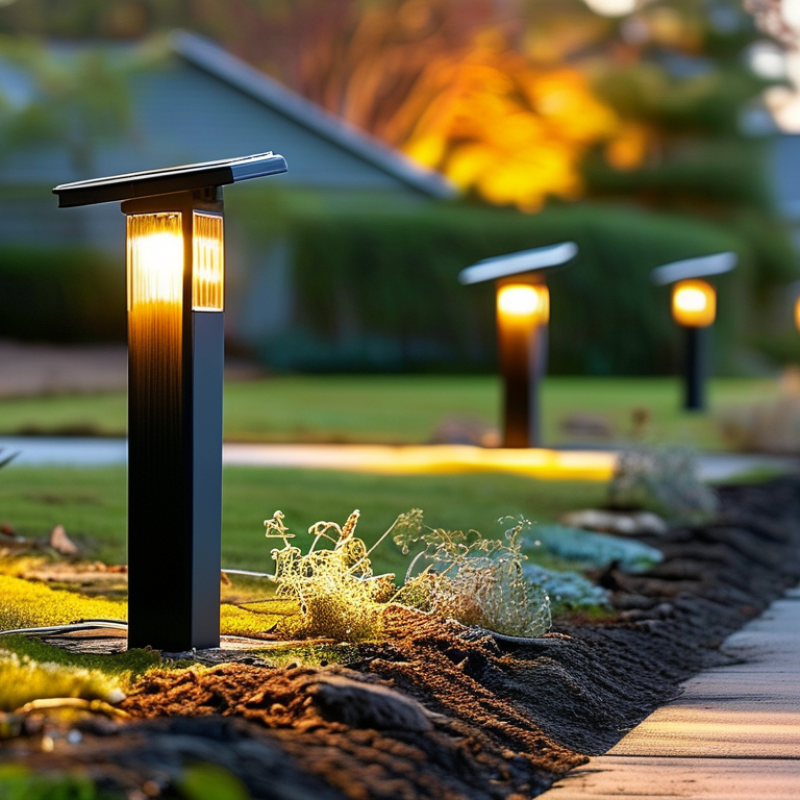
Design choices now suit many property styles. Slim black posts create clean lines along modern walkways. Lantern-shaped fixtures add a traditional feel near gates or porches. Short bollard designs work well beside flower beds, while taller posts improve visibility along driveways. Warm white light feels comfortable around seating areas. Neutral white light can reveal steps and surface changes more clearly. Some models include motion sensors, adjustable heads, or removable solar panels for easier positioning.

Outdoor applications extend beyond private gardens. Hotels, restaurants, parks, and community entrances use these lights to guide visitors without continuous electrical wiring. Along a path, consistent spacing prevents dark gaps and reduces visual clutter. Near a driveway, fixtures should stay clear of vehicle movement and snow-removal equipment. Check the product’s weather-resistance rating before installation. Also inspect local rules for shared paths, brightness, and property boundaries.

Small details matter. Keep panels free from dust and leaves. Replace weak batteries when nighttime performance declines. I have seen attractive installations fail because posts were placed under dense trees. Solar lighting is convenient, but it is not magic. A careful site check still matters.

Important Factors to Consider Before Buying

Why Are Solar Post Lights Popular With Global Buyers?

Important Factors to Consider Before Buying

Solar post lights attract global buyers because installation needs no trenching or outdoor wiring. The appeal is practical: a light turns on beside a gate, path, or driveway after sunset. The International Energy Agency reported nearly 420 GW of new solar photovoltaic capacity in 2023. This wider solar expansion supports consumer confidence, but it does not guarantee every small light will perform well.

Check the battery first. Battery capacity, chemistry, and replacement access affect night-time reliability. A light placed beneath dense branches may receive weak charging, even in a sunny region. Measure the shade. Look for a clear runtime rating, not only a bright daytime photograph. The panel angle, lamp efficiency, and local winter sunlight also matter. These details are easy to overlook.

Weather resistance deserves careful attention. Outdoor products should clearly state protection ratings, material specifications, and operating temperature limits. A coastal buyer may need stronger corrosion resistance than an inland buyer. IRENA recorded about 346 GW of solar capacity added globally in 2023, while the IEA reported a higher figure because reporting methods differ. That difference is worth remembering. Industry data can guide purchasing, but product-level testing remains essential. In my view, decorative appearance is often overvalued; poor drainage or a weak battery can ruin the experience within one season. No checklist is perfect. Read independent reviews, inspect warranty terms, and compare expected maintenance before choosing.