
Blog
What Is a Traffic Control Bollard and How Does It Work?
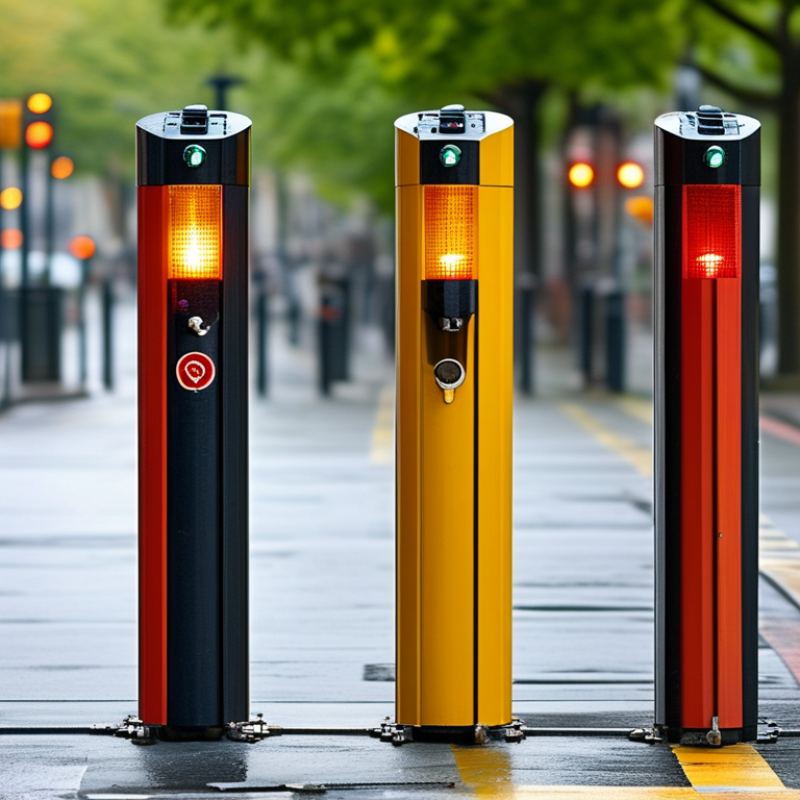
A Traffic Control Bollard is a fixed, removable, or automatic post that manages vehicle movement around roads, buildings, and public spaces. It can guide traffic, protect pedestrians, reserve access, or prevent accidental entry. Some models are slim and decorative. Others contain reinforced steel cores, hydraulic systems, warning lights, or reflective bands.
“Good bollard design begins with understanding the site, not simply choosing the strongest product,” says Steve Wood, an access-control specialist associated with ATG Access. His observation captures an important professional principle. A bollard must match the road width, vehicle risk, operating frequency, visibility, drainage, and maintenance plan. A busy delivery entrance may need automatic rising equipment. A quiet walkway may only require a manually removable post. The details matter.
The operating process is straightforward. Fixed bollards remain anchored in concrete or engineered foundations. Removable versions use sockets and locking pins. Automatic models rise through hydraulic, pneumatic, or electromechanical movement. Sensors, access cards, remote controls, or scheduled signals can operate them. When lowered, vehicles pass over the clear lane. When raised, the post creates a visible physical barrier.
Performance should be verified through manufacturer data and recognized testing requirements. Impact resistance, foundation design, cycle life, visibility, and emergency access deserve careful review. A strong bollard can still perform poorly when installed incorrectly. That is the uncomfortable part. Real sites are rarely perfect. Poor drainage, unclear markings, or delayed maintenance can weaken an otherwise thoughtful system. This guide examines how a Traffic Control Bollard works and how informed selection improves safety, access, and daily traffic management.
Define a Traffic Control Bollard: Purpose, Structure, and Key Components
What Is a Traffic Control Bollard and How Does It Work?
A traffic control bollard is a vertical post that manages vehicle movement and protects defined spaces. It helps separate cars from pedestrians, entrances, loading zones, and temporary work areas. Most bollards use steel, aluminum, or reinforced plastic. Their outer surface may include reflective bands for nighttime visibility. Some models remain fixed, while others fold, slide, or retract when access is required.
The structure usually includes a post, base, anchoring system, and visible warning surface. The base transfers impact force into the ground. Anchors keep the bollard stable during contact or strong wind. A flexible design may bend and return to position. A rigid design offers stronger protection but can damage vehicles during impact. This trade-off deserves careful review. No bollard suits every site. Traffic speed, pavement quality, drainage, and emergency access all influence selection. In practice, installation errors can reduce performance, even with a strong product.
Tips: Measure the lane before installation. Check the bollard’s height and spacing from a driver’s view. Keep reflective areas clean and visible. Inspect loose anchors, cracks, rust, and leaning posts regularly. Test moving components gently. Never block required access routes. A simple inspection record can reveal repeated damage patterns. Also, reassess placement after seasonal changes or nearby construction. Small details matter.
What Is a Traffic Control Bollard and How Does It Work?
A traffic control bollard is a short vertical post used to guide vehicles, separate traffic from pedestrians, protect infrastructure, and improve visibility. Its main components typically include a post, reflective markings, a base, anchoring hardware, and—in flexible designs—a spring or energy-absorbing mechanism.
The chart shows representative industry height ranges for common traffic-control bollard applications. Actual dimensions depend on local regulations, roadway geometry, visibility requirements, impact performance, and installation conditions. Taller posts and reflective bands generally improve daytime and nighttime conspicuity, while the base and anchoring system transfer loads into the pavement.
Classify Bollards by Fixed, Removable, Retractable, and Automatic Designs
What Is a Traffic Control Bollard and How Does It Work?
A traffic control bollard is a vertical barrier that guides vehicles, protects entrances, and separates people from moving traffic. Its performance depends on placement, visibility, foundation depth, and operating method. The World Health Organization reported about 1.19 million road deaths worldwide in 2021, showing why simple physical separation still matters. A bollard does not replace safe road design.
Fixed bollards are permanently anchored in concrete. They suit sidewalks, loading areas, and sensitive building edges where access must remain restricted. Removable bollards use sleeves or locking sockets. Operators can lift them out for deliveries, maintenance, or emergency access. Retractable designs descend below ground, keeping the surface clear when access is needed. Automatic bollards use hydraulic, pneumatic, or electromechanical systems. Sensors, access controls, and warning lights help manage frequent vehicle movement, but poor maintenance can stop the system at the worst moment.
Selection should follow measured risk, vehicle type, impact speed, drainage needs, and recovery time. ASTM F2656/F2656M and IWA 14-1 provide recognized methods for evaluating vehicle-impact resistance. These tests do not prove that every installation will perform identically. Ground conditions matter. So does installation quality. The weak point is often the foundation, not the visible steel. A tall bollard may also create a trip hazard or block wheelchair movement. My practical view is cautious: choose the simplest design that controls access, then verify visibility, stopping distance, and manual override procedures on site.
Explain How Bollards Control Vehicle Access Through Height and Locking Systems
A traffic control bollard is a vertical post that manages vehicle movement at entrances, lanes, and pedestrian areas. Its height determines visibility, clearance, and stopping behavior. Fixed bollards create a permanent barrier. Retractable models rise from the ground when access must close. Removable versions use a sleeve and locking pin for occasional control.
Locking systems decide who can pass and when. Manual locks suit low-traffic sites. Electronic locks can connect with cards, keypads, sensors, or remote commands. Hydraulic and pneumatic systems support frequent movement, but they need regular inspection. A fail-safe design unlocks during power loss, while a fail-secure design stays locked. The correct choice depends on emergency access, fire routes, and local accessibility rules.
The difficult part is simple: taller does not always mean safer. A bollard must match vehicle speeds, impact risks, foundation strength, and turning space. IWA 14-1 and ASTM F2656 testing classify vehicle-impact performance, but certified results apply to specific designs and installations. The World Health Organization reported 1.19 million annual road deaths in its Global Status Report on Road Safety 2023. Controlled access cannot solve every road risk, yet it can separate moving vehicles from vulnerable users.
Tips: Measure the vehicle path first. Check the locked height and ground depth. Test visibility at night. Review emergency release procedures. Keep a maintenance log, because neglected locks often fail before the steel does. Consider professional site assessment; small layout errors can create serious blind spots.
What Is a Traffic Control Bollard and How Does It Work?
How Bollards Control Vehicle Access Through Height and Locking Systems
| Control or Design Dimension | Typical Specification or Option | How It Controls Vehicle Access | Suitable Application |
|---|---|---|---|
| Bollard purpose | A short, sturdy post installed vertically in the ground | Creates a physical boundary that separates pedestrian areas, buildings, roads, parking spaces, or restricted zones from vehicle routes | Traffic management, pedestrian protection, perimeter security, and parking control |
| Fixed bollard | Permanently anchored; commonly about 600–1,200 mm above ground | Always blocks vehicle passage while allowing pedestrians to move around it when spacing is properly planned | Building fronts, sidewalks, pedestrian streets, and permanent perimeter protection |
| Removable bollard | Post lifts out of a receiving socket; height is often about 600–1,000 mm | Blocks access when installed and permits authorized vehicles through after the post is removed | Temporary road closures, event spaces, service entrances, and seasonal access control |
| Retractable bollard | Retracts into an in-ground housing; visible height commonly ranges from about 500–900 mm | Raised position prevents passage; lowered position creates a vehicle opening without moving the post by hand | Controlled entrances, service roads, emergency routes, and pedestrianized areas |
| Manual locking system | Key-operated lock, padlock, locking pin, or internal latch | Keeps a removable or retractable bollard in its blocking or open position until an authorized person releases the mechanism | Low-frequency access points and sites with simple operational requirements |
| Automatic locking system | Electromechanical or hydraulic mechanism controlled by an access system | Locks the bollard after movement and can coordinate access with a card reader, keypad, remote control, intercom, or vehicle detection system | Regularly used entrances, managed parking areas, commercial sites, and secure facilities |
| Telescopic height adjustment | Multi-section post with a variable raised height; adjustment depends on the design | Allows the barrier height to be adapted to clearance needs, visibility requirements, or temporary traffic conditions | Flexible site layouts, maintenance areas, and locations with changing vehicle requirements |
| Raised height effect | A higher visible post provides a stronger visual and physical indication of restricted access | Discourages vehicles from crossing the boundary and makes the access status easier for drivers to identify | Driveways, pedestrian crossings, loading areas, and controlled lanes |
| Lowered height effect | Post is fully retracted or removed, leaving the designed vehicle clearance open | Allows authorized vehicles to pass without permanently removing the traffic-control installation | Emergency access, deliveries, waste collection, and scheduled service traffic |
| Spacing between bollards | Often planned around pedestrian and accessibility needs; approximately 1,200–1,500 mm clear spacing is commonly used, subject to local standards | Narrow spacing prevents most vehicles from passing while maintaining a usable pedestrian route | Sidewalks, entrances, shared spaces, and cycle or pedestrian routes |
| Access authorization | Key, access card, keypad code, remote transmitter, intercom approval, or automatic vehicle identification | Allows only approved users to change the bollard from its blocking position to its open position | Private driveways, managed car parks, campuses, and restricted service roads |
| Safety and visibility | Reflective bands, contrasting colors, lighting, rounded edges, and warning signs | Improves driver awareness, especially at night or in poor weather, and reduces the risk of striking the bollard | Public streets, parking areas, entrances, and locations with mixed pedestrian and vehicle movement |
| Impact-resistance level | Varies from light-duty visual guidance to engineered security-rated protection; performance depends on the complete installation | Determines whether the bollard is intended mainly to guide traffic, stop unauthorized parking, or resist a vehicle impact | Select according to vehicle type, traffic speed, threat level, foundation design, and applicable local standards |
Note: Dimensions and spacing shown are typical planning ranges rather than universal requirements. Final selection should follow local accessibility rules, traffic regulations, structural calculations, and the manufacturer’s installation instructions.
Measure Impact Resistance Using ASTM F2656 Ratings M30, M50, and M80
A traffic control bollard is a short, fixed or retractable barrier that guides vehicles and protects people, entrances, and sensitive assets. Its real performance depends on impact testing, not appearance. ASTM F2656 measures how a barrier responds when struck by a heavy test vehicle at a defined speed. An M30 rating indicates testing at 30 mph, while M50 indicates 50 mph. The reported penetration distance also matters. A bollard that stops a vehicle but allows excessive intrusion may still fail the site’s security objective.
M80 needs careful review. It is not a commonly established ASTM F2656 rating in the same way as M30 or M50. Some suppliers use M80 to describe an 80 mph performance level, but buyers should request the exact standard, vehicle weight, test certificate, and penetration result. The U.S. Department of Homeland Security’s vehicle-ramming mitigation guidance stresses layered protection, including stand-off distance, controlled access, and rated barriers. ASTM F2656 testing also shows why speed matters: impact energy rises sharply as speed increases. At a loading zone, a 15,000-pound vehicle moving at 50 mph creates a far more severe event than one moving at 30 mph. That difference is easy to underestimate.
Look closely at installation. Weak foundations can undermine strong bollards. Drainage, pavement depth, spacing, and emergency access all affect performance. A rating alone cannot predict every real-world collision. That is the uncomfortable part. Teams should compare certified test evidence with the site’s vehicle types, approach angles, and pedestrian exposure before choosing M30, M50, or any claimed M80 system.
Select Bollards by Traffic Volume, Clearance Needs, and Installation Standards
What Is a Traffic Control Bollard and How Does It Work?
Select Bollards by Traffic Volume, Clearance Needs, and Installation Standards
A traffic control bollard is a vertical barrier that guides vehicles and protects people, buildings, or restricted areas. It may be fixed, removable, or retractable. Its value depends on correct placement, not appearance alone.
Traffic volume should guide the selection. A busy loading lane may need impact-rated steel bollards with strong foundations. A quiet pedestrian zone may require lighter posts for visual guidance. Count peak-hour vehicles, delivery frequency, and turning movements. A single afternoon observation can mislead you. Measure twice.
Clearance needs are equally important. Leave enough space for emergency access, service vehicles, wheelchairs, and maintenance equipment. Place bollards where drivers can see them before turning. Avoid creating narrow gaps beside doors or ramps. Reflective bands, contrasting finishes, and adequate lighting improve visibility at night.
Installation standards must match the site and local requirements. Review foundation depth, post spacing, setback distances, drainage, and tested impact performance. Existing concrete, underground utilities, and frost conditions can change the installation method. Removable bollards need secure sockets and controlled access. Fixed models need reinforced foundations. A neat layout can still fail if the base is weak. Qualified installers should verify alignment and document the completed work.