
Blog
7 Best Weighing Packing Machines for Global Buyers?
Choosing the right Weighing Packing Machine is no longer a simple capacity comparison. Global buyers now examine accuracy, hygiene, flexibility, software, and after-sales support together.
PMMI’s 2024 State of the Industry Report valued U.S. packaging machinery shipments at approximately $10.2 billion in 2023. It also identified automation, labor shortages, and flexible production as major investment drivers. MarketsandMarkets projects the global packaging machinery market will grow from about $45.1 billion in 2023 to $56.8 billion by 2028. These figures suggest strong demand, but they do not guarantee that every machine fits every factory.
“Automation is becoming more accessible to smaller companies,” says Jorge Izquierdo, Vice President of Market Development at PMMI. His observation matters for exporters, contract packers, and growing food manufacturers. A compact multihead weigher may suit snack products, while an auger system usually handles powders more consistently. Linear weighers can offer simpler maintenance for selected dry goods. The right choice depends on product behavior, target speed, package format, and cleaning requirements.
Small details become expensive quickly. Product dust can settle around load cells. Uneven granules can damage target-weight consistency. A fast machine may still waste material during changeovers. That is easy to overlook.
This guide reviews seven leading machine categories for global buyers. It compares weighing accuracy, output, sanitation, controls, integration, and service considerations. The ranking is practical, not absolute. Regional voltage, spare-parts access, and operator training can change the final decision. A polished specification sheet is helpful. It is not proof of performance. Trial testing remains essential.
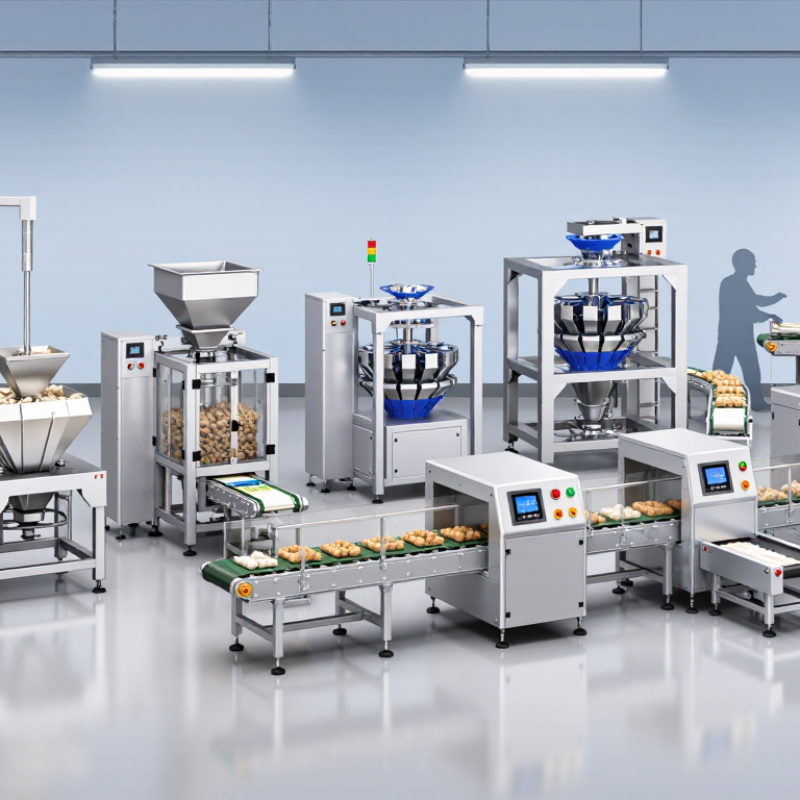
Weighing Packing Machines Explained: Accuracy, Speed, and Product Compatibility
Weighing packing machines are judged by three practical questions: How accurately do they dose, how quickly do they cycle, and what products can they handle? Accuracy begins with stable load cells, controlled feeding, and regular calibration. In a factory trial, compare target weights with actual samples, not only the screen reading. A ten-gram error matters when packaging small portions. It may be less critical for larger sacks. Product behavior changes everything. Free-flowing grains often suit vibratory or multihead systems. Powdery materials may need auger feeding. Sticky snacks can bridge inside hoppers. That detail is easy to underestimate.
Speed should be measured with filled, sealed packages, not an empty machine. Operators, film changes, and product refills affect output. A fast cycle is useless if weight corrections create frequent rejects. Ask for repeatability data across several runs. Request test footage and sample packages from your product. This reflects real performance better than a headline capacity. I have seen buyers focus on bags per minute and overlook cleaning time. That was an expensive assumption.
Tips: Prepare product samples with realistic moisture and particle sizes. Check contact materials, hopper volume, dust control, and cleaning access. Confirm whether the machine supports your bag dimensions and sealing method. Leave room for adjustment. Even a well-designed line may need tuning after installation.
Seven Best Machine Types Compared at 20–120 Packs per Minute
Global buyers comparing weighing packing machines should begin with speed, product behavior, and required accuracy. The seven main types include multihead weighers, linear weighers, net weighers, gross weighers, auger fillers, weigh belts, and combination weighers. Together, they cover roughly 20 to 120 packs per minute. Actual output changes with product density, target weight, bag size, and operator skill.
Multihead systems often suit snacks, grains, frozen pieces, and irregular products at 60–120 packs per minute. Linear weighers usually handle simpler products at 20–50 packs per minute. Net weighers can improve accuracy for larger bags, while gross weighers weigh directly inside the package. Auger fillers provide steady dosing for powders, often around 20–60 packs per minute. Weigh belts work well with fragile or continuous-flow products. Combination weighers offer flexibility, but setup can be demanding. They are not always the fastest choice.
Speed claims need careful testing. A machine rated at 120 packs per minute may produce fewer finished bags after sealing, film changes, and rejected weights. I would request a live trial using the real product, not a dry substitute. Check the weight variation, cleaning time, contact materials, and access to spare parts. Small details matter. A sticky product can bridge in the hopper. Fine powder can escape through weak seals. My own comparison would also include training quality, because an advanced machine performs poorly when settings are misunderstood. Manufacturers should provide test records, calibration procedures, and clear maintenance intervals before purchase.
7 Best Weighing Packing Machines for Global Buyers? - Seven Best Machine Types Compared at 20–120 Packs per Minute
A practical comparison of common weighing and packaging configurations for food, agricultural, chemical and general consumer products.
| Machine Type | Typical Product Applications | Typical Pack Weight Range | Typical Speed | Typical Weighing Accuracy | Compatible Pack Formats | Recommended Product Characteristics | Main Advantages | Key Limitations | Typical Utility Requirements |
|---|---|---|---|---|---|---|---|---|---|
| Single-Head Net Weigher with Vertical Form-Fill-Seal System | Rice, grains, seeds, pasta, snacks, hardware parts and other free-flowing products | 50 g–5 kg | 20–40 packs/min | Approximately ±0.2%–1.0% of target weight, depending on product and pack size | Pillow bags, gusseted bags and basic block-bottom bags | Free-flowing, relatively uniform products with limited oil or dust | Simple operation, lower purchase cost, easy changeover and straightforward maintenance | Lower output and less flexibility than multihead systems; weighing stability can be affected by irregular product flow | Compressed air is commonly required for pneumatic gates and sealing functions; electrical power depends on bagger size |
| Linear Weigher with Vertical Form-Fill-Seal System | Grains, nuts, dried fruit, pet treats, vegetables, frozen products and snack foods | 100 g–2 kg, with larger ranges available in special configurations | 25–60 packs/min | Approximately ±0.2–1.5 g for suitable products and stable operating conditions | Pillow bags, gusseted bags and laminated film bags | Products with moderate flowability or products that require gentle handling | Good balance between price, accuracy and product flexibility; suitable for medium production volumes | Usually slower than a multihead weigher; sticky or highly variable products may reduce accuracy | Electrical power and compressed air are normally required; dust extraction may be needed for dusty products |
| Multihead Combination Weigher with Vertical Form-Fill-Seal System | Potato chips, confectionery, nuts, frozen foods, fresh produce, pet food and mixed products | 10 g–3 kg, depending on hopper size and machine configuration | 60–120 packs/min | Approximately ±0.1–1.0 g or around ±0.1%–0.5% of target weight, depending on product | Pillow bags, gusseted bags, quad-seal bags and other roll-film formats | Free-flowing products with consistent feeding and manageable stickiness | High throughput, strong combination-weighing performance, accurate dosing and flexible target weights | Higher capital cost, more complex setup and greater sensitivity to product buildup or inconsistent feeding | Electrical power and compressed air; product elevators, distribution conveyors and metal detection may be added |
| Multihead Weigher with Premade-Pouch Packaging System | Premium snacks, nuts, dried fruit, frozen food, pet treats and products requiring finished pouches | 20 g–2 kg | 30–70 packs/min | Approximately ±0.1–1.0 g, subject to product flow, target weight and pouch handling | Premade flat pouches, stand-up pouches, zipper bags and shaped pouches | Products that benefit from attractive retail packaging or resealable bags | High presentation quality, easy integration of zippers and special pouch features, no film-forming adjustment | Premade pouches cost more than roll film; pouch dimensions and quality must be consistent | Electrical power and compressed air; vacuum or air-cleaning options may be used for pouch opening |
| Auger Gravimetric Weigher with Vertical Form-Fill-Seal System | Flour, spices, milk powder, coffee, protein powder, chemical powders and fine ingredients | 10 g–2 kg | 20–60 packs/min | Approximately ±0.5%–2.0% of target weight, depending on powder density and flow behavior | Pillow bags, gusseted bags, sachets and laminated film bags | Powders and fine materials with controlled feeding requirements | Suitable for powders, compact layout, adjustable screw dosing and good containment when properly enclosed | Powder density, humidity, bridging and aeration can affect accuracy; cleaning may be time-consuming | Electrical power, compressed air and effective dust control; nitrogen flushing may be added for oxidation-sensitive products |
| Gross Weighing Bagging Machine | Fertilizer, animal feed, rice, flour, seeds, pellets and other bulk dry materials | 5–50 kg | 20–40 packs/min | Typically ±0.1%–0.5% of target weight, depending on product and bag size | Open-mouth bags, woven polypropylene bags, paper bags and heavy-duty laminated bags | Bulk products that can be filled directly into the final bag during weighing | Well suited to large bags, robust construction and efficient handling of bulk materials | Not normally intended for small retail packs; bag feeding and closing may require separate equipment | Electrical power and compressed air; sewing, heat-sealing or pinch-bottom closing equipment may be integrated |
| Net Weigh FFS Machine for Granules and Pellets | Plastic pellets, wood pellets, salt, sugar, detergent granules, fertilizer and industrial granules | 500 g–25 kg | 20–50 packs/min | Approximately ±0.1%–0.5% of target weight, depending on bulk density and target size | Open-mouth bags, valve bags, heavy-duty film bags and form-fill-seal sacks | Free-flowing, abrasive or dense granular products requiring durable contact parts | Handles heavier packs and industrial materials; durable dosing and strong bag-closing options | Large equipment footprint; abrasive products may increase wear on gates, liners and conveyors | Electrical power and compressed air; dust extraction, grounding and wear-resistant components may be required |
Multihead Weighers: 14–32 Heads and Up to 120 Weighments per Minute
7 Best Weighing Packing Machines for Global Buyers?
Multihead weighers are judged by accuracy, speed, and product handling. Models with 14 to 32 heads suit many dry, free-flowing products. They divide product across individual hoppers before combining precise portions. A well-configured 20-head system may reach up to 120 weighments per minute. Actual output depends on target weight, product shape, and filling behavior. Small snacks may move quickly. Sticky products can slow the cycle.
Global buyers should inspect the load cells, hopper design, contact materials, and control interface. Stainless steel surfaces support hygienic cleaning and long-term use. Servo-driven discharge can improve timing, but it may increase maintenance needs. Ask for test results using your own product, not only standard samples. A useful trial records weight variation, rejected packs, cycle speed, and product damage. Operators should also check whether recipes can be saved and adjusted without complicated steps.
A 32-head machine offers more combination choices, especially for irregular products. However, more heads do not always create better value. The machine may need extra floor space and stronger operator training. Claimed speed can also fall during real production. That detail is easy to overlook. Buyers should review spare-part access, calibration procedures, electrical compatibility, and service response before ordering. A practical acceptance test should run continuously, because short demonstrations can hide unstable weighing or hopper delays.
Global Selection Criteria: OIML R 61, IP65 Protection, and 50–60 Hz Power
For global buyers comparing the seven best weighing packing machines, compliance matters as much as speed. OIML R 61 requirements should be verified against the exact machine model. Ask for test reports, accuracy classes, marked capacity, and calibration conditions. A certificate without matching model data is weak evidence. Product density also affects weighing stability. Powder, granules, and irregular pieces may behave differently.
During a factory acceptance test, place several product samples into the hopper and record repeated results. Watch the display, discharge gate, and sealing cycle. Small variations matter. IP65 protection helps in dusty production rooms and during routine cleaning. However, IP65 is not a license for high-pressure washing. Inspect cable glands, door seals, sensors, and stainless-steel joints. A practical weakness may hide around the frame.
Power compatibility deserves equal attention. A machine rated for 50–60 Hz may still require a specific voltage, phase, and current range. Confirm these details before shipping. Ask whether the control system handles local electrical fluctuations. Also check plug standards, grounding instructions, and spare fuse specifications. Installation can fail over one overlooked detail. No checklist is perfect, and buyer requirements often change after testing. Keep a written record of assumptions, especially target weight, product temperature, and expected production speed.
Buying Comparison: ±0.1–1.0 g Accuracy, Labor Savings, and Total Cost of Ownership
Choosing among the seven best weighing packing machines requires more than comparing advertised speed. Buyers should examine accuracy, labor savings, and total cost of ownership together.
A ±0.1 g specification suits small, high-value portions, but it may require stable product flow and frequent calibration. A ±1.0 g system can reduce purchase costs for larger packs. The real test is the factory trial. Request samples, weigh at least 100 packs, and record average error, standard deviation, and rejected units. Catalog accuracy is not production truth. I learned that the hard way.
Labor savings depend on line design, not machine speed alone. Count operators before installation, then measure staffing after commissioning. The International Federation of Robotics reported 541,302 industrial robots installed worldwide in 2023, showing continued investment in automated production. However, automation still needs trained technicians. Include wages, training, cleaning time, spare parts, calibration, energy, compressed air, film waste, and downtime in the five-year cost model. FAO reports that 13.2% of food is lost globally after harvest and before retail, so unstable dosing can create meaningful waste. That figure does not prove every machine will reduce losses. Product testing must confirm it. A cheaper machine may become expensive when rejected packs, changeover delays, and maintenance are counted. Some buyers also overlook integration costs. That is a costly omission.