
Blog
Top Marine Generator Sets for Sale Worldwide?
Choosing the top Marine Generator Sets for sale worldwide requires more than comparing price and rated kilowatts. Buyers must examine vessel type, operating profile, fuel strategy, classification rules, and service access. A compact 500 kW unit may suit a harbor tug, while an ocean-going cargo vessel needs redundant systems, stable frequency, and dependable performance under continuous load. Small details matter. Salt spray matters.
The International Maritime Organization’s Fourth IMO GHG Study 2020 reported that shipping produced approximately 2.89% of global anthropogenic greenhouse-gas emissions in 2018. Its 2023 strategy now targets net-zero emissions from international shipping by around 2050. DNV’s Maritime Forecast to 2050 also highlights growing pressure to adopt efficient engines, alternative fuels, batteries, and hybrid power systems. These findings make fuel consumption and emissions readiness central purchasing questions, not optional upgrades. UNCTAD’s Review of Maritime Transport further shows the scale and complexity of global fleet operations, where equipment downtime can affect cargo schedules, crew safety, and port access.
Knut Ørbeck-Nilssen, CEO of DNV Maritime, has said, “The maritime industry is facing a period of unprecedented change.” That statement is useful, though it does not answer every buying decision. A reliable comparison should review ISO performance data, IMO compliance, class approval, load acceptance, noise levels, cooling design, and local parts support. Tier III capability may be valuable in emission-control areas, but it can increase cost and maintenance demands. Hybrid-ready architecture may protect future investment, yet the best system still depends on the vessel’s real duty cycle. This guide evaluates leading Marine Generator Sets through those practical, sometimes imperfect, conditions.
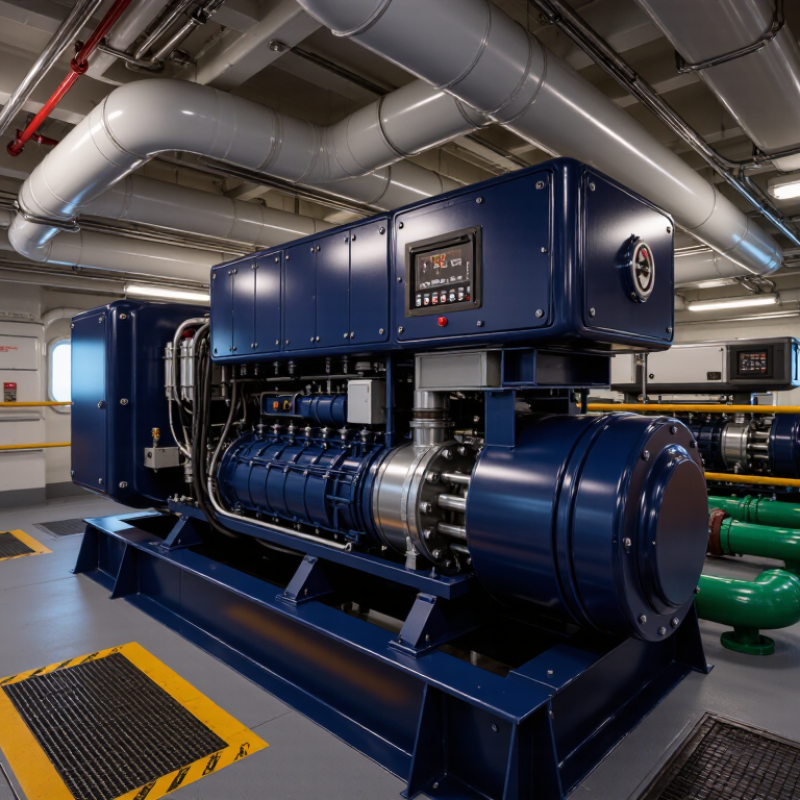
Marine Generator Set Types and ISO 8528-1 Power Ratings
Top Marine Generator Sets for Sale Worldwide?
Marine generator sets are commonly available as diesel, gas, and dual-fuel systems. Diesel units remain practical for cargo ships, workboats, and offshore vessels. Gas and dual-fuel sets can reduce local emissions, but fuel availability may limit their value. The IMO Fourth GHG Study 2020 estimated that shipping produced 2.89% of global human-caused greenhouse gas emissions in 2018. This keeps efficiency under close review.
ISO 8528-1 power ratings help buyers compare real operating limits. Continuous Operating Power suits steady loads for unlimited running hours. Prime Power allows variable loads and extended operation, usually with defined overload conditions. Limited-Time Running Power supports restricted annual use. Emergency Standby Power is designed for outages, not daily propulsion support. A 500 kW generator with a standby rating is not automatically a 500 kW continuous solution. That assumption can become expensive.
Tips: Match the rating to the vessel’s load profile, not its maximum equipment list. Record engine-room temperature, altitude, and seawater conditions. These details affect available output. The DNV Maritime Forecast to 2050 highlights efficiency and fuel flexibility as major maritime priorities. However, forecasts are not purchase specifications. Load testing remains essential. In practice, some selection decisions still rely on optimistic load estimates. Recheck them with measured data before ordering.
How to Size Marine Generators Using Load Profiles and ISO 8528-5
Top Marine Generator Sets for Sale Worldwide?
Selecting a marine generator starts with the vessel’s load profile, not the largest available rating. Record hotel loads, navigation equipment, pumps, refrigeration, battery chargers, and propulsion auxiliaries across a full voyage. Measure real demand when possible. Estimates can mislead.
Separate continuous, intermittent, and emergency loads. Calculate running kW, apparent power in kVA, and power factor. Then model the largest motor start and sudden load steps. A generator may carry the average load but fail during a pump start. That detail matters.
ISO 8528-5 provides performance classes for generating sets, including voltage and frequency response. Match the required class to sensitive electronics, mission duties, and operating conditions. It does not replace a vessel-specific engineering review.
Tips: Build a 24-hour load table with operating times and starting sequences. Add practical reserve, but avoid excessive oversizing, which can cause poor loading and wet stacking. Consider seawater temperature, engine-room ventilation, altitude, and fuel quality. These conditions reduce available output. For larger vessels, two smaller sets may improve redundancy and efficiency, although synchronization controls add complexity.
Test the proposed configuration with real step-load data. I have seen paper calculations pass while onboard voltage recovery remained disappointing. Recheck assumptions before ordering. A final review should include short-circuit capability, protection coordination, maintenance access, and the generator’s declared ISO 8528-5 performance.
Fuel Efficiency, BSFC Data, and IMO’s 0.50% Sulfur Cap
Top Marine Generator Sets for Sale Worldwide?
Fuel efficiency starts with the duty cycle, not the brochure. A generator rated at 1,000 kW may operate most hours below 60% load. That weakens fuel economy and can increase maintenance demands. Published test data, aligned with ISO 3046-1, commonly places modern marine diesel engines near 185–215 g/kWh at efficient loads. Smaller, high-speed units may reach 195–225 g/kWh. BSFC is useful evidence. It is not the whole decision.
Check fuel curves at 25%, 50%, 75%, and 100% load. Request shop-test records, correction conditions, and measurement uncertainty. Sea trials should compare hourly fuel use with electrical output. Small errors matter. A 10 g/kWh BSFC difference can represent roughly 240 tonnes of fuel yearly for a 1,000 kW set operating 8,000 hours. That estimate assumes full output, so real savings may be lower.
IMO’s Fourth GHG Study 2020 estimated shipping produced 2.89% of global anthropogenic greenhouse-gas emissions in 2018. Fuel selection therefore affects both operating cost and regulatory exposure. Since 1 January 2020, MARPOL Annex VI has limited sulfur content outside emission control areas to 0.50% m/m. The ECA limit remains 0.10% m/m. Fuel documentation, purifier settings, and sampling procedures deserve attention. DNV’s Maritime Forecast to 2050 also warns that fuel availability and infrastructure will shape technology choices. The cheapest generator can become expensive when fuel quality changes. I would still question any BSFC claim without load-specific test evidence.
Top Global Marine Generator Brands and DNV, ABS, and LR Approval
Top Marine Generator Sets for Sale Worldwide?
Choosing a marine generator set requires more than comparing rated kilowatts. A reliable unit should match the vessel’s propulsion system, hotel load, emergency demand, and available engine-room space. In practical inspections, vibration, salt exposure, cooling performance, and access for maintenance often decide long-term value. A compact generator may fit neatly, yet poor service access can increase downtime.
DNV, ABS, and LR approval deserves close attention. These classification societies review design, materials, testing, installation, and production controls. Approval usually applies to a specific model, configuration, and service condition. It is not a universal certificate for every unit from one manufacturer. Buyers should request valid type-approval documents, factory test results, load-bank records, and evidence of compliance with the vessel’s flag requirements. Check the paperwork carefully. Certificates can be misunderstood.
Tips: Confirm continuous and standby ratings separately. Ask whether the set supports sudden load acceptance without unstable frequency. Inspect the alternator insulation class, starting batteries, exhaust arrangement, and cooling-water alarm system. For international delivery, verify spare-parts availability near the operating region. A local technician can matter more than a small purchase-price discount. I have seen specifications look excellent on paper, but commissioning revealed weak cable routing and insufficient ventilation. That is an easy detail to miss. A second technical review is often worthwhile before ordering.
Worldwide Buying Checklist: Warranty, Service, Cost, and Compliance
Top Marine Generator Sets for Sale Worldwide?
Buying a marine generator set worldwide requires more than comparing rated power and purchase price. Match the generator to your vessel’s load profile, including starting currents, navigation systems, pumps, and refrigeration. Ask for documented factory testing, serial-number traceability, and clear performance data at continuous and standby ratings. Small paperwork gaps can become expensive later.
Warranty terms deserve close reading. Confirm coverage periods, excluded parts, labor arrangements, and response times for vessels operating far from ports. Reliable suppliers should provide trained technicians, diagnostic support, and access to essential spare parts. Service availability matters most during a night crossing. A cheap unit is not cheap when downtime delays cargo, repairs, or crew schedules. I would also request references from operators in similar climates, although references can be incomplete.
Tips: Calculate total ownership cost, not only the invoice. Include fuel consumption, installation, transport, commissioning, filters, batteries, maintenance, and disposal. Check whether local technicians can perform approved service work. Before payment, verify compliance with the vessel’s flag-state requirements, port rules, classification needs, noise limits, and applicable emissions standards. Request certificates in writing, because verbal assurances are difficult to defend. Review electrical frequency, voltage, insulation protection, exhaust arrangements, and emergency shutdown design with a qualified marine engineer. Specifications sometimes look perfect on paper. Real operating conditions may disagree.