
Blog
Top 10 Indoor COB LED Display Types for Global Buyers
Choosing an Indoor Cob Led Display is no longer a simple size-and-price decision. Global buyers now compare pixel pitch, cabinet depth, brightness, refresh rate, service access, and installation conditions. This guide introduces ten practical display types for meeting rooms, retail stores, broadcast studios, control centers, museums, and premium hospitality spaces.
Each type creates a different viewing experience. A fine-pitch COB wall can show crisp product details at close range, while a curved or creative-format display can shape an entire brand environment. Some models prioritize front maintenance. Others reduce visible seams across wide walls. The best option depends on viewing distance, content movement, ambient light, power planning, and local service capability. Small details matter.
Dr. Li Jun, a senior LED display systems engineer, explains, “A reliable COB display is designed around the room, not simply around the screen.” That principle deserves attention. Buyers sometimes select the smallest pixel pitch without measuring real viewing distance. It sounds impressive, but it can increase cost without improving the image. A careful evaluation should include sample footage, grayscale performance, color consistency, thermal behavior, and long-term maintenance access.
This overview compares the top ten Indoor Cob Led Display types from a buyer’s perspective. It also recognizes an uncomfortable truth: no display fits every project. Specifications can look excellent on paper. Installation reality may disagree. Therefore, each category is considered through performance, usability, durability, serviceability, and value. The goal is not to promote one universal answer, but to help global buyers make a clearer, more defensible decision.
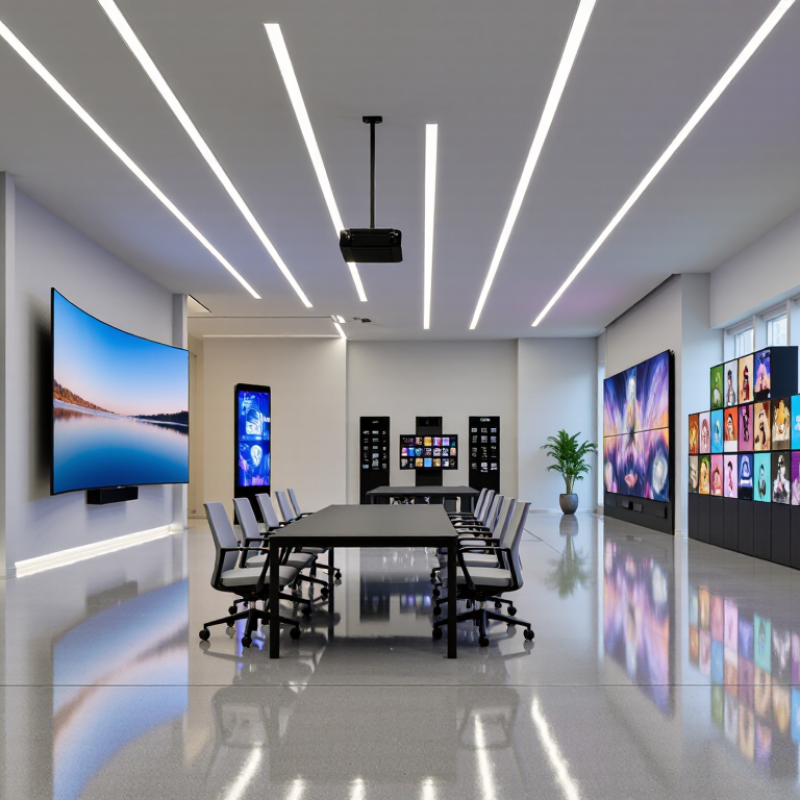
What Defines an Indoor COB LED Display
An indoor COB LED display mounts multiple LED chips directly onto a circuit board. The package receives protective encapsulation, creating a flatter and more continuous surface. This differs from traditional SMD construction, where separate lamp packages are soldered individually. The result is usually finer pixel spacing, stronger contrast, and improved resistance to accidental touch.
Fortune Business Insights valued the global LED display market at approximately USD 7.68 billion in 2023. Its 2024 report expects continued growth through 2032, driven partly by fine-pitch indoor applications. COB technology supports this shift. Pixel pitches below 1.5 millimeters can produce cleaner text and smoother faces at close viewing distances. This matters in control rooms, premium retail spaces, studios, and meeting rooms.
But COB is not automatically better. A buyer should inspect brightness uniformity, grayscale performance, refresh rate, heat control, and repair procedures. The IEC 62368-1 safety framework also remains relevant for professional audiovisual equipment. In real installations, a display may look excellent while showing poor skin tones under a camera. That is an easy detail to miss.
COB surfaces can reduce visible pixel gaps.
They still need careful calibration. Viewing distance, ambient light, content type, and service access should guide the final selection. A low pixel pitch alone does not define quality.
How Indoor COB LED Display Types Are Classified
Top 10 Indoor COB LED Display Types for Global Buyers
How Indoor COB LED Display Types Are Classified
Indoor COB LED displays are classified by pixel pitch, installation distance, and viewing purpose. Pixel pitch remains the clearest starting point. Common categories include P0.7, P0.9, P1.2, P1.5, and P1.8. Smaller pitches support closer viewing and sharper text. Larger pitches usually reduce cost and power demand. A 2024 LED display market report by Omdia identifies fine-pitch LED as a key growth segment, driven by control rooms, corporate halls, and premium retail spaces.
Application creates another useful classification. Rental-style indoor panels emphasize lightweight frames and quick maintenance. Fixed-installation panels prioritize stability, front service access, and long operating hours. Conference displays need readable text at short distances. Broadcast studios need high refresh rates and low scan-line risk. COB packaging also improves surface protection, which matters in busy corridors and exhibition venues. The difference can be felt when a cabinet survives repeated cleaning.
Performance separates similar-looking products. Buyers should compare brightness, refresh rate, grayscale depth, color consistency, and thermal design. The U.S. Department of Energy notes that LED efficiency depends heavily on system design, not only diode efficiency. That point is easy to overlook. Higher brightness is not always better indoors. It can create glare, eye fatigue, and unnecessary energy use.
Classification is still imperfect. Some suppliers mix pixel pitch with application labels. Buyers should request measured data, viewing-distance tests, and maintenance records before choosing a type.
Top 10 Indoor COB LED Display Types for Global Buyers
Indoor COB LED displays are commonly classified by pixel pitch, which determines image detail, recommended viewing distance, and application suitability. The chart uses representative industry-standard pixel-pitch categories and typical viewing-distance guidance.
Smaller pixel pitches provide higher image density for close viewing, while larger pixel pitches are generally suitable for conference rooms, control rooms, retail spaces, reception areas, and other indoor environments viewed from farther away.
Top 10 Indoor COB LED Display Types for Global Buyers
Indoor COB LED displays offer strong protection, fine pixels, and clean viewing from close distances. Global buyers often compare ten practical types for different spaces. Fine-pitch conference displays suit meeting rooms with detailed charts. Rental displays support temporary exhibitions and corporate events. Curved displays create wider viewing angles in experience centers. Floor-standing displays work well in malls and reception areas.
Wall-mounted displays provide a permanent visual surface. Interactive displays support touch-based teaching and product demonstrations. Retail window displays attract attention through bright, seamless images. Control-room displays emphasize stable operation and long viewing comfort. Broadcast displays require accurate colors and consistent brightness. All-in-one displays simplify installation, control, and daily maintenance.
Choose by room depth, pixel pitch, brightness, refresh rate, and service access. A narrow room usually needs a smaller pixel pitch. Bright retail lighting may require stronger brightness control. Ask for thermal test records and cabinet flatness data. Check whether front maintenance suits the installation wall. Dust resistance matters, even indoors. It is often overlooked. During site evaluations, I have seen buyers focus on price and ignore heat management. That mistake can affect reliability and image consistency. No ranking fits every market. Regional electrical standards, shipping conditions, and installer skills can change the best choice. A short trial remains wiser than trusting a brochure alone.
Key Specifications That Distinguish Each Display Type
Indoor COB LED displays differ less by appearance than by their working specifications. Fine-pitch models, such as 0.9mm or 1.2mm, suit control rooms and premium meeting spaces. Standard-pitch screens, including 1.5mm to 2.5mm, balance viewing distance and cost. Rental cabinets usually emphasize lightweight frames, quick locks, and front access. Fixed-installation units prioritize stable mounting, continuous operation, and easier cable management. Curved displays require flexible cabinet structures and consistent module alignment. Transparent indoor designs focus on high permeability and lower visual obstruction. All-in-one conference screens need built-in processing, speakers, and simple signal control. High-brightness models serve sunlit atriums, but excessive brightness can reduce comfort. Fine-detail retail screens need strong contrast and accurate grayscale. Creative-shaped displays prioritize cabinet flexibility over standard replacement speed.
The key specifications should match the viewing environment. Pixel pitch affects image sharpness and recommended distance. Brightness is commonly measured in nits, while refresh rate influences camera performance. A rate above 3,840Hz often supports clearer video capture. Contrast, grayscale depth, and color temperature shape perceived image quality. Front maintenance reduces service time in narrow indoor spaces. Check cabinet weight, power consumption, operating temperature, and spare-module availability. A high protection rating may help, but indoor ventilation still matters. Ask for calibrated samples, not only datasheets. Specifications can look impressive and still disappoint.
Tips: Measure the nearest viewer position before selecting pixel pitch. Test subtitles, skin tones, and dark scenes. Confirm front-service access at the actual installation height. Review warranty terms, delivery records, and technical support response times. Some buyers overlook acoustic noise from power systems. That detail deserves attention.
Top 10 Indoor COB LED Display Types for Global Buyers - Key Specifications That Distinguish Each Display Type
| No. | Indoor COB Display Type | Typical Pixel Pitch | Typical Brightness | Refresh Rate | Contrast Ratio | Viewing Angle | Key Distinguishing Specifications | Typical Applications |
|---|---|---|---|---|---|---|---|---|
| 01 | Ultra-Fine-Pitch COB Display | 0.7–0.9 mm | 500–800 nits | 3,840–7,680 Hz | 10,000:1–20,000:1 | ≥160° horizontal and vertical | Very high pixel density, smooth close-up images, low pixel visibility, and a protected matte surface suitable for short viewing distances. | Executive briefing rooms, premium control rooms, museums, and high-end visualization spaces. |
| 02 | Fine-Pitch COB Video Wall | 1.0–1.5 mm | 600–1,000 nits | 3,840–7,680 Hz | 8,000:1–15,000:1 | ≥160° horizontal and vertical | Balanced pixel density, brightness, and cost; commonly supports front maintenance and seamless cabinet alignment. | Corporate lobbies, boardrooms, retail interiors, education, and conference centers. |
| 03 | Standard Fine-Pitch COB Display | 1.5–2.5 mm | 700–1,200 nits | 1,920–3,840 Hz | 5,000:1–10,000:1 | ≥160° horizontal and vertical | Higher brightness and economical coverage for medium viewing distances while retaining COB surface protection. | Large meeting rooms, shopping centers, hotels, auditoriums, and indoor advertising. |
| 04 | 4K-Ready COB Direct-View Wall | 1.2–2.0 mm | 500–800 nits | 3,840–7,680 Hz | 10,000:1 or higher | ≥160° horizontal and vertical | Designed for high-resolution 16:9 or custom canvases, with pixel pitches selected to achieve sharp 4K content at practical wall sizes. | Command centers, premium home cinema, corporate presentation walls, and digital signage. |
| 05 | HDR-Optimized COB Display | 1.2–2.5 mm | 800–1,500 nits | 3,840–7,680 Hz | 10,000:1–20,000:1 | ≥160° horizontal and vertical | Wide grayscale processing, high contrast, calibrated color performance, and support for HDR workflows when paired with a compatible controller. | Broadcast studios, premium retail, product showrooms, galleries, and media production environments. |
| 06 | Virtual Production COB Display | 1.5–2.6 mm | 800–1,500 nits | 3,840–7,680 Hz | 5,000:1–15,000:1 | ≥160° horizontal and vertical | Camera-friendly scan settings, high refresh rate, low moiré design options, consistent color, and cabinet geometry suitable for curved stages. | Film studios, broadcast sets, virtual events, extended-reality stages, and simulation facilities. |
| 07 | Interactive COB Touch Display | 1.5–2.5 mm | 500–800 nits | 3,840–7,680 Hz | 5,000:1–10,000:1 | ≥160° horizontal and vertical | Adds an infrared, optical, or other touch layer; requires impact-resistant surface integration, multi-touch support, and precise calibration. | Classrooms, collaboration rooms, visitor centers, design studios, and interactive exhibits. |
| 08 | Curved or Creative-Shape COB Display | 1.5–3.0 mm | 600–1,000 nits | 1,920–3,840 Hz | 5,000:1–10,000:1 | ≥140° horizontal and vertical | Uses curved, angled, or custom-shaped cabinets; key buying factors include cabinet tolerance, radius control, alignment, and image uniformity. | Immersive showrooms, themed entertainment, architectural interiors, stages, and experiential retail. |
| 09 | Rental and Portable COB Display | 1.5–2.6 mm | 800–1,200 nits | 3,840–7,680 Hz | 5,000:1–15,000:1 | ≥160° horizontal and vertical | Lightweight cabinets, quick-lock hardware, corner protection, front and rear service options, and reinforced COB surface durability for repeated handling. | Exhibitions, touring events, conferences, houses of worship, and temporary installations. |
| 10 | All-in-One Meeting-Room COB Display | 1.2–2.5 mm | 500–800 nits | 3,840–7,680 Hz | 8,000:1–15,000:1 | ≥160° horizontal and vertical | Integrated display, audio, control, and connectivity options; usually emphasizes quiet operation, low power consumption, simple installation, and front access. | Boardrooms, hybrid meeting rooms, training centers, command offices, and corporate collaboration spaces. |
How Global Buyers Can Select and Source the Right Display
Top 10 Indoor COB LED Display Types for Global Buyers
How Global Buyers Can Select and Source the Right Display
Indoor COB LED displays now serve control rooms, retail stores, corporate halls, broadcast studios, museums, and conference venues. Common types include fine-pitch, 4K, curved, interactive, rental, fixed-installation, all-in-one, transparent, front-service, and high-brightness models. Each type solves a different problem. A 0.9 mm pitch suits close viewing, while 1.5–1.8 mm often offers better value for medium-distance audiences. The right choice depends on viewing distance, room lighting, content detail, service access, and installation structure.
AVIXA’s 2024 Industry Outlook and Trends Analysis forecasts global professional AV revenue at roughly US$331 billion in 2024, with continued growth through 2029. This growth increases demand for reliable visual systems, but market size does not guarantee product quality. Buyers should request pixel-pitch measurements, brightness data, refresh rate, grayscale performance, power consumption, and thermal test results. Ask for sample cabinets. Inspect seams from one meter away.
Sourcing requires more than comparing unit prices. Verify production capacity, module consistency, spare-part ratios, packaging protection, certification documents, and software compatibility. IEC-based testing, electromagnetic compliance, and regional electrical requirements should be checked before payment.
Front maintenance can reduce downtime, especially where rear access is blocked. A low-cost panel may become expensive after repeated module failures. This is an uncomfortable point. Some specifications look impressive on paper, yet real viewing tests may reveal color shifts, fan noise, or uneven cabinet alignment. Independent inspection remains worthwhile.