Top Electric Water Heater Manufacturers Worldwide
Electric water heater choices now reflect more than tank size and purchase price. Buyers compare recovery speed, standby losses, installation needs, warranty coverage, and service access. Those details matter when a heater sits in a tight utility closet or supplies several bathrooms during a winter morning.
The U.S. Department of Energy estimates that water heating uses about 18% of household energy. That figure is U.S.-specific, not a global average. The International Energy Agency’s 2022 report, The Future of Heat Pumps, also records strong growth in heat pump sales, including an 11% rise worldwide in 2022. These trends help explain manufacturers’ growing attention to efficient electric and heat pump water-heating systems. They do not prove that one design suits every home.
IEA Executive Director Fatih Birol described heat pumps as “a key technology in the global transition to secure and sustainable heating.” His statement concerns heating broadly, but it captures a shift shaping water-heater product development. This overview examines leading electric water heater manufacturers worldwide, comparing their product ranges, efficiency approaches, market reach, and support networks. It also considers practical differences between conventional resistance models and heat pump units. Brand claims deserve scrutiny. Published ratings can help, yet installation quality, local electricity prices, and replacement-part availability affect real-world value. A ranking alone cannot settle that question.
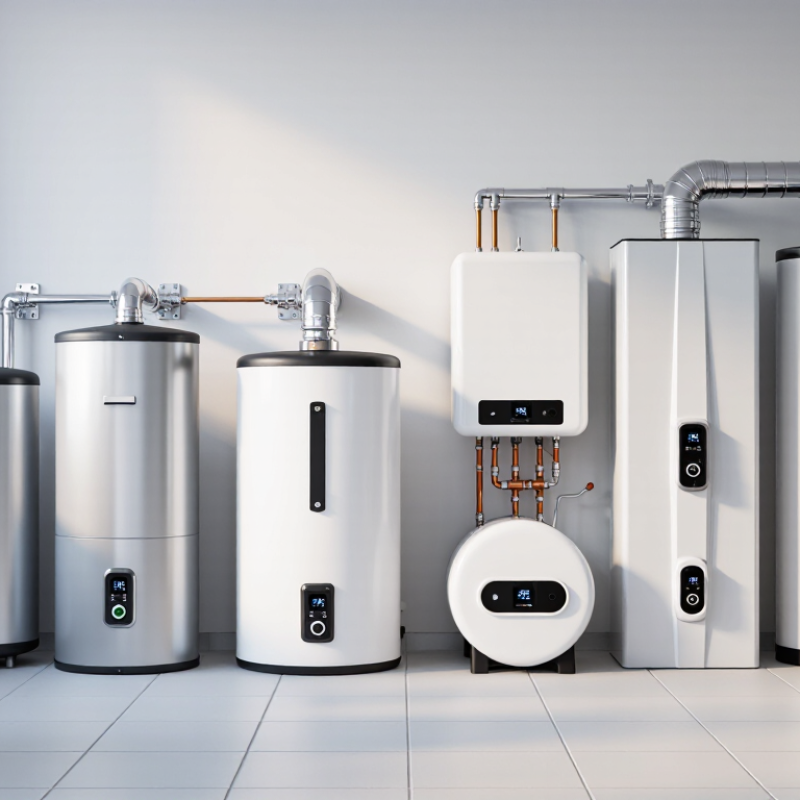
Electric Water Heaters: Core Designs, Components, and Operating Principles
Electric water heaters use two common designs: storage-tank units and tankless units. A storage model holds water in an insulated steel tank, often with separate upper and lower heating elements. When a thermostat detects cooling, it switches an element on. Electric current passes through its resistance wire, producing heat that transfers into the surrounding water. It is a simple process, but recovery time varies with tank size, element power, and incoming water temperature.
Inside a typical tank, the dip tube directs cold water downward, while hot water leaves from near the top. Insulation slows heat loss; a temperature and pressure relief valve helps manage unsafe pressure or temperature. The parts work quietly. Yet scale can collect on elements, especially in hard-water areas, reducing heat transfer and sometimes causing popping sounds. Inspection needs care because electrical power and hot water present real hazards.
Tankless models heat water as it flows through a compact chamber. A flow sensor signals the controls, which energize one or more resistance elements. The result depends on flow rate and the temperature difference between incoming and delivered water. A running shower may expose a limitation: opening another tap can reduce available hot-water performance. Manufacturers’ designs differ, and no single configuration suits every home. I would not judge efficiency from the element alone; insulation, controls, usage patterns, and installation also matter.
DOE: Water Heating Uses About 18% of U.S. Home Energy
DOE estimates that water heating accounts for about 18% of energy use in a typical U.S. home. That share can feel abstract until a hot shower runs cold, or a tank reheats after a busy morning. Actual use varies with household size, habits, climate, and equipment condition. Electric water heater manufacturers focus on features such as insulation, tank capacity, and control settings, but no single model fits every home. Efficiency labels help with comparisons, though installation and daily use matter too.
Small losses add up. A thermostat set higher than needed may use extra electricity, while a poorly insulated tank can lose heat between uses. Heat pump models can use less electricity in suitable locations, but they need enough space and appropriate installation. I would not assume the most advanced option is automatically the best choice; household needs and local conditions deserve a closer look.
Tips: Check the temperature setting and look for leaks around connections. Use a timer or operating schedule only if it suits your routine. Before replacing a heater, compare estimated yearly energy use, capacity, and installation requirements. A quick utility-bill check can also show whether water heating costs are changing over time.
Product Types and Efficiency: Storage, Tankless, and Heat-Pump Models
Storage water heaters keep a ready supply in an insulated tank. They suit predictable household routines, but heat can escape between draws. Tank size also matters: a small tank may run cold during back-to-back showers, while an oversized one can waste energy maintaining unused hot water. Simple, but not always efficient.
Tankless models heat water as it flows, avoiding much standby loss. The U.S. Department of Energy estimates they can be 24–34% more energy efficient than conventional storage units in homes using 41 gallons or less daily. At roughly 86 gallons per day, the estimated gain falls to 8–14%. Flow capacity and simultaneous taps still matter. A long shower and a running dishwasher can expose a sizing mistake.
Heat-pump water heaters move heat from surrounding air into the tank. DOE says they can be two to three times more energy-efficient than conventional electric-resistance models. They need suitable air space and can perform differently in cooler rooms. That sounds promising. Yet efficiency figures are not guarantees: climate, hot-water habits, and installation affect real results. I would compare annual energy use, not just the label, and ask whether the chosen model fits the actual utility room.
Leading Manufacturers by Region: A. O. Smith, Ariston, Haier, Rheem, and Bosch
Electric water heater manufacturers often build around the needs of their home markets. In North America, established producers commonly offer storage tanks in several household sizes, with gas and electric options. Their designs may prioritize service access and familiar installation layouts. A busy utility room tells you more than a glossy brochure.
European manufacturers tend to emphasize compact units, wall-mounted models, and controls suited to smaller homes. Some product lines include heat-pump systems alongside conventional electric tanks. In Asia, large manufacturers serve dense cities and varied climates, so their ranges may span small point-of-use heaters and high-capacity household units. Regional strengths are useful clues, not guarantees.
When comparing suppliers, inspect the model’s energy label, tank lining, warranty terms, and local service network. Check recovery rate as well as tank volume; a large tank can still feel inadequate during back-to-back showers. Confirm the electrical supply and dimensions before ordering. Details matter.
Company reputation alone is not enough. Product availability, component quality, and installer experience can differ by country and model. Even published efficiency figures may use different test conditions. That makes comparisons messy, and buyers sometimes overlook it. Ask for the exact datasheet and written warranty for the unit being quoted.
Regional Population Context for Electric Water-Heater Markets
Population estimates provide broad regional context; they do not represent water-heater sales or market size.
Source: United Nations, World Population Prospects 2024. Figures are approximate mid-2024 estimates, rounded to the nearest million.
Comparing Manufacturers: Capacity, Efficiency, Safety Standards, and Service Networks
Top Electric Water Heater Manufacturers Worldwide
Comparing Manufacturers: Capacity, Efficiency, Safety Standards, and Service Networks
Choosing an electric water heater starts with demand, not the largest number on a product sheet. A small household may need less stored water than a busy home with several showers. Compare tank capacity with peak-use patterns, including morning routines and laundry. For tankless units, check the flow rate at the temperature rise your home requires. Numbers need context.
Efficiency matters over years of use. Compare published energy-use figures under the same test conditions, and check insulation, standby losses, and control settings. Safety details deserve equal attention: look for clear guidance on temperature limits, pressure relief, electrical protection, and installation requirements. Standards and certifications vary by market, so verify that documentation applies where the heater will be installed. A tidy comparison table can still miss the reality of local water conditions and wiring.
Tips: Ask how quickly service technicians can reach your area, which parts are stocked locally, and what warranty coverage excludes. Request written answers. Check whether routine maintenance is practical, especially if the water is hard. A lower purchase price may feel attractive, but delayed parts can be frustrating. I would leave room for judgment; product specifications rarely tell the whole story.