China Top 10 Power Capacitor Manufacturers?
China’s power equipment market is broad, fast-moving, and difficult to compare from brochures alone. This article examines China’s Top 10 Power Capacitor Manufacturers through practical industry criteria, not popularity alone. The review considers product range, dielectric technology, rated voltage, thermal performance, factory capability, certifications, export experience, and after-sales support. These details matter when a capacitor operates beside a transformer, inside a wind farm, or under daily industrial loads.
Power capacitors support reactive-power compensation, voltage improvement, harmonic filtering, and energy efficiency. A poor selection may create overheating, resonance, or shortened service life. Roger C. Dugan, a recognized power-quality specialist, defines power quality as “any power problem manifested in voltage, current, or frequency deviations.” That statement remains useful because capacitor performance depends on the complete electrical environment, not one catalog number.
The ranking should be treated as a research guide, not an absolute verdict. Manufacturer strengths change by project size, application, and region. Some companies excel in metallized film capacitors, while others focus on high-voltage banks, automatic compensation systems, or custom assemblies. Factory visits, test reports, warranty terms, and reference projects still deserve careful verification. Online information can be incomplete. That is the uncomfortable part.
This introduction prepares readers to compare leading Chinese suppliers with greater confidence. It also leaves room for correction, because real operating data may challenge any published ranking.
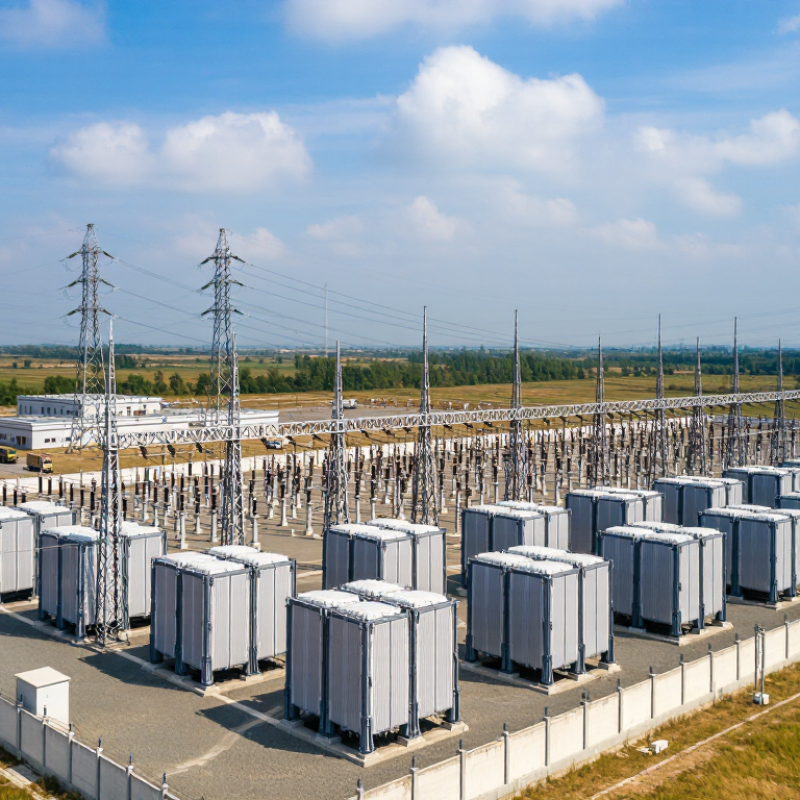
What Are Power Capacitors and Why Are They Important?
Power capacitors are electrical devices that store and release energy in an alternating-current system. Their main job is correcting reactive power, which motors, transformers, and compressors require to create magnetic fields. Without correction, equipment draws extra current from the grid. That current heats cables, occupies transformer capacity, and can increase electricity charges. A capacitor supplies reactive power locally, helping the system operate closer to its useful power factor.
The need is becoming clearer. The International Energy Agency’s Electricity 2024 report expects global electricity demand to grow by about 3.4% annually through 2026. More demand places pressure on existing networks. U.S. Energy Information Administration data also indicate that transmission and distribution losses usually represent roughly 5% of electricity supplied. Power capacitors cannot remove all losses, but properly placed units can reduce current flow and support voltage stability. Small correction, measurable effect.
In a factory, this may mean cooler feeder cables, steadier motor starting, and more available transformer capacity. However, installation is not a simple “bigger is better” decision. Excessive capacitance can create overvoltage or harmonic resonance, especially where variable-speed drives operate. Engineers should review load profiles, harmonics, switching frequency, and seasonal demand before selecting equipment. The IEEE standard on shunt power capacitors provides useful technical guidance, yet field measurements remain essential. A calculation can look perfect on paper and still miss real operating behavior.
How to Evaluate Power Capacitor Manufacturers in China
Evaluating power capacitor manufacturers in China requires more than comparing prices. A reliable supplier should show stable production, clear technical records, and responsive communication. Look beyond polished brochures. Request factory photographs, product drawings, batch traceability, and recent test reports. The reports should cover capacitance, dielectric loss, insulation resistance, temperature rise, and impulse performance. Confirm that testing follows relevant IEC or national standards. Certification must match the actual product and factory scope.
Tips: Ask for samples from regular production, not specially selected units. Compare their measured results with the datasheet. Check whether terminals, casings, and sealing materials suit your installation environment. For outdoor systems, inspect moisture protection and corrosion resistance. Discuss delivery schedules, spare parts, warranty limits, and technical support before signing an agreement. A video meeting can reveal useful details, but an independent factory audit is stronger evidence.
Production equipment also deserves attention. Ask how winding tension, vacuum treatment, and final inspection are controlled. Experienced manufacturers usually explain these processes clearly and provide corrective-action records. However, no evaluation is perfect. A small sample may hide long-term aging problems, and test data can become outdated. Consider third-party testing for critical projects. The best choice balances engineering capability, quality consistency, documented experience, and practical after-sales support. Pricing matters, but unusually low pricing deserves careful questions.
China’s Top 10 Power Capacitor Manufacturers
China’s Top 10 Power Capacitor Manufacturers are usually evaluated by more than production volume. Strong suppliers show stable capacitance, low loss, and reliable insulation under demanding conditions. Their products support power-factor correction, harmonic filtering, and voltage management in industrial systems. A serious comparison should examine rated voltage, temperature range, tolerance, and expected service life.
In practical sourcing, factory evidence matters. Review test reports, production controls, aging procedures, and traceability records. Check whether the manufacturer follows relevant IEC or GB requirements. Ask for partial-discharge data when medium- or high-voltage units are involved. Cabinet space also matters. A compact capacitor can simplify installation, but poor heat dissipation may shorten its life. A polished catalog is not proof of field reliability. That point is easy to overlook.
Tips: Request samples before bulk purchasing. Compare capacitance after thermal cycling, not only at room temperature. Inspect terminals, seals, discharge resistors, and enclosure quality. Ask how failures are recorded and handled. Some suppliers provide impressive documents but limited application support. That gap deserves careful questioning. Cost should be reviewed with warranty terms, replacement access, and energy performance. The cheapest option may become expensive after repeated downtime.
Key Products and Technologies Offered by Leading Manufacturers
China Top 10 Power Capacitor Manufacturers: Key Products and Technologies
China’s leading power capacitor manufacturers serve factories, substations, renewable projects, and commercial buildings. Their product ranges often include low-voltage and high-voltage shunt capacitors, automatic power factor correction systems, and harmonic filtering equipment. Many use metallized polypropylene film, dry-type insulation, pressure-sensitive safety devices, and self-healing designs. These features help reduce losses and improve operating stability. Some suppliers also provide detuned reactors, capacitor banks, intelligent controllers, and remote monitoring systems. Product quality depends on tested materials, accurate assembly, and consistent factory inspection. A polished brochure cannot replace reliable test data.
Tips: Match the capacitor to voltage, frequency, temperature, and harmonic conditions. Check rated current, discharge time, enclosure protection, and applicable standards. In a plant with variable-speed drives, a plain capacitor bank may create resonance. A detuned filter could be safer. Do not size equipment from monthly energy bills alone. Measure load changes during production.
Field experience shows that installation details matter as much as the capacitor itself. Poor ventilation can raise internal temperature and shorten service life. Loose terminals may produce hot spots, noise, or early failure. Leading manufacturers increasingly combine sensors with controllers to identify abnormal current, temperature, and switching cycles. However, monitoring is not magic. Data still needs practical interpretation. An oversized bank may appear efficient while causing unnecessary switching and maintenance. Manufacturer support, traceable testing, warranty clarity, and spare-part availability should influence the final selection. Mistakes happen when buyers compare price before system conditions.
Power capacitor manufacturers commonly supply products for low-voltage power-factor correction, medium-voltage shunt compensation, harmonic filtering, high-voltage coupling, and transient protection. The chart uses representative voltage reference points for these application categories rather than company-specific data.