China Top 10 Jelly Roll Assembly Manufacturers?
China has become a major center for lithium-ion battery manufacturing equipment and component production. This article examines China’s top 10 Jelly Roll Assembly manufacturers through practical, engineering-focused criteria. The review considers production experience, equipment consistency, quality systems, customization capability, and after-sales support.
Jelly Roll Assembly affects battery alignment, internal resistance, winding tension, and long-term safety. A reliable supplier should control cathode and anode positioning precisely. Separator wrinkles, loose winding, or uneven tab placement can create costly defects. Small errors matter.
The comparison also considers factory capacity, inspection methods, material traceability, and process documentation. Important details include vision inspection, ultrasonic tab welding, tension monitoring, and clean production areas. ISO certifications can support credibility, but certificates alone do not prove real performance. Customer references and sample testing remain essential.
No ranking is perfect. Supplier strengths can change as equipment, teams, and markets develop. Some manufacturers may excel at high-volume production, while others offer better support for pilot lines or customized battery formats. Buyers should verify specifications directly before making a commercial decision.
This guide is designed for battery manufacturers, procurement teams, and technical investors seeking dependable Chinese partners. It aims to provide a balanced starting point, not an unquestionable verdict. Factory audits, trial production, and documented acceptance standards should follow every shortlist. Real evidence matters most.
What Is a Jelly Roll Assembly and Where Is It Used?
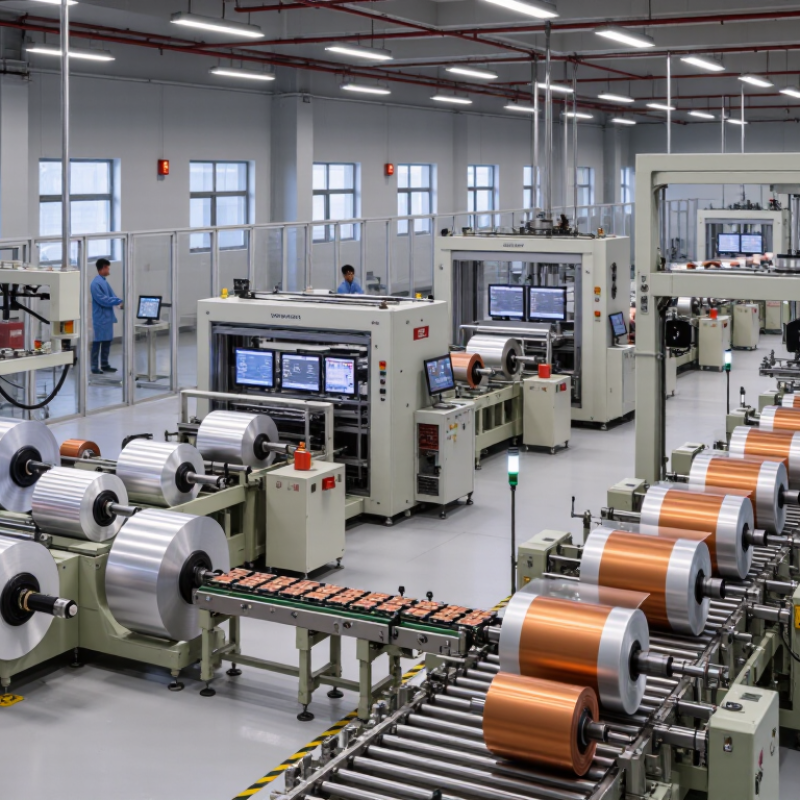
A jelly roll assembly is the wound core inside many cylindrical rechargeable batteries. It combines a positive electrode, negative electrode, and insulating separator in a precise spiral. The layers resemble a rolled sheet of paper. They are not paper, of course. Each electrode carries active material on a metal foil. The separator prevents direct contact while allowing ions to move between electrodes.
During assembly, tension must remain stable across the entire winding process. Excessive tension can wrinkle the separator or damage the coated foil. Loose winding may create uneven pressure and reduce electrical performance. Operators also inspect edge alignment, foil exposure, and contamination. Small particles matter. A practical inspection uses cameras, dimensional gauges, and electrical checks before the core enters its housing.
Jelly roll assemblies are widely used in cylindrical energy cells for power tools, portable electronics, electric mobility, and stationary storage systems. Their spiral structure provides a large active surface within a compact volume. It also supports repeatable high-volume production. However, the design is not automatically reliable. Moisture control, clean handling, and accurate welding remain essential. In my view, the most overlooked issue is consistency between the winding center and outer layers. A cell may look acceptable externally while internal pressure distribution remains uneven. That weakness can appear only after repeated charging cycles.
How China’s Top Jelly Roll Assembly Manufacturers Are Selected
Selecting China’s top 10 jelly roll assembly manufacturers requires more than comparing production capacity. A credible shortlist begins with documented experience in cylindrical, prismatic, or pouch cell assembly. We examine winding accuracy, tab alignment, separator tension, and process consistency.
Factory visits provide stronger evidence than promotional materials. We inspect line layouts, equipment maintenance, operator training, and cleanliness controls. Short videos are not enough. The best manufacturers use traceable work orders and calibrated inspection tools. They record winding diameter, alignment tolerance, weld strength, and defect rates. These records show whether quality is repeatable.
Independent testing also matters. Sample cells should undergo dimensional checks, electrical testing, vibration exposure, and controlled aging. Engineers must explain their failure analysis process clearly. Cost matters, but unusually low quotes deserve careful questions. Delivery records, production flexibility, and after-sales response reveal operational reliability. We also review certifications, internal audits, and customer quality procedures without relying on certificates alone.
This part is imperfect. Public data can be incomplete, and factory performance may change after an audit. A supplier may present its strongest line during a visit. Therefore, the ranking should combine site evidence, verified samples, technical interviews, and long-term communication. Clear communication matters. Manufacturers that admit process weaknesses often appear more trustworthy than those claiming flawless results. Past experience should guide selection, but current evidence must receive greater weight.
Key Technologies and Quality Standards in Jelly Roll Assembly
Jelly roll assembly depends on controlled winding, accurate alignment, and stable material handling. In practical factory audits, the winding tension often reveals process maturity. Excessive tension can deform the separator, while weak tension creates loose layers and uneven internal resistance. High-quality manufacturers monitor tension continuously and record the data for every production batch. Electrode edges should remain clean, with burrs controlled through reliable slitting and inspection.
Key technologies include vision systems, laser measurement, automatic tab positioning, and precision ultrasonic or laser welding. A camera should detect electrode offset before the roll enters the next station. Welding quality requires checks for penetration, electrical resistance, and heat influence. Operators also inspect the finished jelly roll for wrinkles, exposed foil, and damaged insulation. Small defects matter. They may become safety risks during later formation testing.
Reliable assembly lines usually follow documented quality systems, such as ISO 9001-based procedures, process capability studies, and full material traceability. Critical dimensions need clear limits, not vague descriptions like “well aligned.” Sampling alone may miss intermittent faults, so in-line inspection is preferable for important features. However, automation is not a complete solution. Sensors can drift, and false alarms may slow production. Regular calibration, independent audits, and retained samples improve confidence. One issue deserves more reflection: a low rejection rate does not always prove excellent quality, because weak inspection can produce misleading results.
China Top 10 Jelly Roll Assembly Manufacturers? — Key Technologies and Quality Standards in Jelly Roll Assembly
Nominal cylindrical cell formats provide a practical reference for jelly-roll winding, tab placement, separator alignment, and enclosure design. The format code generally represents the approximate cell diameter and height in millimeters; actual dimensions may vary by design and tolerance.
Quality systems for jelly-roll assembly commonly address electrode alignment, winding tension, separator coverage, tab positioning, insulation, moisture control, and weld integrity. Relevant frameworks may include ISO 9001, IEC 62660-1, IEC 62660-2, UL 2580, and UN 38.3, depending on the application and market.
How to Compare and Choose a Chinese Jelly Roll Assembly Supplier
Choosing a Chinese jelly roll assembly supplier requires more than comparing quoted prices. Start with your cell design, including diameter, width, tab position, separator type, winding tension, and insulation requirements. A credible supplier should explain how each parameter affects alignment, resistance, and production yield. Ask for process flow charts, inspection standards, and sample records. Small details matter.
Compare suppliers through verified production evidence. Review winding machines, tension controls, vision inspection, and environmental management. Request trial samples made with materials similar to your final product. Measure tab alignment, winding hardness, burr control, and dimensional consistency. Check whether each roll has a traceable batch code. An experienced factory should provide corrective-action reports, not only polished presentation slides. Video calls help, but an on-site audit reveals more.
Supplier evaluation should also include engineering communication and after-sales response. Confirm who approves design changes, how quickly problems are reported, and whether spare parts remain available. Discuss acceptance criteria before signing a contract. Include sampling plans, defect limits, delivery checkpoints, and documentation requirements. A lower price may hide unstable yield or weak process control. I have found that impressive samples can mislead when production volumes increase. Ask to inspect several consecutive batches. Perfect claims deserve careful questions. Reliability develops through evidence, repeated testing, and clear accountability.