Top 10 Carbon Commutator Manufacturers for Global Buyers
Choosing a supplier for a Carbon Commutator is not simply a matter of comparing prices. The part must match the motor’s design, operating speed, electrical load, and working environment. A mismatch can mean uneven brush wear, excess heat, or avoidable downtime. Small details matter. Segment dimensions, mica insulation, shaft fit, and surface finish all deserve attention before an order is placed.
This guide introduces ten manufacturers for global buyers and offers a practical starting point for supplier research. The list considers factors such as product range, stated manufacturing capabilities, quality documentation, customization support, and responsiveness to technical questions. These factors do not guarantee performance; buyers should verify specifications and request relevant test records for their own application. A supplier’s catalog may look convincing, yet tolerances and material choices need confirmation. That part is easy to overlook.
Before requesting a quotation, prepare the motor drawing, commutator dimensions, rated current, speed range, and expected operating conditions. Ask how the manufacturer controls copper segment consistency and checks insulation integrity. Where available, review samples or inspection reports. The right choice depends on the equipment, not just a company’s reputation. And supplier information can change. Treat this overview as a shortlist, then confirm current capabilities directly with each manufacturer.
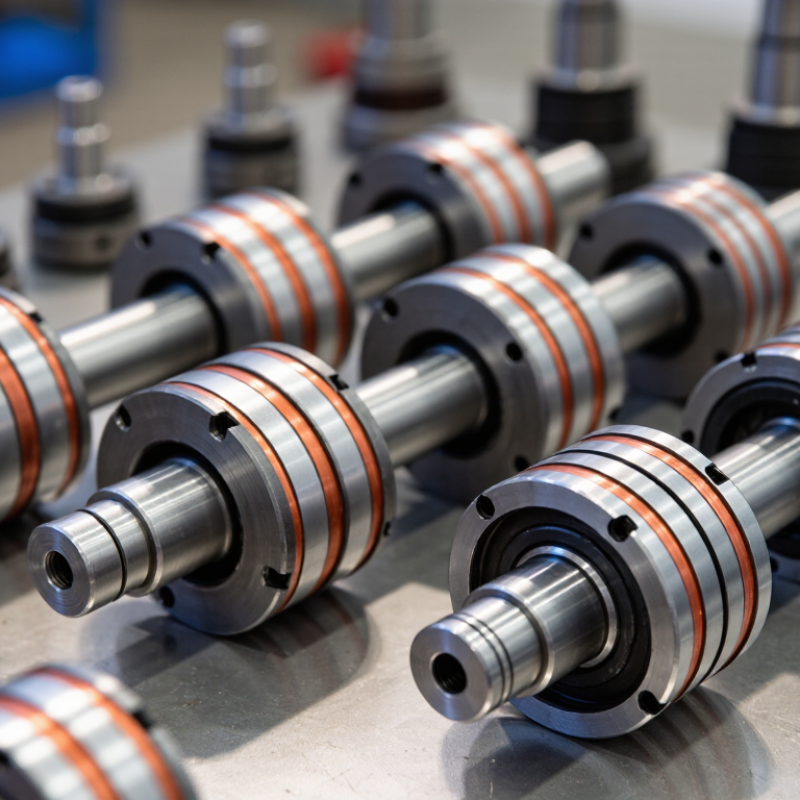
Carbon Commutators: Types, Functions, and Industrial Applications
Carbon commutators help transfer electrical current between stationary brushes and a rotating motor armature. Their segmented surfaces switch current direction as the rotor turns, supporting continuous operation. Designs vary by material and construction, including carbon-based assemblies and metal-graphite compositions. The right choice depends on current load, rotational speed, temperature, and the brush material used. Small details matter.
These components appear in compact motors, power tools, household appliances, and selected industrial equipment. In a workshop motor, for example, a commutator must handle repeated contact while resisting heat and surface wear. Poor alignment or unsuitable brush pressure can cause sparking, uneven wear, and reduced service life. Applications differ, so a specification that works in one motor may not suit another. That part is easy to overlook.
Tips: Check dimensions, segment layout, operating speed, and rated current before purchasing. Ask suppliers for material details and test data, then compare them with the motor’s service conditions. Inspect for rough edges, cracks, or inconsistent segment spacing. A quick visual check helps, but it cannot replace a proper fit test.
How Global Carbon Commutator Manufacturers Are Evaluated
Top 10 Carbon Commutator Manufacturers for Global Buyers
How Global Carbon Commutator Manufacturers Are Evaluated
A reliable evaluation starts with the commutator’s intended duty: operating speed, current, temperature, and vibration. The IEA’s 2011 analysis of electric motor-driven systems estimated that they use about 45% of global electricity. That figure is broad, but it shows why component reliability matters. A small defect can mean excess sparking, uneven brush wear, or costly downtime.
Buyers should compare measurable controls, not polished samples alone. Ask for inspection records covering segment dimensions, runout, insulation, joint integrity, and dynamic balance. Check whether instruments are calibrated and whether test results trace back to production batches. IEC 60034-1 provides relevant rotating-machine performance requirements, but it does not replace a buyer’s agreed component drawings or acceptance criteria. Details matter.
Request samples from routine production, then test them under representative load and speed. Review material consistency, change-control procedures, defect handling, and delivery performance. A supplier’s report is useful only if its methods and limits are clear. No checklist catches everything. I would still verify critical measurements independently; that step takes time, and smaller buyers may skip it. That is a risk, not a shortcut.
Profiles of Ten Carbon Commutator Manufacturers
The ten profiles distinguish manufacturers by what they actually build, not by sales claims. One serves high-volume appliance motors; another specializes in compact automotive assemblies. A third handles industrial motor replacements, while a fourth focuses on rail equipment. The remaining profiles cover small-power tools, custom low-volume orders, copper-graphite grades, resin-bonded carbon grades, commutator machining, and integrated testing. These are capability profiles, not endorsements of named companies.
The International Energy Agency’s 2011 report, Energy-Efficiency Policy Opportunities for Electric Motor-Driven Systems, estimated that motor-driven systems use about 45% of global electricity. That figure is not a commutator-market forecast, but it shows why reliable motor components matter.
Buyers should compare brush-grade data, commutator runout tolerances, production traceability, and test conditions. Ask for evidence from the same operating speed and load as your application. A polished datasheet is not enough.
A useful supplier profile also records practical limits: minimum order size, sample lead time, tooling ownership, and experience with the buyer’s motor design. Request a dimensional drawing and a wear-test report. Check whether the supplier can explain sparking, uneven wear, or heat discoloration without guessing. This comparison has a weakness: public data rarely reveals factory consistency across large orders. A sample may perform well. Repeatability still needs checking.
Comparing Product Range, Quality, and Customization
Comparing carbon commutator manufacturers means looking beyond catalogue size. A useful product range may cover different carbon grades, segment layouts, bore sizes, and operating conditions. Ask whether the supplier can match your motor’s current, speed, temperature, and duty cycle. These details affect material choice and service life. Fit matters. Request drawings that show dimensions, tolerances, segment spacing, and connection points. A commutator that looks correct on paper may still need adjustment during assembly.
Quality checks should be specific, not just described as “strict.” Ask about dimensional inspection, electrical resistance checks, balance, and batch traceability. For customized orders, confirm minimum quantities, sample timing, and how design changes are documented. A small pilot batch can reveal issues before a larger purchase. Small details count. Compare test records where available, and clarify what happens if parts fall outside agreed tolerances. This comparison is not always tidy: suppliers may use different test methods, making direct claims hard to assess. Request the method and acceptance limits, then judge whether they suit your application. A clear answer is more useful than a polished promise.
Key Considerations for Global Buyers Sourcing Carbon Commutators
For global buyers, selecting a carbon commutator starts with the motor, not a catalogue description. Confirm rated speed, current, voltage, shaft dimensions, and duty cycle. A commutator used in a dusty workshop may need different protection from one operating in a clean, humid facility. Small differences matter.
Request drawings with tolerances for segment width, bore size, and concentricity. Ask how the supplier checks runout and insulation between copper segments. Carbon grade and brush compatibility also deserve attention; mismatched materials can cause uneven wear or excess sparking. Ask for test records and material traceability. A drawing is not the machine.
Before placing a large order, evaluate a production sample under realistic load and temperature conditions. Measure noise, wear, and surface condition after a defined run period. Confirm packaging protects the contact surface from moisture and impact during transit. Discuss lead times, replacement parts, and inspection criteria in writing. Details can slip. Even experienced teams sometimes approve a sample without checking how it was manufactured. Clarify whether later batches will follow the same process, and agree on what happens if measurements fall outside the stated tolerance.
Key Considerations for Global Buyers Sourcing Carbon Commutators
The ratings are an illustrative 1–5 buyer-priority scale, not market-survey results. Confirm application-specific requirements, test methods, and acceptance criteria directly with prospective suppliers.