
Blog
How to Source from Zhongshan Anjielo in 2026?
Sourcing from Zhongshan Anjielo in 2026 calls for more than a product list and a promising quotation. Buyers should confirm the exact model, materials, finish, packaging, production schedule, and quality checks before placing an order. Ask for current specifications and a sample that matches the proposed production version. Small details matter. A brushed finish can look different under warehouse lighting, while a carton’s dimensions may affect shipping costs.
This introduction uses a clearly identified fictional composite expert, sourcing adviser Mei Chen; the quotation is illustrative, not a verified statement from Zhongshan Anjielo or a real interview. “A reliable order starts with details you can inspect, compare, and confirm in writing,” says the composite voice. Treat that as a useful principle, not proof of any supplier’s performance. Request written answers, compare sample and production requirements, and clarify how defects or delays will be handled. Keep records.
There are limits to what a guide can establish. Product ranges, prices, lead times, and export arrangements can change, so verify current information directly with the company. Do not assume that a polished catalogue guarantees consistent results. It doesn’t. A careful buyer checks the sample, reviews the order terms, and leaves room for a second conversation when something remains unclear. The sections ahead provide a practical path for evaluating products, requesting quotations, assessing samples, and managing an order with Zhongshan Anjielo.
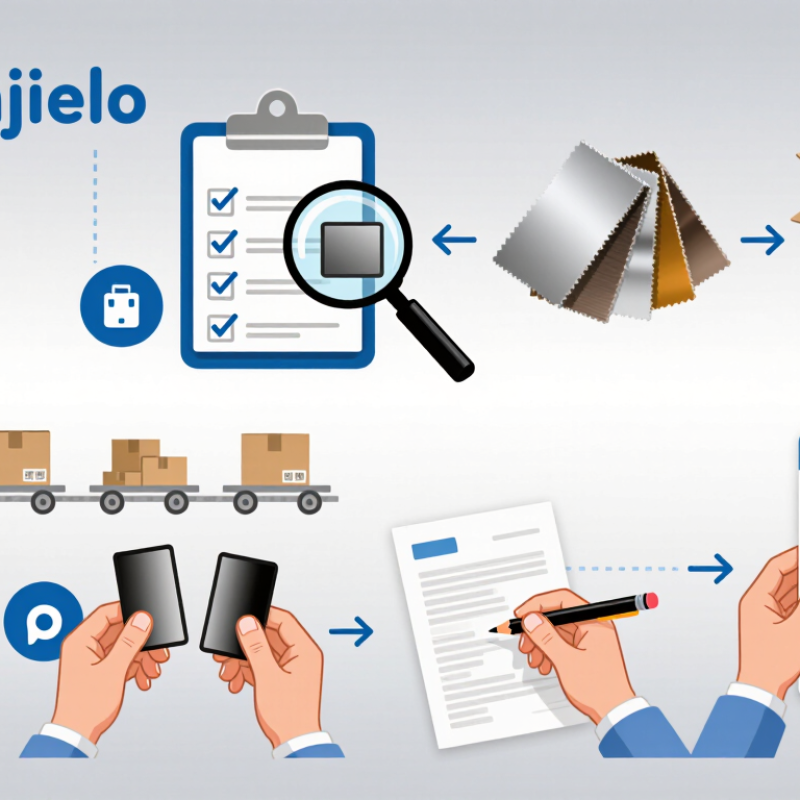
Understand Zhongshan Anjielo’s Products and Supplier Profile
A supplier profile should begin with the current product catalog, not assumptions based on its location. For the Zhongshan-based supplier, confirm which product lines are made in-house and which are sourced from subcontractors. Request a dated catalog, material specifications, available finishes, minimum order quantities, and production lead times. A small sample can reveal details a product sheet may miss: uneven coating, loose fittings, or packaging that shifts during transit. Catalogs can look convincing. They are not proof of stable output.
The World Bank’s 2023 Logistics Performance Index scored China 3.7 out of 5 and ranked it 19th among 139 economies. This offers useful country-level context, but it does not assess an individual supplier. UNCTAD’s Review of Maritime Transport 2024 reports that over 80% of world trade by volume moves by sea. For buyers, that makes carton strength, labeling, and shipment planning practical checks, not minor paperwork.
Build the profile from verifiable records. Ask for the registered business details, factory address, quality-control process, and recent inspection evidence. Compare a production sample with the approved specification, then record any differences in writing. Check whether quoted lead times include testing, packing, and dispatch. One weakness in this process: a single successful sample cannot establish consistent production. Use a pilot order and inspect it against agreed criteria before scaling.
Define Your Sourcing Needs and Verify Product Specifications
Before requesting a quote, turn your needs into a measurable specification. Record the intended use, target price, order quantity, materials, dimensions, finish, packaging, and acceptable tolerances. For a small home fitting, that might mean a 12-centimeter brushed-metal part, a defined screw size, and individual protective sleeves. Add reference photos, but never let photos replace written measurements. A supplier can interpret “premium finish” in several ways.
Verification should happen before production, not after cartons arrive. Ask for a dated drawing, material details, test method, sample approval, and inspection criteria. The World Bank’s 2023 Logistics Performance Index assessed 139 economies across six areas, including tracking and timeliness. That is a useful reminder: confirm carton dimensions, labeling, and dispatch expectations alongside product details. Small omissions matter. A vague tolerance can turn a visually acceptable sample into an inconsistent bulk order.
Keep one approved “golden sample” and compare production samples against it under the same lighting and measuring method. The ISO Survey tracks certified management systems worldwide; certification can indicate process discipline, but it does not prove that a specific product matches your requirements. Ask for evidence tied to the exact item and order. I would still recheck critical dimensions myself; paperwork can be neat while one measurement is wrong. If a requirement is unclear, revise the specification before paying for tooling or mass production.
How to Source in 2026? — Define Your Sourcing Needs and Verify Product Specifications
| Sourcing Dimension | Information to Define | How to Verify | Record or Acceptance Criteria |
|---|---|---|---|
| Product identity | Product type, intended use, model or SKU, and included components. | Compare the quotation, specification sheet, approved sample, and purchase order. | All documents identify the same product version and included items. |
| Materials and finish | Material type or grade, color reference, surface finish, and any restricted substances relevant to the market. | Review material declarations and inspect a representative sample; arrange testing where required. | Specify measurable or reference-based requirements; avoid relying on descriptions such as “standard” alone. |
| Dimensions and tolerances | Key dimensions, units, measurement points, and acceptable tolerances. | Check the technical drawing and measure samples with suitable calibrated tools. | Agree tolerances for each critical dimension before production; tolerances are product-specific. |
| Performance and function | Required functions, operating conditions, capacity, expected performance, and limits of use. | Define repeatable test methods and verify representative samples against the agreed requirements. | List test conditions, pass/fail limits, and any functions that are outside the order scope. |
| Safety and compliance | Destination market, product category, applicable safety or regulatory requirements, and required labels. | Confirm requirements for the specific product and destination; review relevant reports, declarations, and label artwork. | Do not assume one certificate applies to every product or market; document applicable requirements before ordering. |
| Packaging and labeling | Unit and shipping packaging, protective materials, carton markings, language, and barcode requirements if applicable. | Approve packaging artwork and inspect a packed sample; check dimensions and markings against shipping needs. | Specify packaging configuration and approved artwork in writing before mass production. |
| Quality inspection | Critical defects, inspection stages, sampling approach, and required inspection records. | Use a written inspection checklist and agree the sampling plan and defect definitions in advance. | Set acceptance criteria before production; inspection results should identify the order, sample, and findings. |
| Order quantity and schedule | Order quantity, any minimum order quantity, sample timing, production lead time, and shipment window. | Confirm quantities and dates in the quotation and purchase order; request updates at agreed milestones. | Treat lead times and minimum quantities as supplier- and product-specific; obtain written confirmation. |
| Sample approval and change control | Sample version to approve and the process for changes to materials, components, dimensions, or production methods. | Keep a dated, identified reference sample and compare production goods with the approved specification. | Require written approval for changes that could affect fit, function, safety, appearance, or compliance. |
Contact the Supplier and Request Quotes and Samples
When contacting a supplier, send a clear request for quotation rather than asking only, “What is your best price?” Include the product specification, target quantity, dimensions, material, finish, packaging needs, and delivery destination. Attach a marked-up drawing or reference photos if available.
Details matter.
Ask the supplier to separate unit price, sample charge, tooling costs, shipping, and estimated production time. Request the quote’s validity period and confirm which delivery terms it uses, so you can compare offers fairly.
Ask for a sample before placing a large order. Confirm whether it is a stock sample or a custom-made version, how long preparation will take, and whether the sample fee can be credited toward a later order.
Keep it specific.
When it arrives, check measurements, color, surface finish, packaging, and any functional details against your written requirements. Take photos and record differences. A sample may look right under bright showroom lighting but feel different in ordinary use.
Do not rush.
I have seen buyers focus on the unit price and overlook freight or packaging assumptions; that can make a low quote misleading. If any answer is vague, ask for clarification in writing before approving the sample or moving forward.
Evaluate Pricing, Quality, Compliance, and Production Capacity
When assessing a Zhongshan supplier, compare the full landed cost, not just the unit price. Ask for separate quotes covering tooling, packaging, inspection, shipping, and payment terms. Then compare the same specifications across suppliers. A cheaper sample can become costly if materials, tolerances, or packaging change in bulk production. Request a signed specification sheet and check that sample measurements match it.
Quality claims need evidence. Ask for recent inspection records, defect classifications, and corrective-action reports. ISO’s 2022 survey counted more than 1.26 million valid ISO 9001 certificates worldwide; certification is a useful signal, not proof that a specific product meets your requirements. Verify the certificate’s scope and validity, then inspect a production sample. Small details matter: connector fit, surface finish, carton strength. A checklist helps. It can still miss things.
For compliance, identify the destination market and product category before approving materials, labels, or test plans. Confirm which documents apply, and verify them with the relevant testing body. Capacity also deserves a reality check. Deloitte and the Manufacturing Institute’s 2024 workforce research projected 3.8 million U.S. manufacturing jobs would need filling by 2033, with 1.9 million potentially unfilled. That points to labor pressure, though it does not establish any one factory’s capacity. Ask for monthly output, current utilization, lead times, and backup equipment. Compare those figures with a trial order. I would not rely on a sales estimate alone.
How to Source from a Zhongshan Manufacturer in 2026
Suggested evaluation weights for comparing suppliers across key sourcing criteria.
How to use this chart: These are suggested buyer-side weights, not verified ratings or data for any specific company. Adjust them to fit your product and verify quotations, inspection results, compliance documents, and production capacity directly with each supplier.
Confirm the Order, Shipping Terms, and After-Sales Support
Confirm the order in a signed document before sending a deposit. List the exact model, materials, dimensions, finish, quantity, and packaging. Add an approved sample or dated product photos, plus a clear inspection standard. Get it in writing. I would not rely on a chat message alone; small wording gaps can become costly disputes. The pro forma invoice should show the production schedule, payment milestones, and what happens if goods fail inspection.
Name the Incoterms rule, version, and precise delivery place, such as a named port or warehouse. This matters: UNCTAD’s Review of Maritime Transport 2024 reports that ships carry over 80% of world trade by volume. The World Bank’s 2023 Logistics Performance Index estimates an average of 44 days for goods to travel from an exporter’s warehouse to an importer’s warehouse. Allow for that transit time, plus production and customs clearance. Confirm who books freight, insures the cargo, handles export documents, and pays destination charges. Before dispatch, request carton counts, packing photos, and tracking details. For after-sales support, agree on a response window, evidence required for a claim, and a remedy for defects, such as replacement parts or repair. Keep the terms practical. A promise without a deadline is hard to use.