
Blog

Why Use a Scaffold Jack Base for Better Support?

Why Use a Scaffold Jack Base for Better Support?

A scaffold begins at ground level, where small errors can become serious instability. A Scaffold Jack Base helps distribute vertical loads across a larger surface. It also supports accurate leveling on uneven work areas. This matters when frames carry workers, boards, tools, and shifting materials.

OSHA’s Scaffold Safety Fact Sheet reports about 4,500 scaffold-related injuries and 50 fatalities annually in the United States. OSHA also identifies unstable foundations, missing components, and improper assembly as recurring hazards. The CPWR Data Center continues to report falls as a leading cause of construction deaths. These findings show why base support deserves more attention.

“Stable support is the first control against scaffold movement.” — John W. Chitty, scaffold-safety consultant

A properly adjusted jack base can improve contact and reduce rocking. It should sit on a firm, load-bearing surface, not loose soil, scrap timber, or stacked blocks. OSHA Standard 1926.451(c)(2) requires scaffold footings to be level, sound, rigid, and capable of supporting the intended load.

The detail feels simple.

It is often neglected.

Real job sites are rarely perfect. Rain softens soil. Concrete slopes slightly. Workers may adjust one jack without checking the entire bay. That shortcut can create uneven loading, even when the scaffold looks acceptable. A Scaffold Jack Base is not a complete safety solution. It works only with competent inspection, correct installation, proper bracing, and manufacturer guidance.

The overlooked weakness is usually human judgment. Better equipment helps, but disciplined installation still decides whether support remains dependable.
Why Use a Scaffold Jack Base for Better Support?

What Is a Scaffold Jack Base?

Why Use a Scaffold Jack Base for Better Support?

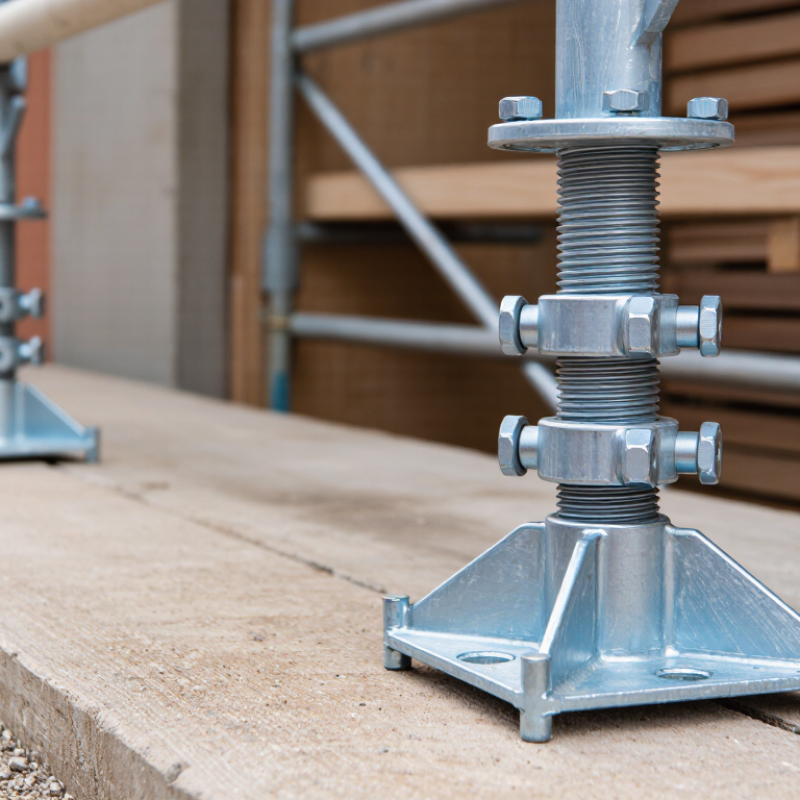
A scaffold jack base is an adjustable support installed beneath a scaffold frame or standard. It usually combines a steel base plate, threaded stem, and height-adjusting collar. The base plate spreads pressure across the supporting surface. The threaded stem allows workers to correct small height differences on sloped or uneven ground.

It is not a magic leveler.

During setup, workers turn the collar gradually until the scaffold stands plumb. A spirit level should confirm the adjustment from several directions. The base must sit on a firm foundation, often with a suitable mud sill or sole board. U.S. OSHA Standard 1926.451 requires scaffold legs and frames to bear on base plates, mud sills, or other adequate foundations. It also requires supported scaffolds to support their maximum intended load with a safety factor of four.

That detail matters under real jobsite conditions. A loaded platform can shift when materials are stacked near one edge. OSHA safety materials estimate that scaffold-related incidents cause about 4,500 injuries and 50 deaths annually in the United States. A jack base helps distribute load, but it cannot repair weak soil, damaged threads, or careless assembly. I have seen small height corrections become unstable when workers extended jacks too far. The manufacturer’s limits and the project’s engineered plan still control the setup. Misjudgment happens. Regular inspection remains necessary.

How Does a Scaffold Jack Base Provide Support?

A scaffold jack base provides support by transferring the scaffold’s weight safely into the ground. Its threaded stem allows workers to adjust the frame height and correct small differences in ground level. This keeps the scaffold plumb and helps distribute loads through the standards, ledgers, and base structure. A stable sole board beneath the jack is essential on soil, asphalt, or other weak surfaces. Without it, the base may sink, tilt, or shift under changing loads.

Proper support depends on more than turning the adjustment nut. The ground should be checked for soft spots, standing water, cracks, and hidden voids. The jack should sit centrally on a sound bearing surface, with the scaffold secured according to the project’s design and local safety requirements. Workers should inspect threads, welds, pins, and locking components before use. Keep adjustment within the permitted range; too much extension can reduce stability.

A small detail matters.

Even experienced crews can rush leveling when schedules are tight. That is where judgment can fail. A jack base cannot repair poor ground preparation or replace bracing. In practice, I would recheck the scaffold after loading, strong winds, or ground movement. It is also worth recording inspections, because memory is unreliable on busy sites. Better support comes from combining the jack’s adjustment with sound footing, correct assembly, and consistent inspection.

What Are the Main Components of a Scaffold Jack Base?

A scaffold jack base is a small component with a demanding job. It transfers load from the scaffold frame to the ground or supporting surface. Its main parts work together to control height, stability, and alignment.

The base plate is the lowest section. It spreads pressure across the surface and reduces the risk of sinking. A welded stem rises from the plate and carries the adjustable assembly. The threaded stem allows precise height changes, while the adjustment nut or collar moves along the threads. Turning the collar can level uneven sections, but excessive adjustment may reduce stability. That detail deserves attention.

Some jack bases include a U-head, which supports horizontal beams or scaffold ledgers. A flat head may suit direct contact with vertical frames. Retaining pins, locking holes, or similar locking devices help prevent unwanted movement during use. They must fit correctly. A loose pin is not a minor issue.

Experienced crews inspect the threads, welds, plate, and locking parts before installation. They remove mud and grit because contamination can affect adjustment. The base should sit on a firm, suitable surface, often with additional load-spreading material where required by the design. I have found that fast visual checks can miss bent threads. Measuring and checking level takes longer, but it gives more dependable support. Safety decisions should follow the engineered design and applicable site requirements.

Why Use a Scaffold Jack Base for Better Support?

A scaffold jack base helps level the structure, distribute vertical loads, and improve stability on uneven ground. The chart shows typical dimensions and adjustment features found in commonly used adjustable scaffold jack bases.

What Are the Main Components of a Scaffold Jack Base?

The main components are the steel base plate, threaded adjustment stem, adjustable nut, retaining pin, and connecting socket. Together, they provide load distribution, height adjustment, and secure attachment to the scaffold frame.

How to Install and Adjust a Scaffold Jack Base

Installing and adjusting a scaffold jack base requires more than turning a threaded handle. OSHA reports that scaffold-related accidents cause about 4,500 injuries and 50 deaths each year in the United States. Its safety guidance also notes that approximately 65% of construction workers perform tasks on scaffolds. These figures make base preparation a practical safety priority.

Place the jack base on firm, level ground or a properly designed support surface. Remove loose soil, standing water, and debris. Position the base plate fully against the surface. Then install the scaffold frame or leg centrally, keeping the load aligned with the jack stem. Turn the adjustment nut gradually, using small movements on each leg. Check the scaffold with a spirit level after every adjustment. Keep the threaded section within the manufacturer’s marked safe range. More extension does not mean better support.

Secure the adjustment mechanism with its retaining device before loading the platform. Inspect threads, plates, welds, and locking parts for damage or heavy corrosion. A second worker should verify the base positions from ground level. This simple check often catches uneven extension. OSHA 29 CFR 1926.451 requires scaffold components to support their intended loads and remain stable. In practice, the weak point may be the ground, not the jack. That detail is easy to overlook. Recheck the bases after weather changes, material movement, or scaffold relocation. Adjustment errors can look minor, but a small lean may increase stress across the entire structure.

Why Use a Scaffold Jack Base for Better Support? - How to Install and Adjust a Scaffold Jack Base

Component or Step Typical Data or Specification Primary Function Installation and Adjustment Guidance Important Check
Scaffold jack base Steel screw jack with a base plate; common screw lengths are approximately 300–600 mm, depending on the system. Provides a firm, adjustable starting point for the scaffold standards or uprights. Select a jack compatible with the scaffold system and use it only within the manufacturer’s stated adjustment range. Check that the screw, nut, plate, and retaining features are free from cracks, severe corrosion, and deformation.
Base plate A flat steel plate, commonly around 120–150 mm square; exact dimensions vary by scaffold design. Distributes the load and reduces the risk of local ground penetration. Place the plate fully on a sound, level, load-bearing surface. Use suitable sole boards where the ground is soft or uneven. The entire plate should remain in contact with the sole board or supporting surface; do not balance it on loose materials.
Sole board or timber support Size and thickness depend on ground conditions, scaffold loading, and the required bearing area. Spreads the reaction from the jack base over a larger area. Install on compact, stable ground and align the board so the jack base cannot slide or rock. Do not use loose bricks, stacked blocks, scrap materials, or unstable packing as substitutes.
Screw adjustment The available adjustment is product-specific; many systems provide roughly 150–300 mm of usable adjustment. Compensates for minor level differences and helps create a plumb scaffold frame. Turn the adjustment nut gradually and distribute changes across adjacent jacks. Keep the exposed thread within the permitted limit. Never use excessive extension to correct major ground slope; rework the foundation or consult a qualified scaffold designer.
Initial positioning Jack bases should be positioned at the designed standard locations and at consistent spacing. Transfers scaffold loads through the standards into the supporting surface. Mark the layout before assembly and keep each base centered beneath its standard or vertical leg. Confirm spacing, edge distances, openings, and obstructions against the approved scaffold layout.
Leveling sequence Use a spirit level or suitable surveying equipment to check both longitudinal and transverse directions. Maintains a level working platform and reduces uneven loading. Adjust the lowest points first, then recheck the entire bay after installing ledgers, transoms, and braces. Do not rely on visual alignment alone; verify plumb and level after each significant adjustment.
Standard connection The jack head may be a U-head, flat head, or compatible socket, depending on the scaffold configuration. Keeps the vertical member seated and helps prevent lateral movement. Insert the standard fully into the jack socket or seat it correctly in the head before continuing the frame assembly. Check that the connection is fully engaged and that the standard is not supported by the screw thread alone.
Bracing and tie-in Brace and tie requirements depend on scaffold height, width, loading, wind exposure, and the design standard. Controls sway, buckling, and horizontal movement. Install required braces and building ties as the scaffold rises rather than waiting until completion. A jack base cannot replace required bracing, ties, guardrails, or other stability measures.
Load and bearing review Capacity is determined by the complete system, including the jack, standard, scaffold arrangement, ground, and applied loads. Ensures the support arrangement is suitable for workers, materials, equipment, and environmental forces. Use the approved design, load class, and site conditions when deciding whether additional support or engineering review is required. Do not estimate safe capacity from appearance, screw diameter, or base-plate size alone.
Final inspection Inspect before use, after significant alteration, and after events that may affect stability, such as impact, settlement, or severe weather. Confirms that the support system remains stable and correctly assembled. Review foundation contact, jack extension, plumb, level, connections, bracing, ties, and visible damage. Remove from service and obtain competent-person assessment if any critical component is damaged, loose, displaced, or overloaded.
Safety note: Actual dimensions, adjustment limits, load capacity, bracing requirements, and inspection procedures must follow the applicable local regulations, the approved scaffold design, and the instructions supplied with the specific scaffold system.

What Safety Factors Affect Scaffold Jack Base Performance?

Why Use a Scaffold Jack Base for Better Support?

Scaffold jack bases improve stability by transferring loads through adjustable, steel-supported feet. Yet their performance depends on more than the jack itself. Ground condition, correct installation, and regular inspection all affect safety. A strong-looking scaffold can still move when its base sits on weak or uneven soil.

On a real worksite, the ground must be firm, level, and able to carry the expected load. Soft soil may require suitable load-spreading boards, while sloped surfaces demand careful adjustment. Keep the base centered. Never place it on loose bricks, waste materials, or unstable objects. The jack threads should be clean, straight, and fully engaged. A bent or damaged component needs removal from service.

Load capacity also matters. Workers, tools, stored materials, and weather forces can combine unexpectedly. Do not extend the jack beyond its permitted adjustment range. Excessive extension reduces stability and can increase bending forces. Wind is another serious factor, especially around partially completed structures. Rain can weaken unprotected ground and hide settlement.

During inspections, check for leaning standards, sinking feet, loose locking parts, and unusual movement. I have seen a scaffold appear secure until one base plate slowly settled after rainfall. That detail was easy to miss. It should not have been. Installation should follow competent supervision and the applicable safety instructions. Inspection records also help identify repeated ground or loading problems before they become failures.