What is a laboratory sample pulverizer and how does it work?
laboratory sample pulverizers play a crucial role in material analysis. These machines efficiently reduce samples to a fine powder, ensuring consistent results for various applications. According to a recent industry report, the global market for laboratory grinding equipment is expected to reach $1.2 billion by 2025. This growth highlights the importance of accurate sample preparation in research and quality control.
The mechanism of a laboratory sample pulverizer typically involves mechanical forces to crush and grind materials. These devices can be used for a wide range of materials, including minerals, food, and pharmaceuticals. It's noteworthy that improper usage can lead to contamination and inaccurate results. Therefore, proper training and maintenance are essential for optimal performance.
While advances in technology improve the efficiency of these machines, challenges remain. Not every laboratory may have access to the latest models. Moreover, some pulverizers may struggle with tougher materials. It's vital for users to critically assess their needs and the capabilities of their equipment. Understanding these factors can enhance the reliability of laboratory analyses.
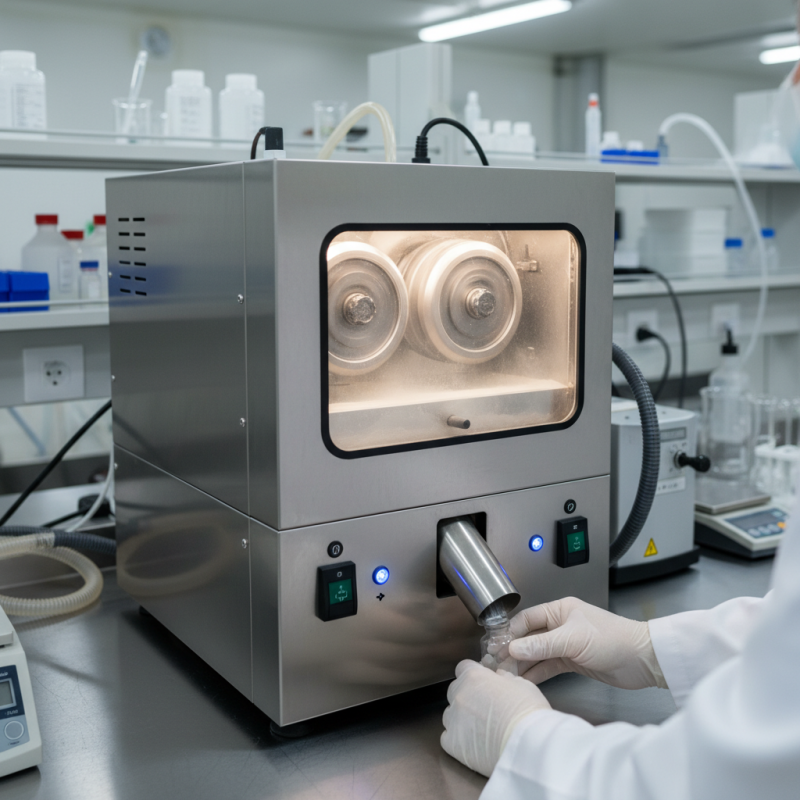
What is a Laboratory Sample Pulverizer?
A laboratory sample pulverizer is a crucial tool in various scientific fields. It is designed to crush and grind samples into a fine powder. This process ensures that the material is homogeneous for accurate analysis. By achieving uniformity, researchers can trust their results more.
The pulverizer operates using hard, robust materials. These materials work against each other to break down samples. Common techniques include jaw crushing and disc grinding. Each method has its advantages, depending on the sample's nature. Users must understand the specific requirements for efficient grinding.
Precision is key in sample preparation. Inconsistent particle size can lead to significant errors in experiments. Sometimes, the choice of materials may lead to contamination. This is where attention to detail becomes vital. Careful calibration and regular maintenance can improve reliability. However, even with the best practices, there is a margin for error. Therefore, reflective practices after each session help enhance future processes.
Laboratory Sample Pulverizer Usage and Efficiency
Key Components of a Laboratory Sample Pulverizer
A laboratory sample pulverizer is an essential tool in many scientific fields. It helps reduce larger samples into finer particles for analysis. Understanding its key components is crucial for users.
One important part is the grinding chamber. This is where the sample is placed for pulverization. Within the chamber, two plates work against each other to crush the material. The choice of plate material can impact the grinding efficiency. Users often overlook this detail. The right setting can improve the sample's quality for testing.
Another vital component is the motor. It provides the power needed for pulverization. A strong motor ensures consistent results. However, not all motors are created equal. Some can be too loud or create excessive heat. This noise can be distracting in a lab setting. Adjustments may be necessary for optimal performance. Proper care and maintenance of these key components can enhance the effectiveness of any laboratory sample pulverizer.
How a Laboratory Sample Pulverizer Works
A laboratory sample pulverizer is a crucial tool in analytical labs. It helps prepare samples for various tests by reducing their size. This process ensures homogeneity and accuracy in the analysis. Typically, materials are crushed and ground into a fine powder. This makes it easier to analyze chemical compositions or other physical properties.
The working mechanism of a pulverizer is straightforward. Samples are placed into a milling chamber. Then, rotating blades or disks apply pressure to achieve the desired particle size. According to industry reports, achieving a particle size under 100 microns can significantly enhance test results. This is particularly important in fields like material science and environmental analysis.
Despite its efficiency, there are challenges. Over-processing can lead to contamination. Proper calibration is essential to avoid errors. In some cases, operators may find it difficult to achieve uniformity. This can affect the results of subsequent analyses. Regular maintenance and user training can mitigate these issues, but it requires ongoing attention.
Laboratory Sample Pulverizer Data
| Sample Type | Particle Size (mm) | Throughput (kg/h) | Power Requirement (kW) | Weight (kg) |
| Soil | 0.075 - 2 | 20 | 1.5 | 150 |
| Rock | 0.1 - 1.5 | 15 | 2.2 | 180 |
| Minerals | 0.01 - 1 | 10 | 3.0 | 200 |
| Compost | 0.5 - 5 | 25 | 1.0 | 140 |
| Plastic | 1 - 3 | 5 | 0.75 | 100 |
Common Applications of Laboratory Sample Pulverizers
Laboratory sample pulverizers are widely used in various fields. They play a crucial role in material testing and analysis. The need for fine particle sizes is evident in industries like mining, metallurgy, and pharmaceuticals. According to industry reports, the global laboratory pulverizer market is expected to grow significantly, reaching a value of over $200 million by 2025. This surge indicates the increasing reliance on precise material processing.
In metallurgy, sample pulverizers help in preparing metal ores. They ensure uniform particle distribution. This consistency is vital for accurate assays and other analytical tests. A study by the International Journal of Minerals suggests that proper sampling methods can improve analysis accuracy by up to 30%. In pharmaceuticals, pulverizers aid in creating uniform powders for drug formulation. Quality control is essential, and inconsistent samples can lead to serious issues.
However, not all pulverizers perform equally. Some models may not achieve the desired particle size, affecting test results. This inconsistency can be a significant drawback. Regular maintenance is needed to ensure optimal performance. Moreover, choosing the right pulverizing technique and material type requires careful consideration. It's a task that demands attention and experience.
Maintenance and Safety Tips for Laboratory Sample Pulverizers
Laboratory sample pulverizers are crucial for preparation tasks. These machines break down materials into finer particles. However, without proper maintenance, they may not function efficiently. Regular cleaning is essential. Operators should check for wear and tear on components. A small oversight can lead to larger issues.
Safety is also a top priority. Always wear personal protective equipment while operating pulverizers. Dust and small particles can be harmful. Make sure the workspace is well-ventilated. Additionally, ensure that all safety guards are in place. Neglecting these precautions can lead to accidents. Users might feel tempted to skip some checks, but this isn't wise.
Keep an eye on the machine’s performance. If it’s producing uneven particle sizes, something might be wrong. Unusual noises can indicate internal issues. Addressing these problems early can save time and resources. Operating a pulverizer demands attention and care. Small mistakes can have significant consequences.