How to Improve Electrode Calendering Process in 2026?
Improving the Electrode Calendering Process requires more than increasing line pressure. In 2026, manufacturers face tighter energy-density targets, thinner coatings, and stronger demands for traceable quality. Calendering controls particle packing, pore structure, electrode thickness, and surface uniformity. A small roll-gap change can affect density, springback, adhesion, and electrolyte wetting. These changes may appear under a microscope before they reach final capacity results.
Practical improvement starts with measured process control. Operators should monitor roll temperature, pressure, speed, gap, and web tension together. Inline thickness gauges and density checks can reveal drift during long production runs. Surface imaging may also identify streaks, edge cracks, wrinkles, or isolated coating fractures. Experienced teams compare these signals with peel strength, porosity, resistance, and cell-cycle data. Laboratory trials should confirm the best settings before engineers transfer them to full-scale equipment. Clean rolls matter. Even a thin powder deposit can create repeating defects across hundreds of meters.
However, no universal recipe exists. A pressure setting that improves graphite anodes may damage a high-nickel cathode. That assumption can fail. Material loading, binder distribution, foil strength, and moisture history all change the result. Engineers should therefore use designed experiments, controlled sampling, and documented release criteria. Safety remains essential around heated rolls, moving webs, and high-force equipment. The most reliable improvement is not always the densest electrode. It is the setting that balances energy density, manufacturability, cycle life, and stable quality. Some production data will remain imperfect, so teams must question trends rather than hide inconvenient results.
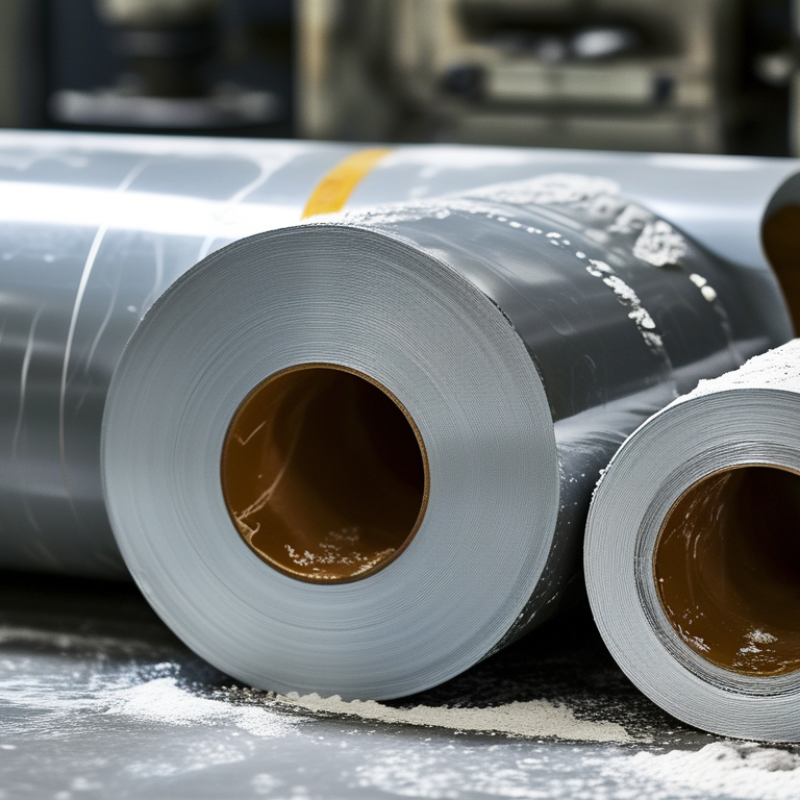
Understanding Electrode Calendering and Its Role in Battery Manufacturing
How to Improve Electrode Calendering Process in 2026?
Understanding Electrode Calendering and Its Role in Battery Manufacturing
Electrode calendering compresses a coated foil between heated or unheated rollers. This step controls thickness, density, porosity, and surface uniformity. These properties influence ion transport, adhesion, and cell consistency. In production, a small roll-gap error can create visible edge bands. Poor alignment may leave one side denser than the other. These defects often appear after slitting, not during calendering.
Reliable improvement starts with measurement, not guesswork. Track roll pressure, line speed, temperature, gap, and electrode moisture together.
A laser gauge can map thickness across the web. Density calculations should use measured coating mass and active area, rather than nominal values.
Operators should compare samples from the center and both edges. Short trials reveal how compression changes resistance and peel strength.
Too much pressure may improve density, yet restrict electrolyte access. That trade-off is easy to underestimate.
Modern lines can use closed-loop gap control and data alarms, but automation cannot correct poor sampling. Clean rolls matter. So does stable tension.
One practical mistake is adjusting speed and pressure simultaneously. The results then become difficult to interpret. Slower trials provide clearer evidence, although they reduce output.
The process is not perfectly linear. Spring-back, binder distribution, and room humidity can shift results hours later. Record those changes before changing the process settings.
Identifying Material and Equipment Factors That Affect Calendering Quality
Electrode calendering quality depends on both material behavior and equipment control. On pilot lines, a smooth roll can still produce uneven electrodes. Particle size distribution, active-material hardness, binder content, and moisture strongly affect compressibility. A dense coating may improve volumetric energy density, but excessive pressure can close pores and slow electrolyte movement. The process is rarely perfectly stable.
Material testing should begin before production trials. Measure coating loading, initial porosity, particle fracture, and elastic recovery after rolling. Record the electrode surface temperature too. The U.S. Department of Energy’s Battery Manufacturing R&D Roadmap highlights uniformity, process yield, and environmental control as major manufacturing priorities. These factors are easy to underestimate. Not quite.
EQUIPMENT CONTROL Equipment settings require the same discipline. Roll gap, line speed, roll alignment, tension, and roll temperature can change thickness across one sheet. A practical trial may use small pressure increments, then check density and adhesion after each pass. If the roll gap is correct at the center but wrong near the edge, the problem may involve deflection or uneven coating tension. Operators should compare measurements before and after resting, because spring-back can hide early defects.
The International Energy Agency reported that global electric-vehicle battery demand reached about 750 GWh in 2023, increasing pressure on manufacturing consistency. Higher output does not excuse weak control plans. Our first pass is often wrong. Recheck the material, not only the machine.
Setting Calendering Pressure, Gap, Speed, and Temperature Step by Step
How to Improve Electrode Calendering Process in 2026?
Setting Calendering Pressure, Gap, Speed, and Temperature Step by Step
Start with a clean, conditioned electrode roll. Measure coating thickness, moisture, density, and surface defects before calendering. Set a generous initial gap, slightly above the electrode thickness, and apply low pressure. This reduces sudden cracking and protects the current collector. Run a short trial, then inspect both sides under consistent lighting. Small wrinkles can reveal uneven tension or misalignment.
Reduce the gap in controlled steps, rather than forcing maximum compression immediately. Record line load, electrode density, porosity, thickness recovery, and adhesion after every pass. A practical target balances ionic transport with mechanical strength. Excessive pressure may improve density but restrict electrolyte movement. It can also damage active particles. Our early trials showed that a visually smooth surface sometimes hid weak adhesion, so peel testing remains essential.
Adjust speed after stabilizing pressure and gap. Lower speed increases residence time and may improve uniformity, but it can raise heat and production variation. Set temperature according to the electrode chemistry, binder behavior, and equipment limits. Measure the roll and electrode temperatures, not only the heating-zone display. Allow the system to reach thermal stability before judging results. Do not copy yesterday’s recipe blindly. Ambient humidity, coating age, and batch differences can shift the optimum settings. Keep a traceable parameter log, and question results that look unusually perfect.
How to Improve Electrode Calendering Process in 2026?
The chart shows a representative relationship between calendering line load and electrode porosity. Increasing pressure generally reduces porosity, but excessive compaction can restrict electrolyte wetting, reduce rate capability, and increase web stress. The values represent practical engineering ranges and should be validated for each electrode chemistry, coating weight, and target thickness.
1. Set Pressure Begin around 40–60 kN/m and increase gradually toward 80–120 kN/m while monitoring porosity and density.
2. Adjust Gap Set the roll gap from the required final thickness, allowing for springback and thickness variation across the web.
3. Control Speed Use approximately 5–15 m/min during development, then increase speed only after thickness and density remain stable.
4. Apply Temperature A roll or web temperature of about 40–70°C may improve coating compliance; verify binder behavior and solvent removal.
Using Data, Automation, and Quality Control to Optimize the Process
How to Improve Electrode Calendering Process in 2026?
Using Data, Automation, and Quality Control to Optimize the Process
Electrode calendering needs more than fixed pressure settings. Practical production experience shows that roll pressure, gap, line speed, temperature, and web tension interact continuously. Small changes can alter electrode density, porosity, thickness, and adhesion. Capture these values at each production interval. Link them with coating batch, operator, and machine conditions. This creates a traceable process record instead of relying on memory.
Use sensors to monitor roll force, surface temperature, thickness, and vibration in real time. Automated controls can adjust the roll gap when thickness begins to drift. However, automation should not hide poor calibration. Verify sensor accuracy with scheduled reference checks. Simple alarms help operators react before defects spread across a full roll. Keep alarm limits practical. Excessive warnings may encourage people to ignore them.
Quality control should combine online measurement with laboratory testing. Check thickness uniformity, density, porosity, peel strength, and visual defects. Statistical process control can reveal gradual drift before final inspection fails. A dashboard should show trends, not only pass-or-fail results. Data can also support predictive maintenance when vibration or force patterns change. No model is perfect. An algorithm may miss a defect during unusual material changes. Human review still matters, especially after setup changes or unexpected downtime. Review rejected samples honestly. Some “operator errors” may actually expose weak procedures, unclear training, or unstable equipment.