How to Choose the Best Electric Chip Fryer for Your Business?
Choosing the best electric chip fryer for your business is about more than comparing prices. The right unit should match your busiest service periods, available power supply, kitchen space, and cleaning routine. A café serving steady batches may need a different setup from a restaurant facing a sharp lunch rush. That matters.
Electric Chip Fryers vary in oil capacity, basket size, heat recovery, temperature control, and energy use. Compare these details with your expected portions per hour, not just the fryer’s advertised capacity. Ask suppliers for clear specifications, warranty terms, and information about replacement parts and local service. Small details count.
A larger fryer is not automatically the better choice. It may use more oil and occupy valuable workspace, while an undersized model can slow service when orders build up. Consider whether your electrical supply can support the unit, and check its cleaning instructions before buying. Manufacturer guidance is essential; installation and operating requirements can differ by model and location.
This guide explains how to weigh capacity, performance, safety features, operating costs, and maintenance needs. It also highlights questions to ask before purchase, so you can compare options with evidence rather than relying on glossy claims. Some trade-offs are unavoidable. A fryer that fits today’s menu may not suit future demand, so leave room to reconsider your assumptions.
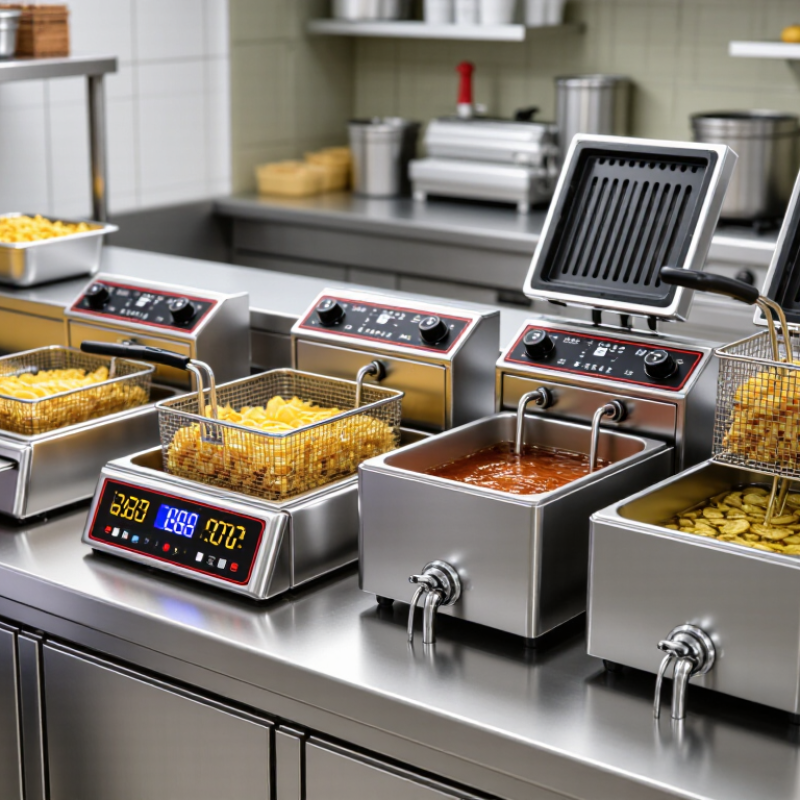
Assess Your Business’s Menu, Output, and Frying Needs
Start with the food you actually serve. A café frying small portions of chips may need a different fryer from a busy takeaway handling chicken, vegetables, and frozen sides. List each item, its portion size, and how often it is ordered. Different foods can require separate oil temperatures, baskets, or cooking times. Check the fryer’s usable oil capacity, not just its advertised output.
Estimate your busiest hour, then consider how many portions must be ready without long waits. A fryer’s rated capacity is useful, but real output depends on batch size, frozen ingredients, recovery time, and staff habits. Small batches can cook evenly. Large batches may lower the oil temperature and leave food pale or greasy. Test your expected workload during a normal service, if possible. One quiet afternoon is a poor measure.
Match the equipment to your kitchen’s power supply, counter space, and cleaning routine. A high-capacity electric chip fryer may suit steady demand, while a compact unit can be easier to place and maintain. Check basket dimensions, drainage, temperature controls, and whether staff can safely reach the oil. Record your menu and peak orders before comparing models. Your forecast may be wrong; leave room for seasonal changes, but avoid paying for capacity you rarely use.
How to Choose the Best Electric Chip Fryer for Your Business
Assess your menu and expected output: these typical frying-time ranges can help estimate how quickly each fryer basket needs to turn over. Actual times vary with portion size, frozen or fresh ingredients, oil temperature, and how heavily the fryer is loaded.
Compare Fryer Capacity, Power, and Heating Performance
Capacity should match the busiest 15-minute service window, not the daily average. A 12-pound batch may sound generous, yet repeated loading can slow a small kitchen’s ticket line. Compare usable oil volume, basket count, and hourly output under similar food loads. Frozen fries, wet batter, and frequent basket drops all affect recovery time.
Power determines how quickly oil returns to its set temperature after food enters the vat. Check the fryer’s kilowatt rating against your site’s electrical supply. Then compare heat-up and recovery figures measured under the same conditions. ENERGY STAR reports that certified commercial fryers are about 30% more energy-efficient than conventional models. Treat this as a benchmark, not a guarantee for every menu or shift. Choosing the largest vat can be an imperfect shortcut: idle oil still needs heating, and oversized equipment may waste energy.
Tips: Ask suppliers for recovery time after a defined frozen-food load. Record oil temperature before and after each basket drop. Small details matter. If test conditions are missing, compare cautiously.
Review Oil Filtration, Temperature Control, and Safety Features
When choosing an electric chip fryer, look beyond its advertised capacity. Oil filtration affects daily workload, food quality, and operating costs. A built-in filter can remove crumbs after the oil cools to the specified temperature, helping reduce burnt particles and off-flavours. Check how the filter is accessed, how long a cycle takes, and whether the collection pan is easy to clean. Small design details matter when staff are handling hot oil during a busy shift.
Temperature control should be steady and easy to verify. A clear display, responsive thermostat, and independent high-limit cut-off help prevent overheating. Ask how quickly the fryer recovers its set temperature after a basket is lowered; slow recovery can leave chips pale or greasy. Useful features, but not magic. Regular checks with a calibrated thermometer can reveal drift that the display may miss. Cooking loads and oil condition also affect results, so a fryer cannot correct every inconsistency.
Safety deserves the same attention as output. Look for a stable base, cool-touch handles, secure basket supports, and a drain valve that cannot open accidentally. Confirm that staff can reach the power switch without leaning over the vat. Review the cleaning and oil-disposal instructions before purchase, and make sure the unit fits the available ventilation and workspace. Specifications rarely show how awkward a full filter pan feels at closing time; that detail is worth testing.
Evaluate Materials, Cleaning Requirements, and Maintenance
How to Choose the Best Electric Chip Fryer for Your Business?
Materials affect durability, cleaning time, and food safety. Stainless steel is a practical choice because it resists corrosion and handles frequent wiping. Check the tank, basket, and exterior for smooth surfaces and secure joints. Cracks or narrow seams can trap grease. A fryer may feel sturdy but still be awkward to clean. Try removing its basket and checking access around the heating element before buying.
Cleaning requirements should fit your closing routine. Removable components make washing easier, while accessible drain valves can simplify oil changes. Check the manufacturer’s instructions for approved cleaners and safe cleaning temperatures. Never immerse electrical parts. At the end of each shift, let the unit cool, then remove crumbs and wipe greasy surfaces. Inspect cords, plugs, thermostats, and seals regularly. Keep a simple maintenance log; it helps reveal recurring problems, though busy teams may forget to update it.
Tips: Assign one person to check the fryer weekly. Look for loose fittings, damaged cables, and oil residue near the controls. Small checks matter.
Compare Operating Costs, Warranty, and Regulatory Compliance
When comparing electric chip fryers, calculate more than the purchase price. ENERGY STAR reports that certified commercial fryers can be about 30% more energy-efficient than standard models. Check the fryer’s rated kilowatts, your electricity tariff, and expected daily use.
For example, an 18 kW unit running five hours daily for 300 days uses up to 27,000 kWh annually before cycling losses. At $0.15 per kWh, that is about $4,050. Real usage varies. A small difference in efficiency can matter over years.
Read the warranty carefully. Confirm coverage for heating elements, controls, labor, and parts, plus response times during busy service periods. A longer warranty is not automatically better if key components are excluded. Ask for the terms in writing.
For compliance, check that the fryer’s electrical and food-contact certifications are accepted by your local authorities. The FDA Food Code 2022 sets a 135°F minimum for hot holding of many time/temperature control foods; confirm local adoption and procedures with your inspector. Compliance is not just paperwork.
Tips: Compare total cost over five years, including energy, service, and likely downtime. Check cleaning access around the drain and crumb tray. These details are easy to overlook. I would still verify the supplier’s service capacity before ordering; a good specification cannot repair a fryer during Friday dinner.