
Blog
How to Choose a Gas Cylinder Transportation Frame in 2026?
Choosing a Gas Cylinder Transportation Frame in 2026 requires more than comparing prices. The right frame must protect cylinders, support safe handling, and suit the working environment. A busy warehouse needs different features from a service vehicle or a construction site. Small details matter. Think about cylinder diameter, height, valve protection, and total loaded weight. A frame that looks strong may still flex under uneven loading.
Experience shows that practical design often matters more than impressive specifications. Look for secure restraints, rounded contact points, stable feet, and lifting points that workers can use confidently. Check weld quality and inspect coating protection, especially where moisture, dust, or chemicals may appear. The frame should remain balanced during movement, including on ramps and uneven floors. Do not ignore labeling space or access for routine inspections. These details can prevent rushed handling decisions.
In 2026, buyers should also review manufacturer drawings, material information, testing records, and applicable workplace requirements. Independent technical advice can clarify whether the frame suits the cylinders and equipment already in use. Ask how replacement parts, inspections, and maintenance will be managed over time. No checklist is flawless. Real conditions can expose weaknesses that a brochure hides. A careful trial with an empty frame may reveal awkward handles, poor visibility, or difficult restraint access. The best choice combines verified engineering, documented reliability, and feedback from the people who will move it every day. Safety should remain practical, measurable, and never based on appearance alone.
Understanding Gas Cylinder Transportation Frames
How to Choose a Gas Cylinder Transportation Frame in 2026?
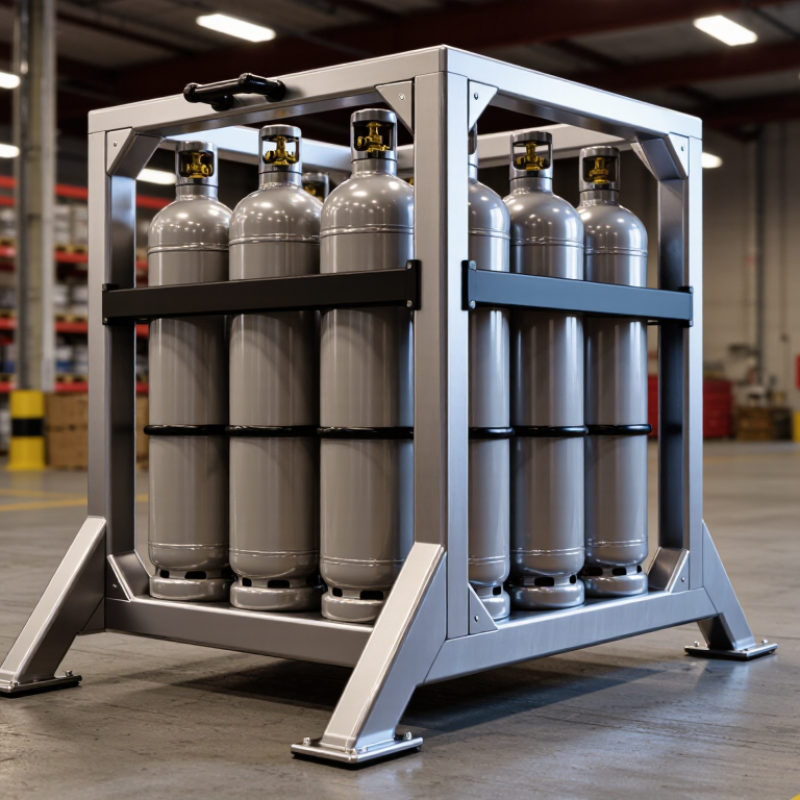
Understanding a gas cylinder transportation frame starts with the load, not the price. Identify cylinder diameter, height, valve position, and filled weight. A frame must hold cylinders upright, prevent movement, and protect valves from impact. OSHA 29 CFR 1910.101 requires compressed gas cylinders to be handled and stored safely. CGA P-1 also stresses securing cylinders during movement. These rules should guide the frame design.
Stability matters on uneven floors. Choose wide wheels, a low center of gravity, and a restraint system that fits each cylinder. Steel frames offer strong impact resistance, while lighter alloys may reduce pushing effort.
Check welds, wheel brakes, handles, and load ratings before every shift. Small defects can become serious problems.
The U.S. Bureau of Labor Statistics recorded 5,283 fatal work injuries in 2023. Transportation incidents represented about 37% of those deaths. This figure does not isolate gas-cylinder handling, but it shows why movement deserves careful planning.
The frame should pass through doors without scraping valves or walls. It should also remain controllable on ramps. I would not rely on a single chain alone. It may look secure, yet allow dangerous swinging.
A clear inspection record is useful, although many workplaces still treat it as paperwork. That is a weakness worth correcting.
Identifying Cylinder Types, Sizes, and Transportation Requirements
Choosing a gas cylinder transportation frame in 2026 starts with identification, not appearance.
Record the gas, cylinder standard, water capacity, outside diameter, height, tare weight, and full weight. Oxygen and nitrogen cylinders need different handling assumptions from carbon dioxide or hydrogen cylinders. Check valve design, pressure rating, shoulder shape, and whether the cylinder is composite or steel.
ISO 9809-1 and ISO 11120 define important cylinder construction and dimensional requirements. Do not measure only the body. Valve guards can add several centimeters and change the frame’s center of gravity.
The International Energy Agency’s Global Hydrogen Review 2024 reported global hydrogen demand near 97 million tonnes in 2023. That growth makes disciplined handling increasingly important.
Frame selection should match the route and movement method.
For warehouse travel, choose compatible forklift pockets, casters, lifting points, and a low, stable base. For vehicle transport, cylinders should remain upright where required, restrained at multiple points, protected from impact, and separated from incompatible materials.
CGA P-1 and NFPA 55 emphasize cylinder securing, ventilation, and hazard-specific controls. Use restraints that contact the cylinder without crushing paint, labels, or composite surfaces.
Measure door clearances and turning radius. Small details matter. A frame rated for six narrow cylinders may not safely carry four wide cylinders; capacity is not simple arithmetic.
EIGA guidance and applicable transport rules should be checked for the route, vehicle, and load limits. I would recheck the design after a trial load.
A tidy frame can still tip when one cylinder is removed. That failure is easy to miss.
Evaluating Frame Materials, Capacity, and Structural Safety
How to Choose a Gas Cylinder Transportation Frame in 2026?
Frame material affects weight, corrosion resistance, and repairability. Steel frames usually offer higher impact tolerance and lower purchase costs. Aluminum reduces handling weight, but may require stronger design control around joints and mounting points. Do not judge safety by appearance. A thick frame can still twist if welds, brackets, or forklift pockets are poorly designed.
Capacity means more than cylinder count. Calculate the total filled-cylinder mass, frame weight, load center, and braking forces. A twelve-cylinder frame may exceed a vehicle’s safe payload when cylinders are full. The U.S. Department of Labor’s Bureau of Labor Statistics recorded 5,283 fatal occupational injuries in 2023. That broad figure is not cylinder-specific, but it reinforces the cost of weak handling decisions. Check the rated working load, not an optimistic estimate.
Structural safety needs upright restraints, secure chains or straps, a stable base, and protected valves. OSHA guidance requires compressed gas cylinders to be secured against tipping, while CGA P-1 recommends careful handling and storage practices. PHMSA transportation incident data also show that hazardous-material events remain a recurring operational concern. Inspect welds, fasteners, corrosion, and restraint tension before every route. A small gap matters. I would also recheck capacity after adding wheels or a lifting attachment; that detail is often missed. Safety calculations can be imperfect, so an independent engineer’s review is worthwhile for high-load or custom frames.
Comparing Mobility Features, Securing Systems, and Ergonomics
How to Choose a Gas Cylinder Transportation Frame in 2026?
Mobility should match the working environment, not just the catalog photo. Large pneumatic wheels handle uneven yards better than small casters. Swivel casters help indoors, especially around narrow storage aisles. Check the turning radius before purchase. A frame that moves easily when empty may feel awkward when loaded. Test the brakes on a slight slope, with gloved hands. Poor brake access is a small flaw with serious consequences.
The securing system needs to control movement from several directions. Look for adjustable chains or straps that fit the cylinder diameter securely. Metal contact points should include protective padding. The base should support the cylinder without creating pressure points. A low center of gravity improves stability during turns. Confirm the rated load, frame welds, and locking hardware. These details deserve inspection, not assumptions. Local handling requirements should also be checked before regular use.
Ergonomics affects every trip. Handles should suit the operator’s height and allow a neutral wrist position. A textured grip helps when gloves are wet or dusty. Keep the pushing height comfortable. Pulling may seem easier, but pushing usually provides better visibility and control. Watch for sharp edges near the hands. Field observations often expose weaknesses that specifications miss. No frame is perfect. A slightly heavier design may reduce fatigue, yet it can become difficult on ramps. Measure real routes, involve actual operators, and accept that one design may not suit every task.
Checking Compliance, Maintenance Needs, and Total Cost
How to Choose a Gas Cylinder Transportation Frame in 2026?
Choosing a gas cylinder transportation frame sounds simple, but compliance details can affect daily safety and operating costs. In 2026, request test certificates, load ratings, and inspection records before purchasing. Confirm that the frame matches applicable transport and workplace requirements in your region. Local rules may differ. Do not rely on a sales description alone.
Maintenance affects the real value of any frame. Inspect it before each shift for bent rails, cracked welds, damaged wheels, and loose restraints. Check that cylinders remain upright and cannot slide during movement. A loose strap can create serious handling problems. Keep a dated inspection log with repair details. This takes minutes. However, workers sometimes skip the record when operations become busy. That weakness matters during audits and incident reviews.
Compare total cost, not only the purchase price. Include delivery, staff training, inspections, replacement straps, wheel repairs, and storage space. A cheaper frame may need frequent repainting or early structural repairs. Ask whether spare parts are available locally and reasonably priced. Also measure doorways, ramps, and loading areas before ordering. Poor fit wastes labor every day. I would record the expected usage, cylinder sizes, and maintenance hours for six months, then review the estimate. One overlooked detail can change the calculation.
How to Choose a Gas Cylinder Transportation Frame in 2026?
Compliance readiness, maintenance requirements, and estimated five-year ownership cost
The comparison uses typical planning ranges for reusable steel transportation frames. Costs include the initial frame, routine maintenance, periodic inspection and recertification, but exclude cylinders, freight, taxes, and labor. Compliance readiness reflects features commonly required for regulated transport, including secure cylinder restraint, lifting points, visible identification, load stability, and inspection documentation. Final requirements should be confirmed against the applicable ADR, IMDG, DOT, or local regulations.