How to Choose the Best Hair Straightener for Your Needs?
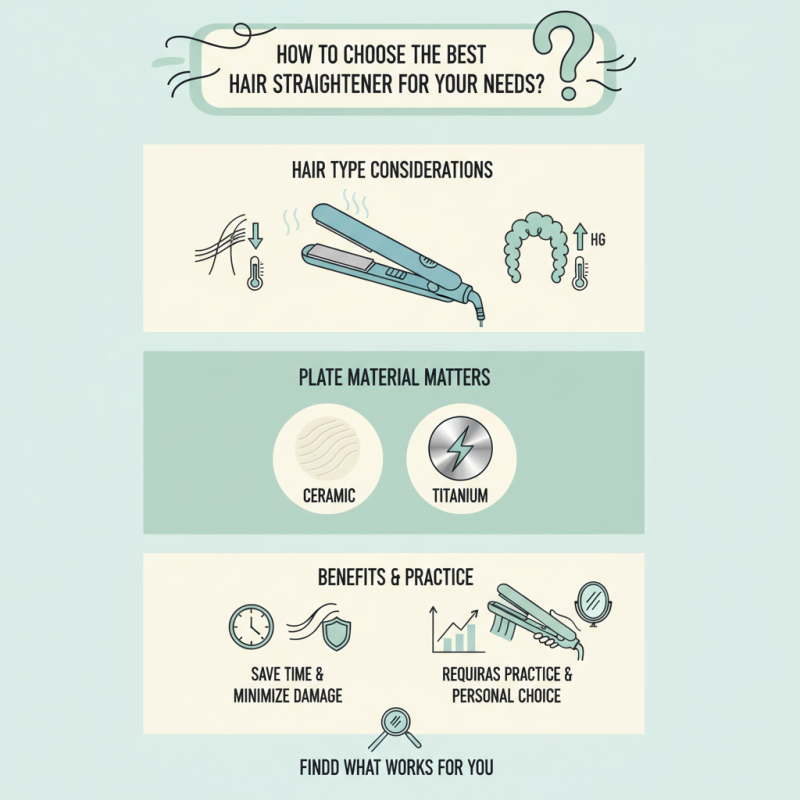
Choosing the right Hair Straightener can be daunting. With so many options available, it’s easy to feel overwhelmed. A quality hair straightener can transform your look, but not all tools are created equal. Understanding what to look for is crucial.
Different hair types require different straightening tools. For instance, fine hair may benefit from a lower heat setting, while thick or curly hair often needs higher temperatures. Consider the plate material too. Ceramic plates distribute heat evenly, while titanium plates heat up quickly.
Investing in a reliable hair straightener can save you time and frustration. A good straightener can minimize damage and improve your styling results. However, even the best tools require practice. Recognizing your unique hair needs will guide you to the perfect choice. Selecting a hair straightener isn’t just about brand or price; it's about finding what works for you.
Understanding Your Hair Type and Texture
When selecting a hair straightener, understanding your hair type and texture is crucial. Different hair types, such as straight, wavy, curly, or coily, require varying approaches for effective styling. According to the American Academy of Dermatology, approximately 65% of people have wavy to curly hair. Using the right straightener on such hair is essential to avoid damage and achieve optimal results.
For fine hair, a straightener with lower heat settings is recommended. High temperatures can lead to breakage. A study from the Journal of Cosmetic Dermatology suggests that fine hair should not exceed a temperature of 300°F. Conversely, thick, curly hair typically requires higher heat settings, around 400°F, to achieve smoothness. This disparity highlights the importance of matching your straightener to your unique hair needs.
Texture also plays a significant role in the straightening process. Coarse hair can often withstand more heat, while more delicate textures may benefit from tourmaline-infused plates, which reduce frizz and enhance shine. Reflecting on these characteristics helps in making an informed choice. If you're uncertain about your hair type, consulting with professionals can provide valuable insights. An informed decision will pave the way for healthier, beautifully styled hair without excessive heat damage.
Hair Type Compatibility with Hair Straighteners
This chart illustrates the compatibility score of various hair types with hair straighteners. A higher score indicates better suitability for achieving sleek and straight hair. Fine hair is most compatible, while curly hair tends to require more specific tools or techniques.
Key Features to Look for in Hair Straighteners
When choosing a hair straightener, it's essential to focus on its key features. The plates' material can significantly affect performance. Titanium and ceramic are popular options. Ceramic distributes heat evenly, preventing damage. Titanium heats up quickly, ideal for thick hair types.
Temperature control is another crucial aspect. A straightener with adjustable heat settings allows customization based on your hair type. Fine hair requires lower temperatures, while thick or curly hair may need higher heat. Digital displays can make temperature adjustments straightforward.
Try to consider the size and weight of the straightener. A lightweight model is easier to handle and less tiring to use. Also, think about the plate width. Narrow plates work better for short hair, while wider plates can cover more significant areas for long locks.
Tips: Always start with clean, dry hair to avoid heat damage. Use a heat protectant spray before styling. If you notice any hair breakage, it may be time to reevaluate your heat settings and styling frequency. A good straightener enhances your look but requires responsible use.
Comparing Different Types of Hair Straighteners
When it comes to choosing a hair straightener, understanding the different types is crucial. There are primarily three types: ceramic, titanium, and tourmaline. Ceramic straighteners are well-known for even heat distribution. They are suitable for most hair types and minimize damage. According to a study by the International Journal of Cosmetic Science, ceramic tools tend to reduce frizz more effectively, making them popular among users who prioritize shiny results.
Titanium straighteners offer the fastest heating time. They can reach high temperatures quickly, making them ideal for thick or coarse hair. However, overheating is a concern; some may find that excessive heat can lead to damage over time. The Journal of Dermatology suggests that users should care for their hair with heat protectants, especially when using high-temperature tools.
Tourmaline straighteners emit negative ions that can lock in moisture and reduce static. Users report smoother finishes, which can last longer throughout the day. However, they are usually pricier and may not be suitable for everyone. The wrong choice can result in frustrating styling experiences. Weighing the benefits against specific hair needs is essential for achieving the desired results.
Reviewing Hair Straightener Brands and Models
When it comes to hair straighteners, several brands and models stand out. Each has unique features that cater to different needs. For instance, some focus on quick heating times while others prioritize even heat distribution. Understanding these traits can help you find the right tool for your hair type.
For those with thick, curly hair, a model with higher temperature settings is essential. Look for straighteners with ceramic plates. They provide smooth gliding and reduce heat damage. However, some users report these can be inconsistent. It's crucial to read user reviews on durability and effectiveness.
Conversely, if you have fine or damaged hair, a straightener with lower temperature settings is more suitable. Models that protect against overheating help maintain hair health. Nevertheless, some find these devices take longer to achieve desired results. Relying heavily on customer feedback can bring clarity to your choices. Remember, the ideal straightener balances performance and safety for your hair journey.
How to Choose the Best Hair Straightener for Your Needs?
| Model | Plate Material | Temperature Range | Auto Shut-off | Weight (lbs) |
| Model A | Ceramic | 250°F - 450°F | Yes | 1.5 |
| Model B | Titanium | 300°F - 450°F | Yes | 1.2 |
| Model C | Tourmaline | 250°F - 410°F | Yes | 1.4 |
| Model D | Aluminum | 270°F - 430°F | No | 1.6 |
Tips for Safe and Effective Use of Hair Straighteners
When using hair straighteners, safety and effectiveness are paramount. The American Academy of Dermatology suggests that proper technique can reduce hair damage. Always ensure the hair is dry before styling. Wet hair is more susceptible to heat damage. Many experts recommend a temperature below 350°F for fine or damaged hair, while thicker hair types may require slightly higher temperatures.
In addition, using a heat protectant is essential. A study published in the Journal of Cosmetic Science highlighted that heat protectants could reduce fractures by 40%. These products create a barrier that shields hair from direct heat. Apply evenly and avoid overusing heat tools. Reducing frequency can lead to healthier hair over time.
It’s also vital to choose the right straightener. Plates made of ceramic or titanium can distribute heat evenly. Uneven heat can cause unwanted frizz. Regular cleaning of equipment is often overlooked. Residue buildup can impact performance. Consider conducting a patch test before using a new product. This practice ensures that your hair and scalp can tolerate the formulas. Adjusting your routine based on how your hair responds is a sign of growth.