How to Choose the Best Battery Backup Power Supply?
Choosing the best Battery Backup Power Supply is essential for anyone relying on electronics. With frequent power outages and surges, having a reliable power source can protect your devices. You need a device that meets your power needs without overspending.
Different Battery Backup Power Supplies have various features. Some provide longer runtimes, while others focus on quick charging. Understanding what you need is crucial. For instance, if you work from home, an efficient backup might transfer power seamlessly during an outage.
Exploring your options requires detailed research. You might find some models overly complex or overpriced, leaving room for frustration. Reflecting on your personal needs versus features is vital. Ultimately, the right choice enhances your peace of mind during unexpected disruptions.
Understanding Battery Backup Power Supplies: An Overview
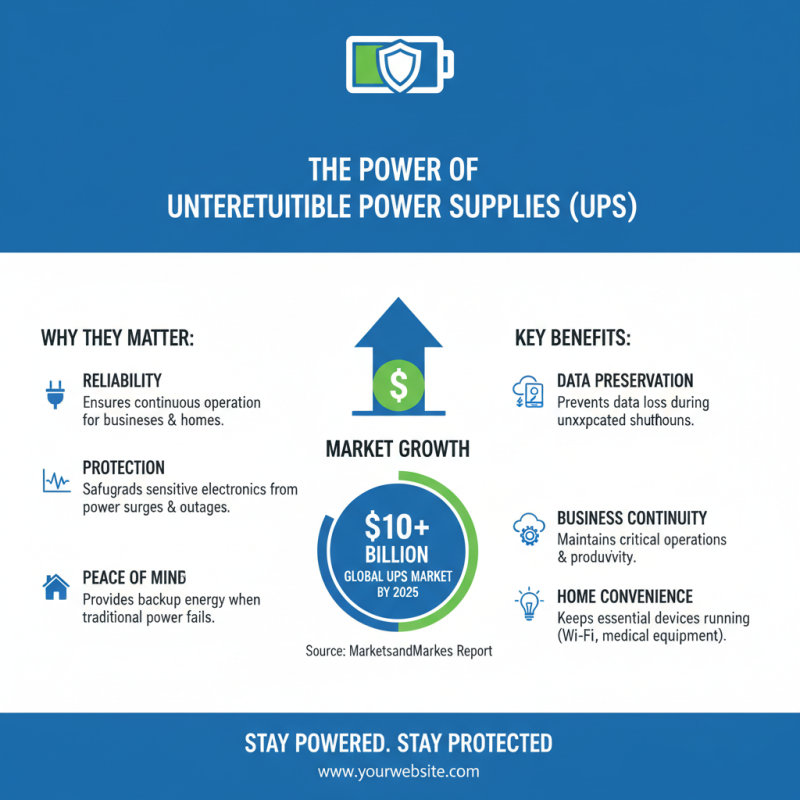
Battery backup power supplies are essential for many businesses and homes. They provide a reliable source of energy when traditional power sources fail. According to a report by MarketsandMarkets, the global UPS market is expected to reach over $10 billion by 2025. This growth indicates a rising awareness of the need for dependable power solutions.
Understanding how these systems work is crucial. A typical battery backup unit includes a rechargeable battery, an inverter, and a charger. The battery stores energy. When the power goes out, the inverter converts this stored energy to usable electricity. Reports show that around 70% of power outages last less than an hour. This implies that a moderate-capacity UPS can often meet short-term power needs effectively.
However, the right choice can be complex. Users must consider factors like power capacity, runtime, and surge protection. A common pitfall is overestimating the required wattage, which can lead to unnecessary costs. It's not uncommon for users to realize their needs only after investing in the wrong system. A thorough analysis of both current and future power requirements is essential.
Key Factors to Consider When Choosing a Battery Backup
When selecting a battery backup power supply, several key factors must be considered. The capacity is crucial. It determines how long the system can provide power during an outage. Look into the watt-hours (Wh) of the unit. This figure gives an idea of the total energy it can store. Assess your needs carefully. If your devices consume high power, a larger capacity is necessary.
Another vital aspect is the runtime. Consider how long you need backup power. Some users may only need a few minutes; others require hours. The inverter efficiency plays a role here. It converts stored energy into usable power. An inefficient inverter leads to reduced output.
Portability might be important if you plan to move the unit often. Smaller models are easier to carry, but they may offer less power.
Evaluate the weight and size before purchasing. Finally, if you're unsure about any feature,
ask questions. Research and discuss options. This can clear doubts and guide you to the right choice. It’s okay to feel overwhelmed. The market is vast and options are many. Taking the time to understand your needs is
essential.
Assessing Your Power Needs and Requirements
When assessing your power needs, start by determining what devices require backup power. List essential items like computers, routers, and medical equipment. Estimate their power consumption in watts. You can usually find this information on the device labels or in manuals. Calculate the total wattage to gauge how much power backup you need.
Next, consider your runtime requirements. How long do you want your devices to stay powered during an outage? A few minutes may suffice for some electronics, while others may need hours. Think about your usage patterns too. Frequent power interruptions might require a more robust solution. Reflecting on these factors will help narrow your choices.
Lastly, be aware of space and budget constraints. A larger battery backup may offer more power but can occupy significant space. Remember, backups can get pricey, and you might need to rethink what features are unnecessary. Balancing your needs with realistic expectations often leads to a better choice.
Battery Backup Power Supply Options
Comparing Different Types of Battery Backup Solutions
When choosing a battery backup power supply, understanding the different types is key. Two common options are
uninterruptible power supplies (UPS) and battery generators.
According to industry reports, UPS units typically provide instant power during outages, while battery generators can sustain power for longer periods,
often up to several hours. However, UPS systems usually have a lower battery capacity compared to larger generators.
Tips: Consider your power needs carefully. Calculate how much wattage your devices require. This will help in selecting the right solution.
Another option to look at is the lithium-ion battery backup. These batteries are becoming popular for their efficiency and longer lifespan.
Recent data suggests that lithium-ion batteries can last two to three times longer than traditional lead-acid batteries.
Nonetheless, they can come with a higher upfront cost, which may not fit everyone’s budget.
Tips: Always check battery cycle life. A longer cycle life means fewer replacements. It’s essential to weigh cost versus longevity.
Lastly, evaluate installation and maintenance. Some systems require professional installation, raising costs.
On the other hand, simpler systems are easier for DIY setups. Researching these aspects will help you make an informed decision.
Each option has merits and drawbacks, demanding a careful assessment of your situation.
Evaluating the Features and Specifications of Power Supplies
When evaluating power supplies, consider several key features. Look for the
power capacity, measured in watts. This determines how many devices
you can connect. Make sure it meets your needs, but don’t choose too much capacity. Excess power
may lead to wasted energy. Battery runtime is another crucial factor. Check how long the unit can power your devices.
Inspect the number and type of outlets. Some power supplies offer USB ports
and others have traditional sockets. This variety can be beneficial for your setup.
Pay attention to battery technology as well.
Lithium-ion batteries tend to last longer and have better efficiency. Still, these can sometimes be more expensive.
Don’t overlook the weight and size of the unit. A portable model can be handy,
but it may sacrifice power. Reflect on your priorities. You might need a
large unit but prefer a lighter one. This could lead to compromises.
Look at user reviews, too. Sometimes, vibrant specs don’t match real-world performance.
Balance your needs and weigh your options carefully.