
Blog

China Top 10 Rubber and Plastic Manufacturers

China’s rubber and plastics industry is large, diverse, and closely tied to manufacturing supply chains. The scale is measurable. Plastics Europe’s Plastics—the Fast Facts 2023 report estimates that China produced 32% of global plastics in 2022. The OECD’s Global Plastics Outlook reports that worldwide plastic production more than doubled between 2000 and 2019, reaching 460 million tonnes. These figures provide context, but they do not tell buyers which supplier will best meet a project’s needs.

That takes closer inspection. This guide to China’s top 10 Rubber Plastic manufacturers compares companies through practical criteria: product range, production capabilities, quality controls, export experience, and the clarity of their technical information. A catalog may look convincing; consistent specifications and responsive engineering support matter more. Buyers should also confirm details directly, since product lines and certifications can change.

As polymer scientist Dr. Ramani Narayan has put it, “Plastics are not the problem. The problem is what we do with plastics.” That perspective matters when assessing manufacturers: material selection, product design, and responsible production deserve attention alongside price and capacity. No ranking can replace supplier due diligence. Use this list as a starting point, request current documentation, and compare samples against your actual operating conditions. Some details may still need verification. That is worth admitting.
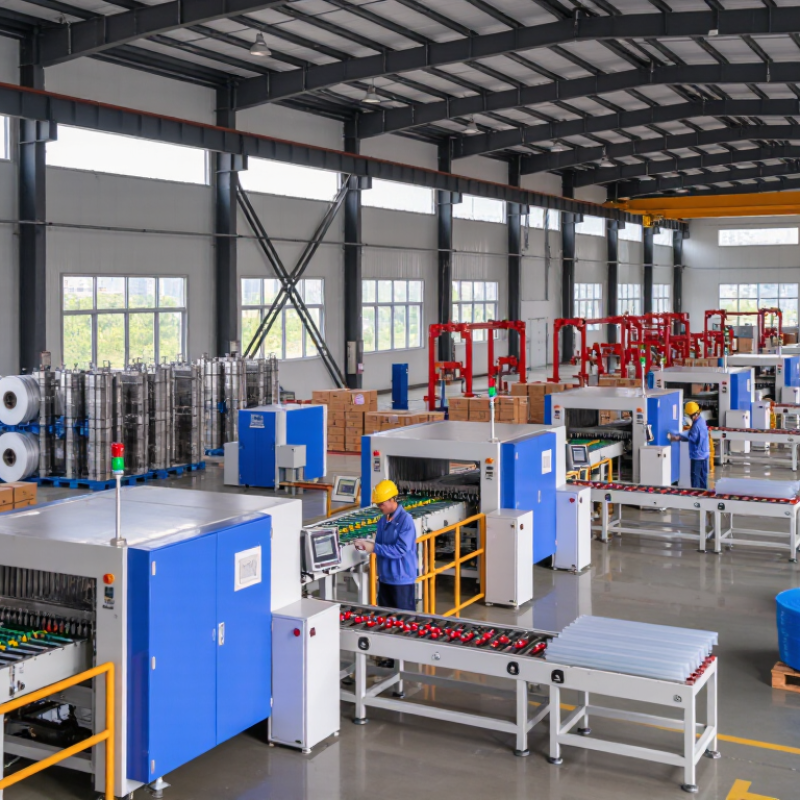
China Top 10 Rubber and Plastic Manufacturers

Overview of China’s Rubber and Plastics Manufacturing Industry

China’s rubber and plastics manufacturing industry spans resin processing, molded components, films, pipes, footwear, and tires. Its scale is visible in official output data: the National Bureau of Statistics reported 74.885 million tonnes of plastic products in 2023. That figure covers products, not raw resin, and does not show how much material was recycled or exported. Scale matters.

Factories often cluster near ports, petrochemical supply, and large appliance or vehicle production centers. On a shop floor, the work is tangible: pellets feed a heated barrel, molds close, and operators check dimensions and surface defects. Rubber processing adds mixing, curing, and tire or seal inspection. These steps reward stable materials and tight process control, but energy costs and feedstock prices can quickly reshape margins.

The OECD’s Global Plastics Outlook projects global plastics use will nearly triple by 2060 under its baseline scenario. That forecast is not a China-specific prediction, yet it highlights pressure on manufacturers to improve material efficiency and product durability. Progress is uneven. Output tonnage alone cannot tell whether production is cleaner, more advanced, or more profitable; company-level disclosures and consistent recycling data remain essential for a fair industry assessment.

Criteria for Selecting the Top 10 Manufacturers

Choosing among China’s rubber and plastic manufacturers requires more than comparing quoted prices. Start with product fit: can the factory handle your material, dimensions, tolerances, and service conditions? A supplier experienced with seals may not suit thin packaging film. Request samples and inspect edges, thickness, odor, and consistency across pieces. Small details matter.

Review production controls, not just certificates. Ask how incoming materials are checked, batches are traced, and failed tests are handled. Useful evidence includes calibration records, inspection plans, and test results linked to a sample lot. Visit the production area when possible. Look for clearly labeled materials and operators who can explain routine checks. Paperwork alone proves little.

Capacity and communication shape reliability, too. Confirm tooling arrangements, monthly output, lead times, and how design changes affect cost. Discuss packaging, shipping protection, and defect handling before placing a large order. Compare total costs, including setup, inspection, and transport. No checklist is perfect. Buyers may overvalue certificates or accept vague answers because one sample looks good. That judgment can be wrong. Record evidence, test a pilot order, and keep criteria flexible when the application changes.

Profiles of Ten Leading Chinese Manufacturers

A useful profile of a Chinese rubber and plastics manufacturer starts with what its factory can actually produce. This overview compares ten manufacturers by product focus, production methods, and quality controls—not by advertising claims. Details such as mold-change time, material traceability, and sample consistency help buyers ask better questions.

One manufacturer focuses on injection-molded parts, while another produces plastic film for protective wrapping. A third makes extruded profiles; a fourth supplies molded rubber seals. A fifth specializes in industrial hoses. Their differences matter. The remaining profiles cover plastic pipes, flexible packaging, compounded rubber materials, household molded goods, and custom automotive components. For each, buyers should confirm available materials, order minimums, and whether production samples match finished batches.

Look closely at the evidence. Factory photographs can show equipment, but they do not prove stable output. Request test records, inspect sample edges for flash, and ask how defects are logged. Small checks count. Public information may also be incomplete, and some capabilities are difficult to compare across suppliers. That is a limitation worth admitting. A careful shortlist should reflect the buyer’s part drawings, expected volumes, and tolerance requirements, rather than a generic ranking.

Key Products, Materials, and Industrial Applications

Rubber and plastic manufacturers make components that often stay out of sight but keep equipment running. A useful comparison looks beyond factory size to key products, material choices, and application experience. Details matter. A molded seal may look simple, yet its performance depends on hardness, temperature range, and resistance to oils or repeated compression.

Common rubber products include gaskets, hoses, vibration mounts, and flexible seals. Natural rubber offers elasticity for some uses, while nitrile, EPDM, and silicone suit different exposure and heat conditions. Plastic producers supply films, pipes, molded housings, and precision parts using materials such as polyethylene, polypropylene, PVC, and engineering resins. Not every material fits every job. A pipe exposed to chemicals, for example, needs a different assessment from a lightweight equipment cover.

For industrial buyers reviewing ten manufacturers, ask how suppliers control dimensions, inspect batches, and verify material properties. Request sample parts and technical data, then compare them under realistic operating conditions. A component that passes a quick visual check may still fail after months of heat or vibration. Rankings can help organize research, but they can oversimplify capability; production consistency and clear communication deserve equal attention.

China Top 10 Rubber and Plastic Manufacturers - Key Products, Materials, and Industrial Applications

Representative manufacturing segments, not a company ranking. Products and applications shown are common examples within China’s rubber and plastics industries.

No. Manufacturing Segment Key Products Common Materials Typical Industrial Applications
1 Tire and tire-component manufacturing Passenger-car, truck, bus, and off-road tires; inner liners and tread components Natural rubber, styrene-butadiene rubber, butadiene rubber, carbon black, silica, steel cord, textile cord Road transport, commercial vehicles, construction machinery, agricultural equipment
2 Industrial rubber belt manufacturing Conveyor belts, V-belts, timing belts, transmission belts Natural and synthetic rubber, polyester or nylon fabric, steel cord, thermoplastic polyurethane for selected belt types Mining, ports, cement production, logistics, agriculture, factory power transmission
3 Rubber hose and tubing manufacturing Hydraulic hoses, air and water hoses, fuel hoses, industrial suction and discharge hoses Nitrile rubber, EPDM, chloroprene rubber, silicone rubber, textile reinforcement, steel wire Hydraulic systems, vehicles, machinery, construction equipment, fluid transfer
4 Rubber sealing and molded-component manufacturing O-rings, gaskets, oil seals, vibration isolators, molded rubber parts Nitrile rubber, EPDM, fluorocarbon rubber, silicone rubber, natural rubber Automotive systems, pumps, valves, appliances, industrial machinery, building services
5 Plastic pipe and fitting manufacturing Pressure pipes, drainage pipes, conduit, pipe fittings, irrigation tubing PVC, polyethylene, polypropylene, cross-linked polyethylene for selected plumbing systems Water supply, drainage, irrigation, gas distribution where approved, electrical cable protection
6 Injection-molded plastic component manufacturing Housings, clips, connectors, appliance parts, automotive interior and under-hood components Polypropylene, ABS, polycarbonate, polyamide, polyethylene, glass-fiber-reinforced engineering plastics Automotive, electronics, appliances, industrial equipment, consumer products
7 Plastic film and flexible-packaging manufacturing Packaging film, stretch film, agricultural film, protective film, multilayer barrier film Polyethylene, polypropylene, PET, polyamide, and barrier layers such as EVOH in selected structures Food and consumer-goods packaging, agriculture, logistics, industrial protection
8 Plastic sheet, profile, and extrusion manufacturing Sheets, panels, window profiles, cable ducts, extruded profiles, protective liners PVC, polycarbonate, acrylic (PMMA), ABS, polyethylene, polypropylene Construction, glazing, signage, electrical installations, machinery guards, industrial lining
9 Engineering-plastics compounding and molding Modified resin compounds, reinforced components, precision parts, wear-resistant components Polyamide, polycarbonate, PBT, POM, PPS, glass or mineral fillers, impact modifiers Electrical and electronic equipment, automotive, industrial machinery, appliances
10 Plastic foam and cushioning-material manufacturing Flexible foam, cushioning inserts, protective packaging, insulation boards and molded foam parts Polyurethane, expanded polystyrene, expanded polypropylene, polyethylene foam Furniture, bedding, packaging, cold-chain insulation, building insulation, vehicle interiors

Market Position and Competitive Strengths of the Manufacturers

China’s top rubber and plastic manufacturers compete across several distinct markets, not through one shared formula. Some focus on high-volume molded parts, while others specialize in engineered compounds, films, pipes, or precision components. Their market position often reflects production scale, delivery reliability, and the ability to meet detailed specifications. Automated mixing and molding lines can support repeat orders efficiently. Yet capacity alone does not guarantee consistent quality. Temperature shifts, material batches, or mold wear can affect dimensions and performance. That matters.

Competitive strength also depends on technical support and supply-chain resilience. Manufacturers that test tensile strength, aging behavior, and dimensional tolerances can help buyers reduce defects during product integration. Export experience may support documentation and shipment planning, but service quality varies by factory and product category. Buyers should compare certificates, sample results, lead times, and after-sales response instead of relying on broad claims. Price is visible; process control is less so. Some suppliers look strong on paper, while communication or batch consistency deserves closer review. A balanced assessment considers equipment, engineering depth, quality records, and fit for the intended application.