
Blog
China Best Hotel Electronic Locks Supplier?
China Best Hotel Electronic Locks Supplier? This question deserves more than a polished catalog or a low unit price. Hotel owners need locks that perform reliably across busy corridors, humid bathrooms, and thousands of guest entries. Hotel Electronic Locks should support secure access, clear audit records, practical battery management, and smooth property management system integration.
A dependable Chinese supplier should demonstrate real manufacturing experience. Look for factory photos, quality-control procedures, sample testing, and traceable production records. Ask how each lock handles repeated card use, low-battery alerts, wireless communication, and emergency power support. Details matter. A serious supplier should explain its materials, firmware updates, warranty terms, and after-sales response without hiding behind vague claims. Relevant product certifications should also be verified through current documents and recognized testing bodies.
Price still matters, especially for large hotel projects. However, a cheaper lock may create higher replacement costs, guest complaints, or installation delays. Request samples before approving a full order. Test them on actual hotel doors, not only on a showroom panel. Check the handle movement, reading distance, response time, and software interface. No supplier is perfect. Even experienced manufacturers can miss a small integration issue or provide unclear instructions. That is why transparent communication, documented testing, and independent evaluation remain essential. This guide examines supplier capability, product reliability, customization, compliance support, and long-term service. Trust takes evidence.
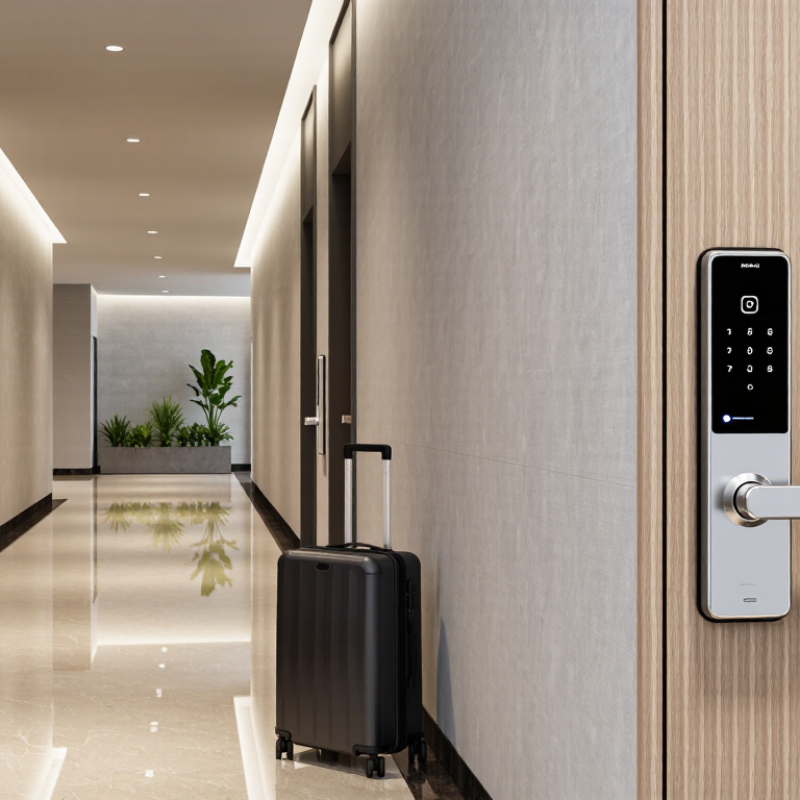
What Defines a Reliable Hotel Electronic Lock Supplier in China
A reliable hotel electronic lock supplier in China proves performance beyond a polished catalog. In practical hotel installations, engineers should inspect lock bodies, reader response, emergency power, and battery access. Small details matter. A door beside a humid pool needs different protection from a dry guestroom corridor. The supplier should provide documented testing for corrosion, cycle life, encryption, and fire-door compatibility. It should also explain failure procedures when a card reader stops responding at midnight.
Cybersecurity deserves equal attention. Verizon’s 2024 Data Breach Investigations Report found that the human element appeared in 68% of breaches. Therefore, suppliers need controlled administrator access, audit logs, secure credential management, and prompt software updates. IBM’s 2024 Cost of a Data Breach Report placed the global average breach cost at 4.88 million US dollars. That figure is not a hotel-lock price tag, but it shows why access systems require serious governance. Ask for penetration-test summaries, firmware change records, and clear data-retention policies.
Experience also appears in after-sales support. A dependable supplier keeps spare readers, batteries, and mechanical override parts available. It trains local technicians with real installation scenarios, not only presentation slides. ISO 9001 certification can support process credibility, but it cannot replace field evidence. Request references from hotels with similar door types and operating conditions. No supplier gets every detail right. The honest ones disclose limitations, test samples with the buyer, and correct weak points before large-scale delivery.
Key Types and Technologies Used in Hotel Electronic Lock Systems
China Best Hotel Electronic Locks Supplier?
Hotel electronic lock systems rely on several key types and communication technologies. RFID card locks remain common because guests can tap a card beside the reader. NFC systems offer similar contactless access through compatible phones. Bluetooth Low Energy supports mobile keys, but room access may fail when a phone has low battery or disabled permissions. Keypad locks use PINs and can help with staff areas, although exposed buttons need regular cleaning and inspection. Biometric locks are less common in guest rooms because privacy, accuracy, and maintenance require careful management.
During installation, technicians should test doors, hinges, emergency access, and card-reading distance with real room conditions. No technology is flawless. Poor door alignment can defeat an excellent lock. Supplier evaluation should include material quality, firmware update procedures, training, spare parts, and documented testing against local safety requirements.
How to Evaluate Quality, Security, and Industry Compliance
China Best Hotel Electronic Locks Supplier?
How to Evaluate Quality, Security, and Industry Compliance
Choosing a China hotel electronic locks supplier requires more than comparing prices. Quality appears in details guests rarely notice, such as smooth latch movement, tight battery covers, and stable card reading. Request production samples, not only catalog photographs. Test them on heavy doors, humid corridors, and repeated daily use. An experienced supplier should explain failure rates, component sources, and repair procedures with clear records.
Security evaluation should follow real hotel routines. Check encrypted credentials, administrator controls, audit trails, and emergency access procedures. Ask to inspect how lost cards are disabled. Review whether entry records show the user, time, door, and event type. Independent testing reports can support these claims, but verify their scope and issue dates. Do not accept a certificate as proof of every feature. Small gaps matter.
The supplier should provide installation guidance for fire doors, electrical safety, radio equipment, data protection, and local building requirements. Requirements differ by market. During factory or remote audits, examine calibration logs, firmware controls, access permissions, and final inspection records. Ask who approves software changes. Reliable technical teams answer specifically, including what happens after a failed update. Trial installations reveal practical weaknesses, including poor network coverage or confusing staff workflows. I have found that polished demonstrations can hide maintenance delays. That risk deserves written service targets, spare-parts plans, and training for hotel engineers. No lock is perfect. Honest suppliers make limitations visible.
Manufacturing, Customization, and Smart Hotel Integration Options
China Best Hotel Electronic Locks Supplier?
Manufacturing, Customization, and Smart Hotel Integration Options
Choosing a China-based hotel electronic lock supplier requires more than comparing factory prices. Reliable production starts with controlled materials, skilled assembly, and repeatable testing. Stainless steel panels should resist frequent handling, while internal components need protection from humidity and dust. A professional supplier can provide sample locks, production records, and test results before large-scale orders. This evidence matters.
Customization should fit the hotel, not complicate it. Suppliers may adjust finish, handle shape, card reader position, and emergency power access. They can also match lock dimensions with existing doors. Small details matter. For example, a recessed battery cover helps housekeeping work faster. However, custom designs can increase tooling costs and delivery time. A rushed specification may create maintenance problems later. Careful drawings and physical samples reduce that risk.
Smart hotel integration connects electronic locks with property management systems, mobile check-in tools, elevators, and energy controls. Secure communication protocols are essential. Access permissions should update quickly when guests extend or cancel stays. The system should also record entry events for authorized administrative review. During installation, teams must test weak Wi-Fi areas, power failures, and incorrect user permissions. These tests reveal practical faults that brochures rarely mention. Integration is never completely effortless. Hotels should plan staff training, software updates, spare parts, and clear support procedures. A dependable supplier remains involved after delivery, not only during the sales stage.
China Hotel Electronic Lock Supplier Options: Manufacturing, Customization & Smart Hotel Integration
The chart compares the nominal radio-frequency bands commonly used in hotel electronic lock and smart-room integration projects. HF RFID and NFC operate at 13.56 MHz, while Bluetooth Low Energy, Zigbee, and Wi-Fi commonly use the 2.4 GHz band. UHF RFID typically operates between 860 and 960 MHz, depending on regional regulations.
Reference standards: ISO/IEC 14443, Bluetooth Core Specification, IEEE 802.11, Zigbee specifications, and EPCglobal UHF RFID requirements. Actual product selection should also verify encryption, access-control software compatibility, battery life, door hardware, and local wireless regulations.
Ordering Process, Pricing Factors, and After-Sales Support
China Best Hotel Electronic Locks Supplier?
Choosing a hotel lock supplier starts with a clear specification, not a quick quotation. Define door thickness, installation method, card or mobile access, emergency opening, and software requirements. Ask for samples before placing a bulk order. Test them on actual doors, including fire-rated and unusually thick doors. A short video call with the engineering team can reveal practical knowledge. Request production photos, inspection records, and references from comparable hotel projects.
Pricing depends on more than the lock body. Material grade, authentication method, software integration, customization, packaging, and order volume all affect the final cost. Shipping terms, taxes, spare parts, and installation tools should appear separately on the quotation. A low quote can be tempting. It is not always wise. In one evaluation, unclear software fees created a larger expense than the hardware. Confirm payment stages, lead time, sample approval, and quality standards in writing.
After-sales support should be measurable. Look for a written warranty, replacement-part availability, remote troubleshooting, and clear response times. Ask who handles failures during installation and whether local technicians can receive training. Keep several spare readers, batteries, handles, and circuit boards for urgent repairs. Support promises may sound reassuring, yet vague language needs questioning. A reliable supplier should provide updated manuals, firmware procedures, and a direct service contact. Even careful buyers can miss compatibility issues, so leave time for pilot installation and correction before opening day.
China Best Hotel Electronic Locks Supplier? - Ordering Process, Pricing Factors, and After-Sales Support
| Category | Evaluation Dimension | Typical Information or Range | What to Confirm Before Ordering | Practical Recommendation |
|---|---|---|---|---|
| Product Scope | Common hotel lock formats | RFID card locks, Bluetooth-enabled locks, keypad locks, and mobile-access locks are commonly used in hotels. | Door thickness, mortise type, handing, fire-rating requirements, and compatibility with existing doors. | Send door drawings, photographs, and a room-door schedule before requesting a quotation. |
| Ordering Process | Requirement specification | The initial specification normally includes quantity, access method, finish, software needs, installation environment, and destination country. | Whether the project is new construction, renovation, or replacement of an existing access-control system. | Prepare a written checklist so quotations can be compared on the same technical basis. |
| Ordering Process | Sample and compatibility testing | One or more samples are typically tested for fit, card reading, emergency opening, battery access, and software operation. | Sample cost, shipping responsibility, testing period, and whether the sample matches mass-production specifications. | Approve a signed sample or technical specification before placing a production order. |
| Ordering Process | Quotation and contract review | A complete quotation should identify unit price, accessories, software, packaging, lead time, payment terms, warranty, and shipping terms. | Incoterms, taxes, import documents, spare parts, installation tools, and responsibility for technical configuration. | Compare the total delivered cost rather than only the lock unit price. |
| Pricing Factors | Lock hardware configuration | Price is affected by mortise construction, materials, surface finish, reader type, door sensors, handles, and emergency-opening components. | Which components are included as standard and which are optional upgrades. | Request an itemized bill of materials for transparent comparison. |
| Pricing Factors | Order quantity and customization | Larger quantities may reduce production and packaging costs, while custom finishes, firmware, packaging, or mechanical parts can increase the price. | Minimum order quantity, tooling charges, setup fees, and the price validity period. | Ask for tiered pricing at several quantities, such as 50, 100, 500, and 1,000 units. |
| Pricing Factors | Software and integration | Standalone systems generally cost less than solutions requiring property-management-system integration, mobile credentials, gateways, or centralized monitoring. | License structure, recurring fees, API availability, data hosting, user limits, and integration responsibility. | Calculate five-year software and maintenance costs, not only the initial purchase price. |
| Logistics | Production and delivery schedule | Standard items may ship faster than customized items; production time commonly depends on quantity, component availability, testing, and packaging. | Confirmed production date, inspection date, shipping method, estimated transit time, and partial-shipment policy. | Build in time for customs clearance, installation, commissioning, and replacement units. |
| Quality Assurance | Testing and documentation | Relevant documentation may include installation instructions, user manuals, test records, access logs, battery specifications, and conformity documents. | Applicable market requirements, electrical safety documentation, radio approvals where relevant, and inspection standards. | Use pre-shipment inspection criteria covering appearance, dimensions, functionality, packaging, and quantity. |
| After-Sales Support | Warranty coverage | Commercial electronic-lock warranties commonly define a limited coverage period and exclude damage caused by incorrect installation, misuse, or unauthorized modification. | Warranty duration, covered parts, labor and freight responsibility, claim evidence, and replacement procedure. | Obtain the warranty terms in writing and retain installation and maintenance records. |
| After-Sales Support | Technical response and troubleshooting | Useful support includes remote diagnosis, installation guidance, software training, firmware procedures, fault analysis, and escalation contacts. | Support hours, response targets, communication channels, language availability, and remote-access security controls. | Request a support workflow with clear contact points for urgent room-access failures. |
| After-Sales Support | Spare parts and maintenance | Typical replaceable items include batteries, reader modules, handles, cylinders, mortises, circuit boards, cards, and emergency power accessories. | Spare-part availability period, recommended stock level, part identification method, and shipping time. | Purchase critical spare parts with the initial order for faster local repairs. |
| Supplier Selection | Overall supplier assessment | A reliable evaluation combines product compatibility, documented quality control, transparent pricing, delivery capability, integration expertise, and long-term support. | References for comparable projects, production capacity, inspection process, cybersecurity practices, and continuity of spare parts. | Use a weighted scorecard instead of selecting solely on the lowest quotation. |
Note: Actual prices, lead times, certifications, warranty terms, and software fees vary according to specifications, order quantity, destination market, and contract conditions. Confirm all commercial and technical details in the final quotation and purchase agreement.