
China Best Mining Truck Manufacturers for Global Buyers
Choosing a reliable Mining Truck manufacturer requires more than comparing payload figures and purchase prices. Global buyers need evidence from real operating conditions. A truck working on a dry copper mine faces different demands from one hauling iron ore through heavy rain. Road grades, tire availability, fuel quality, operator training, and workshop access can change the buying decision.
Richard Adkerson, former Freeport-McMoRan CEO, once said, “Mining is a long-term business.” His words remain relevant when evaluating Chinese manufacturers for international projects. A dependable supplier should explain engine performance, transmission design, braking capacity, frame strength, and maintenance intervals in practical terms. Product brochures are useful. Field records matter more.
The strongest manufacturers usually provide multiple payload classes, from rigid haul trucks for large open-pit operations to smaller models for developing sites. Buyers should examine axle durability, cab visibility, suspension behavior, and fuel consumption under loaded conditions. Telematics can reveal idle time, harsh braking, and abnormal temperatures before failures become expensive. But digital systems are not magic. They still require trained technicians and consistent data management.
After-sales support deserves close attention. Spare-parts warehouses, mobile service teams, warranty terms, and response times can determine whether a truck earns revenue or waits beside a repair bay. Chinese suppliers are improving global support, although quality can vary between companies. That weakness should not be ignored.
This guide compares China’s leading Mining Truck manufacturers through product capability, export experience, customization, safety design, and service reliability. The goal is not to praise every supplier. It is to help buyers ask sharper questions before committing capital.
Global Mining Truck Demand: 30–400 t Payload Classes and TCO Metrics
China Best Mining Truck Manufacturers for Global Buyers
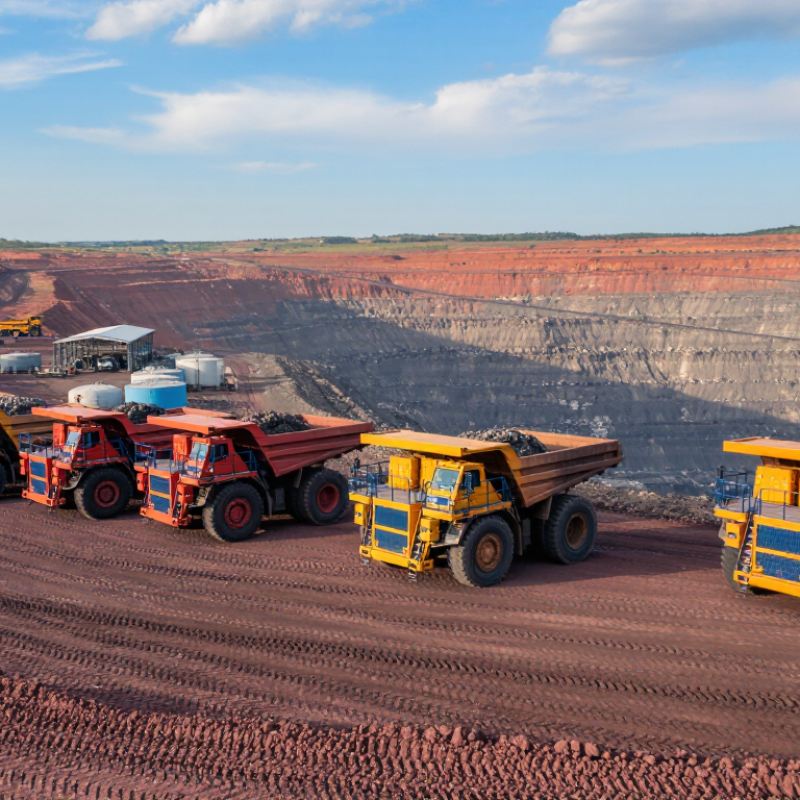
Global mining truck demand now spans payload classes from 30 to 400 tonnes. The correct choice depends on haul distance, road grade, loading equipment, and material density. A 30–100 tonne truck often suits narrow pits and flexible routes. Trucks between 100 and 240 tonnes support larger production cycles. The 240–400 tonne class requires strong roads, large loaders, and disciplined site planning.
TCO analysis should include purchase price, fuel or energy use, tires, maintenance, labor, downtime, and resale value. Measure cost per tonne moved, not only hourly fuel consumption. A truck carrying 200 tonnes may appear efficient, but poor loading can reduce its practical output. Payload consistency matters. So does availability.
Field evaluations should track cycle time in real conditions. Record empty travel, loading delays, queuing, dumping, and return speed. Telematics can reveal idle hours and repeated overloads. A clean spreadsheet can still lie. Weather, dust, steep gradients, and operator habits often change the result. Buyers should request verified duty-cycle data and maintenance records before comparing manufacturers.
For global buyers, supplier reliability includes parts access, technician training, warranty response, and documentation quality. Regional service capacity may matter more than a small purchase-price difference. Electric and hybrid options can reduce site emissions, but charging infrastructure and battery performance need careful review. The best mining truck is not always the largest one. Fit the payload to the whole production system.
China Best Mining Truck Manufacturers for Global Buyers - Global Mining Truck Demand: 30–400 t Payload Classes and TCO Metrics
| Payload Class | Typical Mine Application | Typical Engine Output | Typical Fuel Use (L/h) | Indicative Fuel Intensity (L/t·km) | Expected Mechanical Availability | Typical Economic Life | Main TCO Drivers |
|---|---|---|---|---|---|---|---|
| 30–45 t | Small open-pit mines, quarrying, aggregate, short-haul construction and narrow access roads | 250–450 kW | 22–38 | 0.045–0.075 | 82–90% | 35,000–50,000 h | Fuel, tires, scheduled maintenance, braking components and resale value |
| 50–70 t | Medium-scale metal mines, coal operations and overburden removal with moderate haul distances | 400–650 kW | 32–52 | 0.040–0.070 | 85–92% | 40,000–60,000 h | Fuel burn, transmission or drive-system repairs, tire life and payload compliance |
| 80–120 t | Large open-pit coal, copper, iron ore and gold mines requiring higher daily production | 650–1,050 kW | 45–78 | 0.035–0.065 | 88–93% | 45,000–70,000 h | Energy cost, major component rebuilds, tires, haul-road quality and operator utilization |
| 130–180 t | High-volume surface mines with long production shifts and established haul-road infrastructure | 1,000–1,500 kW | 65–105 | 0.030–0.060 | 88–94% | 50,000–80,000 h | Fuel or electricity, traction motors, wheel motors, structural maintenance and downtime |
| 190–240 t | Large copper, iron ore, oil-sands and coal mines with high annual material movement | 1,400–2,000 kW | 85–135 | 0.028–0.055 | 90–95% | 55,000–90,000 h | Major powertrain rebuilds, tires, payload efficiency, fuel price and lost production |
| 250–320 t | Very large open-pit operations where loading-unit matching and road capacity are critical | 1,800–2,500 kW | 110–175 | 0.025–0.050 | 90–95% | 60,000–100,000 h | Fuel, tires, drive-system rebuilds, road maintenance and availability-related production loss |
| 330–400 t | Ultra-class mining operations with large loading tools, wide haul roads and high capital intensity | 2,200–3,000+ kW | 145–220 | 0.022–0.045 | 90–96% | 65,000–110,000 h | Energy, tire supply, component exchange, road geometry, payload control and downtime exposure |
Total Cost of Ownership Metrics for Global Buyers
| TCO Dimension | Typical Benchmark | What Buyers Should Measure | Primary Cost Sensitivities |
|---|---|---|---|
| Energy cost per tonne | Usually the largest operating-cost item | Litres or kWh per tonne moved, payload factor, cycle time and loaded distance | Fuel or electricity price, gradient, rolling resistance, idle time and operator practice |
| Maintenance cost | Often evaluated as cost per operating hour | Planned maintenance hours, parts consumption, labor rates and component rebuild intervals | Local service capability, parts lead time, climate, dust and haul-road conditions |
| Tire cost | A major variable cost in severe haulage | Cost per tire hour, tire life, heat generation, TKPH/TMPH utilization and failure rate | Road surface, speed, payload, ambient temperature, inflation control and tire availability |
| Availability and utilization | Target commonly exceeds 85% for production fleets | Mechanical availability, physical availability, utilization and mean time between failures | Maintenance planning, technician coverage, spare parts and dispatch efficiency |
| Capital recovery | Normally assessed over 5–10 years | Purchase price, financing, expected life, residual value and rebuild strategy | Exchange rates, import duties, warranty terms, resale market and financing cost |
| Productivity | Measured in tonnes per hour or tonnes per day | Payload compliance, cycle time, queue time, loading match and road speed | Haul profile, loading-unit efficiency, traffic management and dispatch control |
| Environmental performance | Increasingly included in fleet-selection models | Fuel-related emissions, regenerative energy, noise, dust control and idle reduction | Local emissions rules, grid carbon intensity, duty cycle and energy source |
Note: The figures are market-neutral indicative ranges for conventional rigid mining trucks operating in open-pit applications. Actual results vary with payload, haul distance, gradient, road condition, climate, loading efficiency, maintenance practices, energy prices and local operating regulations. Fuel intensity is expressed as litres per tonne-kilometre and should be validated through a site-specific duty-cycle study.