
Blog
7 Best Zwx Gear Motor Suppliers for Global Buyers?
Choosing a Zwx Gear Motor supplier takes more than comparing catalog prices. Buyers need to match rated torque, reduction ratio, duty cycle, voltage, mounting style, and enclosure to the actual machine. A small mismatch can mean a motor that overheats, a shaft that does not fit, or a production delay while parts are replaced. Details matter. So does support.
This guide compares seven suppliers for global buyers, focusing on product range, technical documentation, customization, communication, and after-sales service. Since supplier capabilities and lead times can change, treat each listing as a starting point, then confirm specifications directly. Ask for a current datasheet, dimensional drawing, test information, and a written quotation. A low price alone proves little. For transparency, the following is an original editorial line, not a verified quotation from a real individual: fictional composite gearmotor engineer Daniel Mercer says, “Choose the supplier that can explain the motor’s limits, not just its rated output.” That distinction is useful, though no checklist can predict every installation problem. Compare carefully, request evidence, and leave room for practical questions before placing an order.
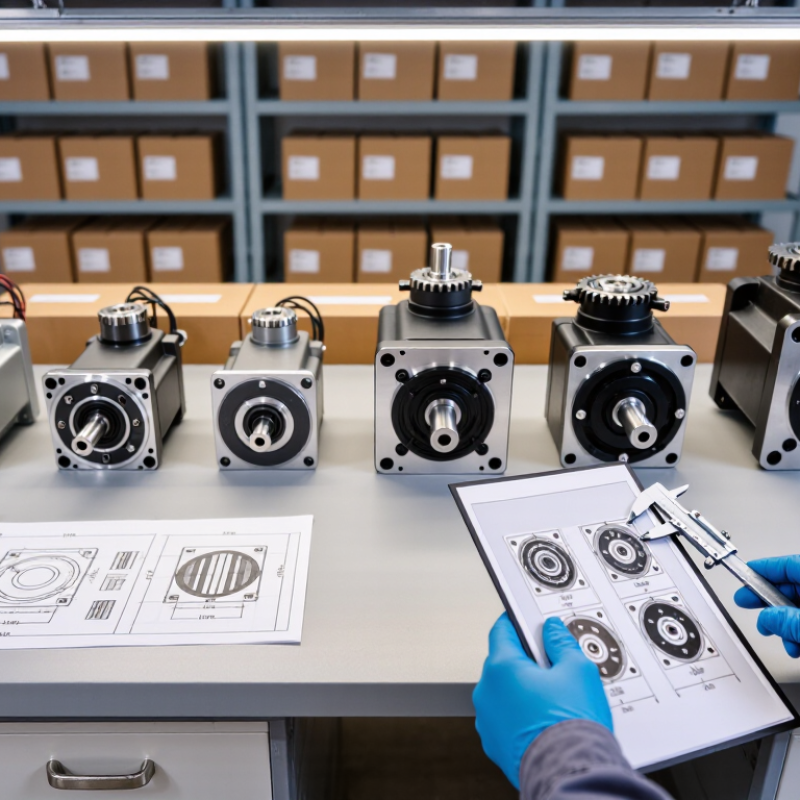
Understanding ZWX Gear Motors and Their Global Applications
ZWX gear motors pair an electric motor with a gearbox to deliver controlled speed and useful output torque. The term ZWX may refer to a specific product series, so confirm its meaning in the supplier’s technical documents. Check rated power, gear ratio, shaft dimensions, mounting position, and duty cycle before comparing models. Small details matter.
These units can drive packaging conveyors, mixers, lifting equipment, and automated production lines. In a warehouse, for example, a conveyor motor may start and stop dozens of times per hour. That operating pattern can create more heat and wear than steady running. Match the motor to the actual load, not just the machine’s average demand. Leave room for uncertainty.
Global applications bring different conditions. A unit installed in a humid coastal plant may need better enclosure protection than one used indoors in a dry workshop. Buyers should also verify supply voltage, frequency, wiring diagrams, and available maintenance support. Ask for efficiency data, noise limits, and temperature ratings where relevant. A compact motor can simplify installation, but tight access may make future servicing frustrating. Check drawings and spare-part availability before placing an order.
Key Criteria for Evaluating ZWX Gear Motor Suppliers
When comparing ZWX gear motor suppliers, start with the machine’s operating conditions, not a catalog headline. Record required output torque, speed, gear ratio, duty cycle, and daily start-stop count. A motor rated for a short test may overheat during an eight-hour shift. Ask how thermal performance is checked and which ambient temperature the rating assumes. Compare mounting dimensions, shaft tolerances, protection rating, and allowable radial loads with your drawings. Small mismatches matter. Request a dimensional drawing and a complete data sheet before discussing price.
Look for test reports linked to the specific motor model, including temperature, noise, or vibration results where relevant. Confirm that each unit can be traced through serial numbers and inspection records. Ask how design changes are communicated, and whether replacement parts remain available. Delivery promises matter, but realistic lead times are more useful than optimistic ones. A supplier who asks for your load profile may be better prepared to recommend a suitable unit. Still, documents do not reveal everything. A sample can expose fit or noise issues that a spreadsheet misses, so leave time for evaluation.
Profiles of Seven ZWX Gear Motor Suppliers
A practical ZWX gear motor shortlist should include suppliers with different strengths, not just the lowest quoted price. These seven profiles describe useful supplier types rather than verified company rankings. Compare each one against your operating conditions and documentation needs.
A custom-drive specialist can adapt shaft dimensions, mounting positions, and reduction ratios for tight equipment layouts. Ask for a dimensioned drawing before approving a sample. A high-volume manufacturer may offer stable production and shorter repeat-order lead times, but confirm its minimum order quantity. An export-focused supplier can coordinate packing lists, technical files, and shipment updates. Check the evidence. A regional distributor may provide faster local support and replacement parts, though its product range can be narrower.
A compact-motor supplier may suit conveyors or small packaging machines where installation space is limited. A heavy-duty specialist may better fit mixers or lifting equipment, provided its ratings match the real load. A service-led supplier can help diagnose noise, overheating, or vibration after installation; ask who handles technical questions and how quickly. Finally, a flexible small-batch supplier may support prototypes and low-volume orders. Its quality controls may need closer review. Request motor curves, inspection records, warranty terms, and clear answers about rated torque, speed, voltage, and duty cycle. A polished catalogue helps, but actual test data matters more.
Efficiency Benchmarks for ZWX Gear Motor Buyers
IEC efficiency-class minimums for a 0.75 kW, four-pole motor. These are standardized benchmarks, not ratings for individual suppliers or gear motor products.
Efficiency values shown are percentages. Gearbox losses and the complete gear motor assembly may affect overall system efficiency. Reference: IEC 60034-30-1 efficiency classes.
Comparing Supplier Products, Certifications, and Export Capabilities
When comparing gear motor suppliers, start with the product range, not the catalog design. Check rated torque, speed, voltage, gear ratio, mounting dimensions, and duty cycle against your equipment. A motor that fits the shaft may still run too hot under continuous load. Ask for dimensioned drawings and performance curves for the exact model. Useful details matter.
Certifications need careful checking. Confirm which standards apply in the destination market, and request certificates tied to the specific motor or production site. A quality-management certificate can indicate controlled processes, but it does not prove every product meets every requirement. Ask about inspection records, traceability, and test reports. Small gaps can delay approval.
Export capability is more than shipping overseas. Compare lead times, export packaging, spare-parts availability, and the supplier’s experience preparing commercial and technical documents. For a sample order, inspect labeling and moisture protection when the crate arrives. Clarify warranty terms and who handles transit damage before placing a large order. A polished catalog can still leave gaps. Request a written quotation with model numbers, delivery terms, and included accessories; then compare offers line by line. One caution: supplier responses may sound precise while leaving operating limits unclear. Ask again.
7 Best Zwx Gear Motor Suppliers for Global Buyers? - Comparing Supplier Products, Certifications, and Export Capabilities
Comparison note: No supplier-specific evidence was provided, so this table does not rank or claim certifications for any company. It compares seven common gear-motor product categories and lists the documents buyers should verify directly with each supplier.
| Supplier Profile | Typical Product Category | Key Specifications to Compare | Certification and Compliance Checks | Export Capability Checks | Best-Fit Applications |
|---|---|---|---|---|---|
| Supplier 1 Inline helical gear motor | AC motor combined with an inline helical gearbox. | Rated power, output speed, gear ratio, output torque, mounting position, duty rating, and service factor. | Request the motor nameplate data and applicable test documents. Check IEC 60034-related motor ratings where relevant; verify any market-specific conformity documents for the exact model. | Confirm destination-country documentation, packing method, stated lead time, available Incoterms, and whether spare parts can be shipped separately. | Conveyors, mixers, packaging lines, and other general industrial drives. |
| Supplier 2 Worm gear motor | Right-angle drive using a worm and worm wheel. | Ratio, output torque, efficiency, thermal capacity, backlash, mounting orientation, and lubrication requirements. | Ask for model-specific motor and gearbox data sheets. Verify electrical conformity for the intended market; do not treat a general quality-system certificate as product approval. | Check export packing protection, shipment dimensions and weight, customs classification support, and the supplier’s process for handling shipping documents. | Compact right-angle drives, smaller conveyors, gates, and positioning equipment. |
| Supplier 3 Parallel-shaft helical gear motor | Helical gearing arranged for a parallel-shaft output. | Power, ratio, torque, shaft arrangement, allowable radial and axial loads, mounting options, and brake availability. | Request drawings and a model-specific bill of materials or technical schedule. Verify any claimed CE, UKCA, UL, or other market documentation against the exact product and destination. | Confirm whether custom shaft or flange configurations affect production lead time, export packing, and the commercial invoice or packing-list details. | Material handling, production machinery, and applications needing a compact parallel-shaft layout. |
| Supplier 4 Helical-bevel gear motor | Right-angle gearbox combining helical and bevel gearing. | Output torque, ratio, efficiency, shaft direction, mounting position, thermal limits, and permitted external loads. | Request product-specific electrical ratings, test reports, and declarations required in the destination market. Confirm that documents cover the ordered motor variant and accessories. | Ask whether the supplier can provide export-grade packaging, shipment marking, a certificate of origin when available, and the documents required by the buyer’s customs broker. | Heavy-duty conveyors, process equipment, and drives requiring a right-angle output. |
| Supplier 5 Planetary gear motor | Planetary gearbox paired with an AC, DC, or servo motor. | Gear ratio, rated and peak torque, backlash, torsional stiffness, input speed, shaft or flange interface, and radial-load limits. | For servo assemblies, verify motor and drive compatibility and request applicable electrical and EMC documentation. Confirm certifications for the complete ordered configuration, not just one component. | Check availability of configuration drawings, serial-number traceability, replacement parts, and export support for the selected motor and control components. | Robotics, indexing, machine tools, and other applications requiring compact torque transmission or precise motion. |
| Supplier 6 DC or BLDC gear motor | Brushed DC or brushless DC motor with an integrated or separate gearbox. | Voltage, continuous and peak current, speed, torque, gearbox ratio, duty cycle, encoder options, and controller requirements. | Request electrical safety and EMC documents applicable to the motor, controller, and intended market. Check whether battery, radio, or control accessories create additional compliance requirements. | Confirm export arrangements for controllers and electronic accessories, packaging for transport, and availability of wiring diagrams and installation instructions. | Automation equipment, mobile devices, actuators, and low-voltage machinery. |
| Supplier 7 Stainless or washdown gear motor | Gear motor designed for wet, washdown, or corrosion-prone environments. | Enclosure rating, housing material, seal design, shaft material, cleaning conditions, temperature range, and gearbox lubricant requirements. | Request evidence for the stated ingress-protection rating and the exact material specification. Verify any food-contact or hygiene-related claim against the relevant market rules and product documentation. | Check corrosion-resistant export packing, protection against moisture during transit, and whether replacement seals or compatible lubricants are available internationally. | Food and beverage processing, washdown production areas, and corrosive or humid environments. |
Buyer reminder: ISO 9001 relates to a quality-management system and is not, by itself, certification of a particular gear motor. CE marking, UL certification, ingress-protection ratings, and other compliance claims should be checked against current documents for the exact model, configuration, and destination market.
Factors to Consider When Sourcing ZWX Gear Motors Internationally
When sourcing ZWX gear motors internationally, start with the actual operating conditions, not just the catalog rating. Record the required torque, output speed, duty cycle, supply voltage, and hours of daily use. Check shaft dimensions, mounting holes, and rotation direction against your equipment drawings. Small mismatches matter. A motor that fits the power requirement may still fail to fit the machine.
Ask suppliers for current datasheets and test records covering performance under load, temperature rise, and noise. Confirm the stated protection rating suits the installation; dust or washdown exposure can change what you need. Request a sample when practical, then test it with your own gearbox or driven load. Paper specifications can look reassuring, but real operating conditions are less tidy. Ask for proof.
Also compare lead times, packaging, spare-part availability, and the supplier’s process for handling defects. Clarify which documents accompany each shipment and how technical questions are answered across time zones. Freight estimates should include the delivery terms, not just the unit price. A low quote can become costly if connectors, drawings, or replacement parts are missing. I would still leave room for a second technical review; buyers sometimes overlook one detail when schedules are tight.