
What Is the Best Trolley Elevator in 2026?
Choosing the best Trolley Elevator in 2026 starts with the load, route, and working environment—not a glossy brochure. A unit moving loaded carts between warehouse levels faces different demands from one serving a hotel kitchen or retail stockroom. Measure the trolley’s width, turning space, and heaviest expected load. Then check the landing layout, travel distance, and daily number of trips. Small details matter. A few centimeters can decide whether a cart rolls smoothly or catches at the entrance.
Compare rated capacity, platform dimensions, controls, guarding, and service access. Ask suppliers how the equipment behaves during repeated peak-hour cycles, not just a single demonstration. Request written specifications and maintenance guidance. Watch the lift operate with a representative trolley, if possible. Listen for unusual vibration. Check whether operators can see the platform and reach controls comfortably. These observations are useful, though they do not replace an engineering assessment.
No source material was provided to verify a named Trolley Elevator expert or an authentic quotation, so attributing one here would risk misleading readers. A reliable comparison should instead make its evidence clear: stated specifications, practical operating needs, and documented support. The best choice may not be the fastest or cheapest. It is the model that fits the actual route, handles the real load, and can be maintained consistently. One caveat remains: product claims deserve independent scrutiny, especially when performance figures lack test conditions. Before deciding, compare like with like—and record what still needs checking.
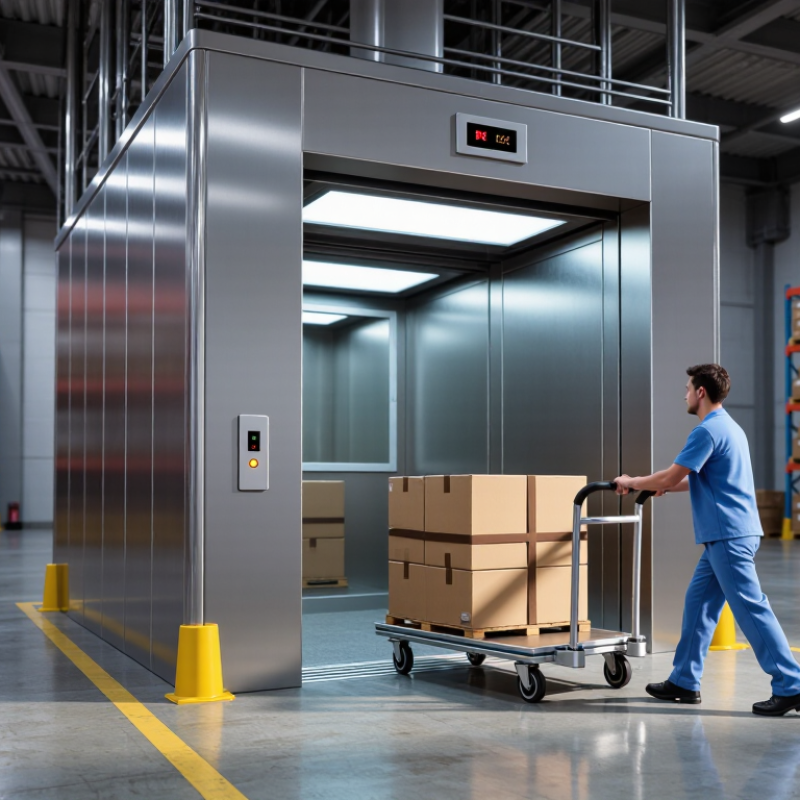
Define Trolley Elevators: EN 81-31 Covers Goods-Only Lifts Rated at 300 kg or More
What Is the Best Trolley Elevator in 2026?
A trolley elevator is not automatically a passenger lift. EN 81-31:2010 covers accessible goods-only lifts with a rated load of at least 300 kg and a rated speed no greater than 0.15 m/s. The standard defines a safety scope, not a ranking of the “best” models. A goods-only lift is not intended to transport people. That distinction matters. Check local adoption and project requirements with a qualified lift professional before specifying equipment.
For a practical choice, match rated capacity to the heaviest loaded trolley, then check platform dimensions, doorway clearance, floor stops, and loading frequency. A 300 kg rating is a threshold, not proof that a lift suits your site. Measure the trolley with its handles and turning space included. The IEA’s 2024 Global Status Report for Buildings and Construction reports that buildings and construction account for 32% of global energy consumption and 34% of CO₂ emissions. Those figures cover the whole sector, not lifts alone, but they support asking suppliers for standby-energy and operating data. Exact comparisons can still be awkward.
Tips: Measure the narrowest doorway and tightest approach. Confirm the trolley’s loaded weight, not just its empty weight. Ask for documented capacity, safety features, and maintenance requirements.
| Selection dimension | Verified standard scope or practical criterion | What to check when choosing |
|---|---|---|
| Lift category | EN 81-31 applies to permanently installed, accessible goods-only lifts serving defined landing levels. | Confirm that the proposed equipment is designed and documented as a goods-only lift, rather than assuming every service or trolley lift falls within the same standard. |
| Rated load | The EN 81-31 scope covers rated loads of 300 kg or more. | Calculate the combined weight of the trolley, goods, and any loading accessories. Select a rated load that accommodates the maximum intended load without exceeding the lift’s stated capacity. |
| Rated speed | The standard’s scope includes rated speeds not exceeding 1.0 m/s. | Check the lift’s declared rated speed and confirm that the applicable installation requirements are met in the destination country. |
| People inside the car | A goods-only lift is intended for goods, not for carrying passengers. | Use clear operating instructions and access controls. If people must travel in the car, assess a suitable passenger-lift category instead. |
| Trolley and car fit | EN 81-31’s load and speed thresholds do not determine a suitable car size for a particular trolley. | Measure the loaded trolley’s length, width, height, turning space, and handle projection. Check the clear car opening and usable car dimensions against those measurements. |
| Landing doors and route | The lift serves defined landing levels; the building layout and installation must be considered alongside the lift design. | Check door clearances, approach space, thresholds, floor levels, and the trolley’s route to and from each landing. |
| Loading and unloading | Loading arrangements depend on the lift, trolley, goods, and site; a rated load alone does not establish safe handling. | Review whether the trolley can be positioned and secured safely, and whether staff need ramps, restraints, or other site-specific handling measures. |
| Safety documentation | EN 81-31 is a technical standard for a defined goods-only-lift scope; legal obligations may also depend on local regulations. | Request the applicable conformity and installation documentation, operating instructions, rated-load marking, and maintenance requirements. Confirm local compliance with a qualified lift professional. |
| Best-fit decision | There is no universally best trolley elevator: suitability depends on the load, trolley dimensions, travel, landings, duty, and site. | Compare documented capacity and speed with the actual operating needs, then assess fit, access, installation constraints, safety provisions, and service arrangements. |
| Note: EN 81-31 scope thresholds are not a substitute for project-specific design or local regulatory checks. Confirm the current applicable edition and requirements with the lift supplier, installer, or competent authority. | ||