
Who Is the Best SBMA Connector Supplier in China?
Choosing the best Sbma Connector supplier in China takes more than comparing unit prices. Buyers need to assess dimensional consistency, contact performance, material traceability, and delivery reliability. A connector can look flawless on a drawing yet fail after repeated mating or exposure to vibration. Small details matter.
The broader market offers useful context, but it does not rank SBMA manufacturers. MarketsandMarkets estimated the global connectors market at USD 84.7 billion in 2023 and projected growth to USD 118.7 billion by 2028, at a 7.0% compound annual growth rate. This forecast reflects expanding demand across many connector categories, not SBMA products alone. It does, however, show why careful supplier qualification matters as sourcing options multiply.
A practical comparison should examine more than a catalogue. Ask for current dimensional inspection records, electrical test results, material specifications, and evidence of production controls. Check whether sample performance matches the quoted drawing and whether the supplier can explain its inspection process clearly. Requesting a small pilot batch can reveal fit, finish, and packaging issues before a larger order. No single ranking settles it. The right supplier depends on the application, operating environment, and required tolerances. Published market estimates cannot replace direct verification, and supplier claims should be checked against product samples and documented test data. This guide outlines the criteria buyers can use to compare Chinese SBMA Connector suppliers with greater confidence.
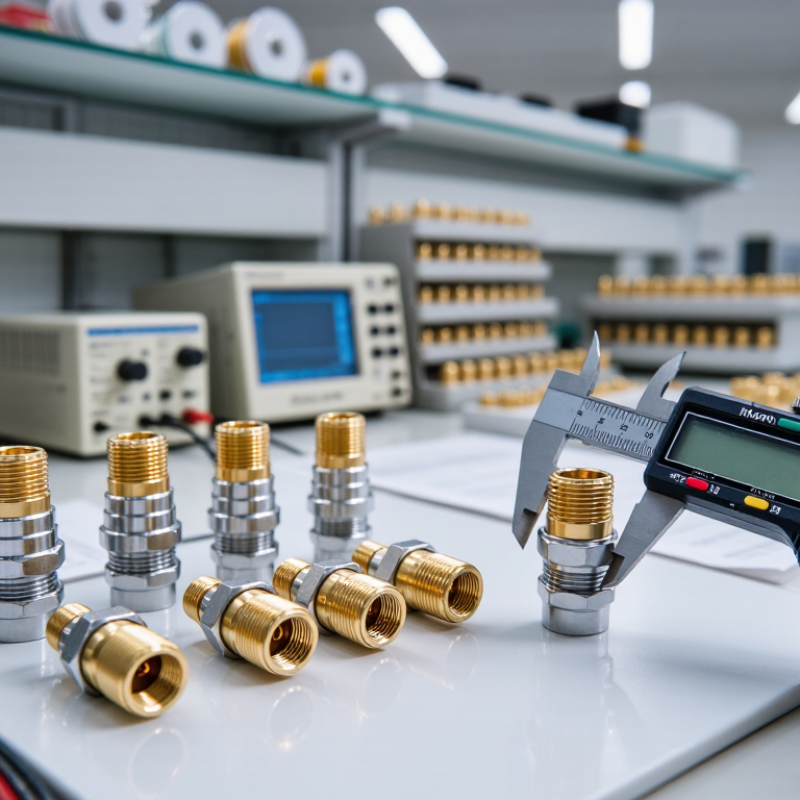
Understanding SBMA Connectors and Their Applications
SBMA connectors provide a compact coaxial connection for carrying radio-frequency signals between cables and equipment. Their small footprint can suit wireless modules, antennas, and test setups where space is limited. In a bench setup, a loose or mismatched connection may cause unstable readings. Check the connector interface, cable type, impedance, and operating frequency against the equipment specifications. SBMA designs can vary, so the name alone does not confirm compatibility.
Tips: Inspect the center contact and threads before assembly. Keep mating surfaces clean, and tighten connections as specified. Avoid twisting the cable while fastening the connector.
For dependable performance, review insertion loss, shielding, and mechanical durability for the actual application. A connector used inside a protected instrument may face different demands than one exposed to vibration or frequent handling. Small parts matter. Even a suitable connector can perform poorly when cable routing is strained or installation is careless. It is easy to focus on frequency ratings and overlook how the assembly will be mounted; that deserves a second look.
Who Is the Best SBMA Connector Supplier in China? - Understanding SBMA Connectors and Their Applications
| Category | Comparison Dimension | Practical Information | What to Verify with a Supplier |
|---|---|---|---|
| Connector overview | Interface and naming | SBMA generally refers to a compact blind-mate coaxial connector interface. Product naming and interface details can vary, so the exact mechanical interface should be agreed before design or purchasing. | Request an interface drawing, mating dimensions, and confirmation of compatibility with the intended counterpart. |
| Electrical design | Impedance | Many RF coaxial connector versions are designed for a nominal 50-ohm system. The connector’s impedance and operating range must match the system requirements. | Check the datasheet for nominal impedance and ask for test data for the proposed part number. |
| Electrical performance | Frequency range and RF characteristics | Usable frequency range, insertion loss, return loss, and voltage standing wave ratio depend on the specific design, cable, and assembly. They should not be inferred from the connector name alone. | Request specified limits and measurement conditions across the required operating band. |
| Mechanical design | Blind-mate capability | Blind-mate connections can simplify installation where direct access or visual alignment is limited. Allowable misalignment and engagement distance are product-specific. | Confirm alignment tolerance, engagement depth, retention method, and any mechanical guidance features. |
| Applications | Typical use cases | Compact blind-mate RF interconnects may be used in modular RF equipment, antenna assemblies, instrumentation, and rack or panel systems where repeatable connections and limited access are relevant. | Confirm that the connector is suitable for the application’s RF, space, environmental, and service requirements. |
| Product configuration | Mounting and termination options | Available configurations may include cable terminations and board, panel, or chassis mounting styles. Options vary by product family. | Check the drawing for mounting dimensions, termination method, cable compatibility, and required installation tooling. |
| Durability | Mating-cycle rating | Mechanical life depends on the connector design, materials, and operating conditions. A universal cycle rating should not be assumed. | Request the rated mating-cycle count and the test method used to establish it. |
| Environment | Temperature, vibration, and sealing | Environmental suitability is determined by the specific construction. Not every SBMA-style connector is sealed or qualified for harsh environments. | Compare stated temperature limits and applicable vibration, shock, ingress-protection, or other qualification results with project requirements. |
| Materials and finish | Contact and body materials | Conductive materials and surface finishes affect electrical performance, corrosion resistance, and durability. Details differ among product designs. | Request material and plating specifications, including any restrictions relevant to the intended environment. |
| Supplier evaluation | Technical documentation | A capable supplier should be able to provide consistent drawings, datasheets, specifications, and revision-controlled documentation for the quoted configuration. | Review document completeness, revision status, traceability, and whether the data applies to the exact part being offered. |
| Supplier evaluation | Quality and compliance | Quality-system certifications and material or regulatory declarations should be checked against the buyer’s requirements; their availability and scope should be confirmed directly. | Request current certificates and applicable RoHS, REACH, or other compliance declarations where required. |
| Supplier evaluation | Sampling and inspection | Samples and defined incoming-inspection criteria help confirm mechanical fit and electrical performance before production release. | Agree on sample quantities, inspection criteria, test reports, acceptance limits, and change-notification procedures. |
| Supplier evaluation | Production and delivery capability | Lead time, minimum order quantity, customization capability, and production capacity depend on the supplier and the selected configuration. | Request a written quotation with lead times, order terms, customization limits, and capacity for expected demand. |
| Choosing a supplier | Best-fit decision | The best supplier is the one that can demonstrate a suitable interface, verified performance, consistent quality, and dependable support for the specific application. | Compare documented evidence and sample results rather than relying on a general ranking or an unverified performance claim. |
Note: SBMA specifications are product-dependent. Confirm the exact interface, performance limits, and qualification requirements using the supplier’s current datasheet and drawings before ordering.