
Blog
7 Best Marine Trolling Motor Batteries for 2026
A trolling motor can turn a quiet morning on the water into a long day of steady movement. It can also expose a weak battery before you reach the far bank. Choosing a Marine Trolling Motor Battery means looking beyond the largest capacity number on a product page. Voltage must match the motor, while usable capacity affects how long it can run at your usual speed. Weight matters too, especially when you lift the battery into a small boat by yourself. Small details matter.
This guide compares seven options for 2026, including different battery types and price points. It considers practical factors such as deep-cycle performance, stated capacity, charging needs, warranty terms, and fit within a boat’s battery compartment. Lithium models may offer lower weight and longer service life, while AGM batteries can suit buyers who prefer a familiar setup. Neither choice is right for everyone. Check your motor maker’s requirements and the battery manufacturer’s charging guidance before buying.
Real-world runtime can vary with current, propeller load, temperature, and throttle use. A calm lake and a windy channel are not the same test. That is easy to overlook. The picks here are intended to help narrow the search, not promise identical results on every boat. Compare specifications carefully, leave room for reasonable capacity needs, and remember that the most expensive battery is not automatically the best match. Trade-offs remain.
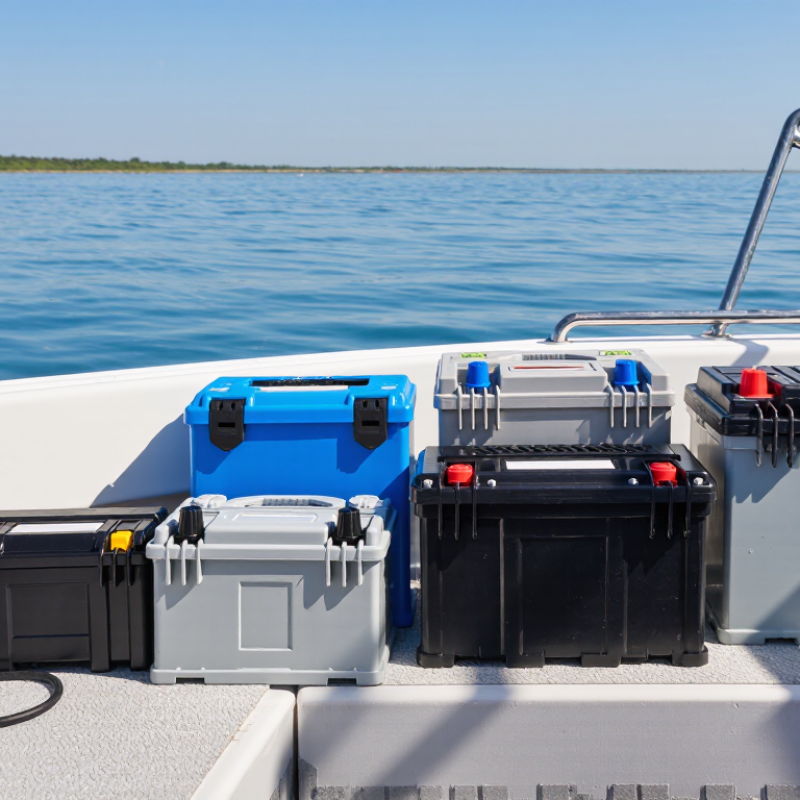
How Marine Trolling Motor Batteries Power a Boat
7 Best Marine Trolling Motor Batteries for 2026
How Marine Trolling Motor Batteries Power a Boat
A trolling motor battery supplies direct-current power to the motor’s controller, which regulates current and turns the propeller. More current generally means more thrust, but it also drains the battery faster. A 12-volt, 100-amp-hour battery holds about 1.2 kilowatt-hours nominally; that is not all safely usable capacity. Actual runtime changes with speed, propeller load, water conditions, temperature, and battery chemistry. Small details matter.
For a rough estimate, divide usable amp-hours by the motor’s average current draw. A 30-amp draw from 90 usable amp-hours suggests about three hours, before real-world losses. The U.S. Department of Energy’s 2022 Grid Energy Storage Technology Cost and Performance Assessment lists roughly 85% round-trip efficiency for lithium-ion storage systems. That grid-scale figure is useful context, not a guarantee for a marine battery. Wiring batteries in parallel adds capacity; wiring in series raises voltage, so follow the motor’s rated voltage and battery instructions.
Tips: Check the motor’s current draw at your usual speed, not just its maximum rating. Keep connections dry and tight, and use a compatible charger. A simple runtime estimate can still be wrong; cold mornings and weeds change the load. For better planning, track voltage and actual hours on the water over several trips.
Key Battery Types and Their Differences
Trolling motor batteries are commonly flooded lead-acid, AGM, or lithium iron phosphate (LiFePO4). Each differs in weight, maintenance, and tolerance for repeated deep discharge. Check the motor’s voltage requirements before comparing capacity; a 12-volt system needs a compatible battery setup. Small detail, big consequence.
Flooded deep-cycle batteries usually cost less upfront, but they need upright installation, ventilation, and periodic electrolyte checks. AGM batteries are sealed and resist vibration, which can suit rough rides, though they remain heavy and may cost more. Both lead-acid types generally offer less usable capacity when repeatedly drained deeply. On the water, that can mean reduced thrust before the battery is fully empty.
LiFePO4 batteries are lighter and typically provide more usable energy across many charge cycles. They often cost more initially and need a compatible charger and battery-management system. Cold weather matters: some models restrict charging near or below freezing, so check the manual rather than guessing. Advertised capacity alone is not a reliable runtime promise; thrust setting, boat load, wind, and current all matter. Estimates are imperfect. Keeping a reserve for the return trip is sensible. The right chemistry is a practical match, not a universal winner.
7 Best Marine Trolling Motor Batteries for 2026 - Key Battery Types and Their Differences
| Battery Type | Best For | Typical Configuration and Capacity | Approx. Weight | Practical Usable Capacity | Typical Cycle-Life Range | Main Advantages | Key Considerations |
|---|---|---|---|---|---|---|---|
| 12V flooded deep-cycle lead-acid | Budget-conscious anglers with space for routine maintenance | 12V; commonly 75–120Ah | About 45–75 lb for a 12V, 100Ah-class battery | Plan to use roughly 50% of rated capacity for better service life | About 300–700 cycles, depending on depth of discharge and care | Widely available, relatively low purchase cost, and straightforward charging | Heavy; needs ventilation and periodic inspection or watering. Avoid excessive discharge. |
| 12V AGM deep-cycle lead-acid | Boats needing a sealed, spill-resistant lead-acid option | 12V; commonly 70–120Ah | About 50–75 lb for a 12V, 100Ah-class battery | Usually plan around 50% of rated capacity for regular use | About 400–800 cycles, depending on design and operating conditions | Sealed construction, low routine maintenance, and good resistance to vibration | Still heavy; requires a compatible charging profile and can be damaged by deep, repeated discharge. |
| 12V gel deep-cycle lead-acid | Installations where a sealed battery and controlled charging are priorities | 12V; commonly 60–100Ah | About 55–75 lb for a 12V, 100Ah-class battery | Generally plan around 50% of rated capacity for regular use | About 500–1,000 cycles under suitable charging and discharge conditions | Sealed, low-maintenance construction; electrolyte is immobilized in gel form | Charging voltage must match gel specifications. Incorrect or excessive charging can shorten battery life. |
| 12V LiFePO4 deep-cycle | Most 12V trolling-motor setups seeking lower weight and more usable energy | Typically 12.8V nominal; commonly 50–150Ah | About 20–40 lb for a 100Ah-class battery | Often 80–90% of rated capacity, subject to the battery’s BMS limits | About 2,000–5,000 cycles; actual life depends on use and temperature | High usable capacity relative to weight, stable output, and typically faster charging | Use a compatible charger and a battery with an appropriate BMS. Charging below freezing may be restricted. |
| 24V LiFePO4 deep-cycle | 24V trolling motors where a purpose-built higher-voltage pack is preferred | 25.6V nominal; commonly 30–100Ah | About 20–55 lb, depending on capacity | Often 80–90% of rated capacity, subject to BMS limits | About 2,000–5,000 cycles; varies by cell design and operating conditions | Provides the required 24V from one matched pack and can reduce wiring complexity | Confirm the motor’s voltage and the battery’s continuous-current rating; use a compatible 24V charging system. |
| 36V LiFePO4 deep-cycle | 36V trolling motors and higher-power installations | 38.4V nominal; commonly 30–100Ah | About 30–75 lb, depending on capacity | Often 80–90% of rated capacity, subject to BMS limits | About 2,000–5,000 cycles; varies with discharge depth and temperature | One matched 36V pack can simplify a system compared with multiple batteries in series | Check motor voltage, current draw, charger compatibility, and the battery’s BMS discharge rating. |
| 6V flooded golf-cart deep-cycle bank (two batteries in series) | 12V systems needing substantial capacity and able to accommodate a heavy battery bank | Two 6V batteries in series provide 12V; commonly about 200–230Ah for the bank | About 110–140 lb for the two-battery bank | Plan to use roughly 50% of rated capacity for routine deep-cycle service | About 500–1,000 cycles, depending on construction, maintenance, and discharge depth | Can provide high 12V capacity and is suited to installations designed for large lead-acid banks | Requires two batteries, secure mounting, ventilation, maintenance, and space; the series connection does not add amp-hour capacity. |
Figures are typical category-level estimates, not specifications for a particular battery. Weight, capacity, usable energy, and cycle life vary by design, manufacturer, temperature, charging method, and depth of discharge. Match battery voltage and current capability to the trolling motor, and follow the battery maker’s charging and installation instructions.
How to Choose a Battery for Your Trolling Motor
Choosing a trolling-motor battery starts with the motor’s voltage and your expected time on the water. Match the battery voltage to the motor’s specification; then estimate energy demand using volts × amp-hours. A 12-volt, 100-amp-hour battery stores about 1,200 watt-hours nominally, but that is not a promise of runtime. Wind, weeds, boat weight, and high throttle can drain it faster. Check the motor’s maximum draw and the battery’s usable capacity, not just its advertised amp-hour figure. Leave room.
Battery chemistry changes the trade-offs. Lead-acid batteries are often less expensive, but they are heavy and can lose capacity when deeply discharged. Lithium batteries usually weigh less and provide more usable energy, yet require a compatible charging system. The Battery Council International’s National Recycling Rate Study reports that more than 99% of lead batteries are recycled in the United States. That figure concerns recovery, not performance, but it is useful when weighing end-of-life impact. A battery’s care instructions still matter.
For a practical choice, compare continuous current limits, reserve capacity, weight, dimensions, and warranty terms. Secure the battery so it cannot slide across a wet deck, and use marine-rated connections protected from spray. Check charging guidance before mixing battery types or chargers. I would also size for a longer outing than the average trip; my own estimates can be optimistic when wind rises. Keep some capacity in reserve, especially if the motor is your only way back to the launch.
Seven Marine Trolling Motor Batteries to Consider in 2026
A useful 2026 shortlist starts with the motor’s voltage and expected hours on the water. A 12-volt flooded deep-cycle battery can suit budget-conscious anglers willing to check water levels. A sealed 12-volt AGM battery needs less routine attention, but it is heavy. A 12-volt lithium iron phosphate battery offers lower weight and steady output, provided the charger is compatible.
For higher-voltage motors, consider a 24-volt or 36-volt lithium battery matched to the motor’s requirements. These setups can reduce wiring complexity compared with separate batteries, but confirm the battery’s continuous-current rating. A 24-volt AGM bank made from two matching 12-volt batteries is another option. So is a 36-volt AGM bank using three. Keep each bank’s batteries alike in chemistry, capacity, and age. Mixing them is asking for trouble.
Look beyond the chemistry label. Compare usable amp-hours, reserve capacity, weight, warranty terms, and cold-weather charging limits. Check the motor manual before choosing a charger or connecting batteries in series. One detail is easy to overlook: a battery that fits the compartment may still be awkward to lift aboard. I would also leave room for a little uncertainty in runtime estimates; wind, current, and repeated high-speed use can drain a pack sooner than a calm-water test suggests.
Battery Installation, Charging, and Maintenance Essentials
A trolling-motor battery needs a firm, dry, ventilated mounting area. Secure the case against bouncing, and keep metal tools away from exposed terminals. Fit overcurrent protection near the battery, with wiring and fuse ratings matched to the motor instructions. ABYC’s E-11 standard covers marine AC and DC electrical systems, including installation practices that help reduce electrical hazards. Small details matter. A loose hold-down can let a heavy battery shift in choppy water.
Choose a charger made for the battery’s chemistry; charging profiles are not interchangeable. After each trip, recharge promptly, inspect cables for heat damage or corrosion, and check terminal tightness against the battery maker’s specifications. For serviceable flooded lead-acid batteries, check electrolyte levels as directed; never open sealed batteries. It is easy to forget the compartment lid, but ventilation matters during charging. Battery Council International reports that about 99% of lead batteries in the United States are recycled, so take worn lead-acid units to an accepted recycling collection point. Routine checks can feel fussy. Skipping them is easier, until a weak connection interrupts a day on the water.