
Blog
Top Battery Powered Pruning Saws for Global Buyers
A Battery Powered Pruning Saw can make orchard maintenance, garden care, and light branch removal easier, especially where a power outlet is out of reach. Buyers still need to look beyond a headline voltage or cutting diameter. Battery capacity, chain speed, bar length, weight, and replacement-battery availability all affect daily use. According to the International Energy Agency’s Global EV Outlook 2024, electric-car battery demand reached about 750 GWh in 2023, up roughly 40% from the previous year. That figure measures EV batteries, not pruning-saw sales, so it should not be mistaken for direct evidence of tool-market growth. It does, however, reflect the wider expansion of battery technology and manufacturing. Context matters.
This guide compares leading pruning saws for buyers across different markets and work routines. It focuses on practical details: how a saw feels during repeated cuts, whether its battery suits a full day’s workload, and how easily users can source compatible replacements. A lightweight model may be comfortable on a ladder, yet struggle with thicker limbs or extended sessions. A larger battery may provide longer runtime, but also add weight. Specifications help narrow the options; they cannot fully predict comfort, service support, or real-world cutting performance. Those trade-offs deserve a closer look.
What Battery-Powered Pruning Saws Are and How They Work
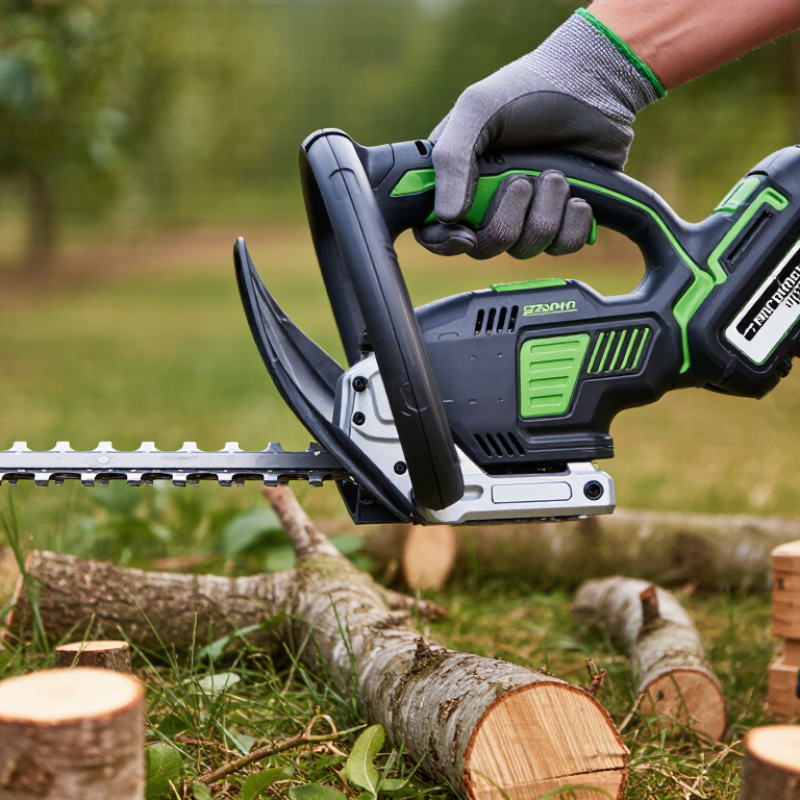
Battery-powered pruning saws are compact cutting tools designed for branches that are too thick for hand pruners. A rechargeable battery supplies electricity to a motor, which moves a toothed chain around a short guide bar. On many models, squeezing a trigger starts the chain; releasing it stops the motor. The exact controls and safety features vary, so the manual matters.
Quiet, but not silent. These saws can make clean cuts through suitable limbs without fuel mixing or a power cord. Cutting speed depends on battery charge, chain sharpness, wood condition, and branch size. A dull chain may tear bark and force the user to push harder, which is a poor trade. Pause and inspect. Keep both hands on the tool where its design allows, wear eye and hearing protection, and stand on stable ground. Avoid cutting above shoulder height, and secure loose branches before trimming. Battery tools feel easy to handle, but their moving chain can still catch or kick back. They suit many garden tasks, though larger limbs may call for a different tool or experienced help.
Common Types and Their Pruning Applications
Battery pruning saws generally fall into three types: compact handheld chain saws, pole saws, and reciprocating pruning saws. Compact chain saws suit orchard rows, where workers make repeated cuts on reachable branches. The Almond Board of California’s 2024 Almond Almanac reports about 1.38 million bearing almond acres in 2023. That scale helps explain the value of consistent, efficient pruning tools. Still, acreage alone cannot determine the right saw; branch size and tree structure matter more at the cut.
Pole saws reach higher limbs without a ladder, making them useful for orchard canopies and landscape trees. Their extended reach can reduce awkward stretching, but it also makes precise cutting harder. Reciprocating pruning saws handle occasional cuts and varied branch angles, though they may leave a rougher finish than a chain saw. Small cuts matter. I would keep hand pruners or loppers nearby for delicate shoots. Match blade capacity to the manufacturer’s guidance, and avoid forcing a saw through a branch. Battery runtime also changes with wood hardness, cut frequency, and temperature. The practical choice is often less obvious than a catalog comparison suggests.
Top Battery Powered Pruning Saws for Global Buyers - Common Types and Their Pruning Applications
| Saw Type | Typical Cutting Setup | Best Pruning Applications | Practical Branch Size Guide | Main Advantages | Key Buying Considerations |
|---|---|---|---|---|---|
| Compact handheld cordless chain saw | Short guide bar, commonly about 4–6 in (10–15 cm); operated at ground level or from a stable work position. | Fruit-tree maintenance, garden shrubs, storm-damaged limbs, and routine cuts where a larger chainsaw would be cumbersome. | Often suited to branches around 2–4 in (5–10 cm), depending on the saw, wood condition, and cutting technique. The guide-bar length is not a guaranteed maximum cutting diameter. | Compact and maneuverable; generally faster through thicker branches than a hand saw. | Check the manufacturer’s permitted use, chain tensioning method, lubrication requirements, battery availability, and required protective equipment. |
| Cordless pole pruning saw | Chain-saw head mounted on a pole; common guide-bar lengths are approximately 6–10 in (15–25 cm). Poles may be fixed or telescopic. | Removing elevated limbs from the ground, orchard canopy work, and maintaining trees where climbing or ladder access is avoidable. | Many models are intended for limbs roughly 2–6 in (5–15 cm); capacity varies by bar length, power, pole stability, and branch condition. | Extends reach while keeping the operator on the ground; useful for overhead pruning when used within the tool’s instructions. | Compare working reach, total weight, balance, shaft stiffness, head angle, and battery runtime. Do not cut directly overhead or exceed the stated reach and cutting limits. |
| Cordless reciprocating saw with a pruning blade | Reciprocating blade, typically a coarse-toothed pruning blade; blade length and tooth pattern vary by model and task. | Occasional branch removal, garden cleanup, and cuts in awkward positions where a reciprocating saw is already available. | Best for smaller, well-supported limbs; the usable diameter depends on blade length, exposed blade, and the ability to control the cut. Larger limbs can bind or cause blade deflection. | Accepts interchangeable blades and can be useful for mixed cutting tasks beyond pruning. | Choose a blade designed for green or woody material, secure the branch where possible, and check whether the saw is approved for outdoor pruning use. |
| Articulating-head cordless pole saw | Pole saw with an adjustable cutting-head angle; guide bars are commonly in the same general range as other pole saws, often about 6–10 in (15–25 cm). | Selective cuts in dense crowns, along fences, and around obstacles where a fixed-angle head may not line up conveniently. | Use the same conservative limits as the specific pole-saw model; an adjustable head does not increase the saw’s rated cutting capacity. | Allows the operator to position the bar for certain branch angles without changing the pole’s position as much. | Assess head-lock security, added weight, balance at full extension, and the manufacturer’s instructions for adjusting the head and cutting position. |
Selection note: Branch-size figures are practical estimates, not universal ratings. Actual performance depends on the saw, chain or blade condition, wood species, moisture, branch support, and operator technique. Follow the tool manufacturer’s instructions and applicable local safety requirements.
Key Performance Features for Comparing Saws
Compare cutting performance under similar conditions, not just headline voltage. A higher voltage may support tougher cuts, but it does not guarantee longer runtime. Battery capacity, chain speed, wood density, and sharpness all matter. A clean cut matters. Look for published test details, such as branch diameter and cuts per charge. Without them, runtime claims are hard to interpret.
Bar length affects reach and control. For routine pruning, a compact bar can feel steadier among crowded branches; longer bars add reach but may increase weight and snagging. Check the saw’s weight with its battery installed, not as a bare tool. Small details count: accessible chain tensioning, reliable oil delivery, and a clear battery indicator reduce interruptions. Safety features also deserve scrutiny. Do not assume every model includes the same brake or guard. Battery performance changes in cold weather, too. A specification sheet rarely reflects a chilly morning. For buyers in different markets, confirm charger compatibility, replacement-chain availability, and local service support before comparing prices. I would give these practical details more weight than an impressive peak-speed figure, though they are easy to overlook.
Battery, Safety, and Maintenance Considerations
Top Battery Powered Pruning Saws for Global Buyers
Battery, Safety, and Maintenance Considerations
For buyers, battery capacity matters less if the saw feels unbalanced in one hand. Compare voltage and amp-hour ratings, then consider the weight of the complete tool and battery. Check that the charger matches the battery, and inspect the casing for cracks or swelling before use. Small details matter. Store batteries dry, away from direct heat, and follow the manufacturer’s charging instructions. The New York City Fire Department recorded 268 lithium-ion battery fires, 18 deaths, and 150 injuries in 2023. Those incidents involved many device types, not pruning saws specifically (FDNY, 2023). The figures are a reminder to treat damaged batteries seriously, not a measure of pruning-saw risk.
Safety depends on the operator as much as the tool. The U.S. Bureau of Labor Statistics reported a fatal injury rate of 100.7 per 100,000 full-time-equivalent workers in logging in 2022 (Census of Fatal Occupational Injuries). That rate covers a broad occupation, not pruning-saw users alone. Wear eye protection and gloves, keep both hands on the saw where its design allows, and avoid cutting above shoulder height. Before clearing jammed material or cleaning the cutting area, remove the battery. A clean chain cuts more predictably, but maintenance takes time—and it is easy to put off. Check chain tension and lubrication regularly, using the tool’s instructions rather than guesswork.
Top Battery-Powered Pruning Saws: Battery Energy for Global Buyers
Nominal battery energy is calculated as voltage multiplied by amp-hours. These examples are arithmetic comparisons, not specifications for particular saws; actual runtime depends on cutting load, battery condition, and tool efficiency. Before buying, confirm battery-system compatibility and follow the manufacturer’s instructions. For safer operation and maintenance, wear eye and hand protection, keep the chain properly tensioned and sharp, and remove the battery before cleaning or servicing.
Choosing a Pruning Saw for Global Markets
Top Battery Powered Pruning Saws for Global Buyers
Choosing a Pruning Saw for Global Markets
Choosing a pruning saw for international buyers means looking beyond cutting speed. Compare weight with the battery installed, balance overhead, trigger control, chain adjustment, and guard design. Ask suppliers for runtime using a stated wood type and branch diameter; vague “cuts per charge” claims are difficult to compare. Test it wet. A slippery handle can change the whole job.
Battery availability also matters. The International Energy Agency’s Global Critical Minerals Outlook 2024 reports that lithium demand grew by 30% in 2023, while demand for nickel, cobalt, and graphite rose by 8–15%. These figures describe wider battery supply, not pruning-saw prices, but they underline the value of checking replacement-cell access and warranty support in each destination market.
One uncomfortable trade-off: a larger battery may extend runtime, yet add fatigue during repeated overhead cuts. Verify charger compatibility, product labeling, spare-chain availability, and local conformity requirements before ordering. A clear service plan beats a low quote with no local parts.