
Blog

What Is the Best Aircraft Air Starter Unit in 2026?

Choosing the best Aircraft Air Starter Unit in 2026 requires more than comparing price, weight, or published air-pressure ratings. Modern operators increasingly judge starter equipment through dispatch reliability, maintenance access, life-cycle cost, and proven compatibility. The Boeing Commercial Market Outlook 2024–2043 forecasts demand for 43,975 new commercial aircraft and highlights the expanding need for dependable aftermarket support. Airbus reaches a similar conclusion in its Global Market Forecast 2024–2043, identifying fleet growth and service capability as long-term priorities.

A strong starter should deliver consistent turbine acceleration during cold mornings, high-altitude turnarounds, and repeated engine starts. It should also tolerate vibration, heat, moisture, and demanding ramp conditions. FAA airworthiness requirements, EASA certification expectations, and aircraft manufacturer maintenance instructions remain essential reference points. IATA’s 2024 safety and operational reporting further reinforces a practical lesson: reliability systems must reduce avoidable delays without creating new maintenance risks.

Specifications alone are not enough. Real performance matters.

This comparison therefore examines starting torque, airflow efficiency, installation weight, overhaul intervals, noise, technical support, and fleet integration. Data from OEM documentation and independent maintenance records should carry more weight than attractive marketing claims. However, no universal winner exists. A regional jet may need a different solution from a widebody aircraft or military transport platform. Any ranking can simplify a complicated decision. That weakness deserves attention. The best Aircraft Air Starter Unit is the one that matches the aircraft, operating environment, maintenance capability, and reliability strategy most convincingly in 2026.
What Is the Best Aircraft Air Starter Unit in 2026?

What Is an Aircraft Air Starter Unit and How Does It Work?

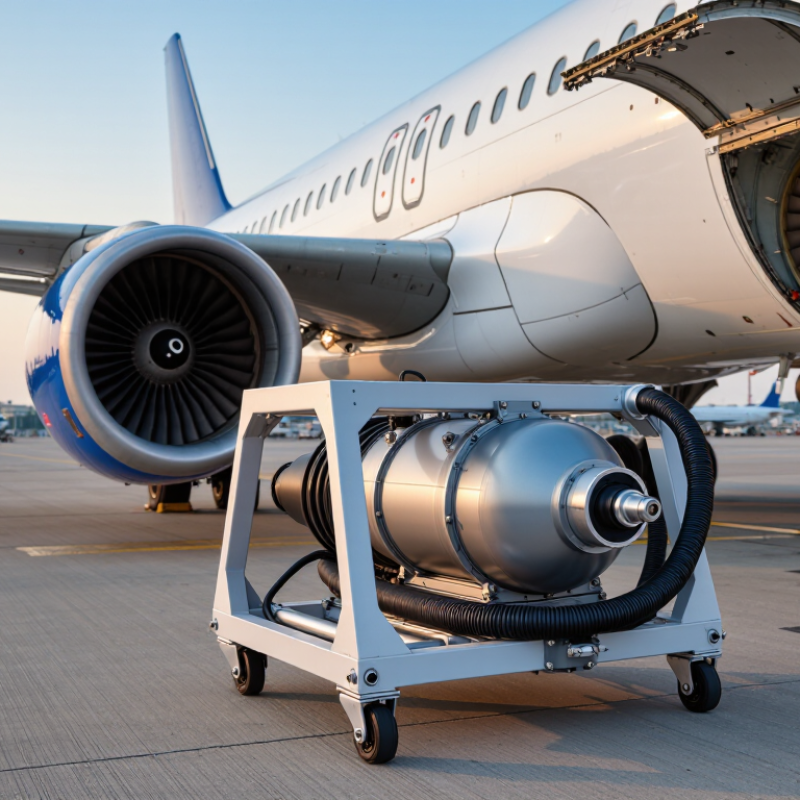
An aircraft air starter unit uses compressed air to turn an engine before combustion begins. It may be a mobile ground cart or an onboard pneumatic starter. The unit sends controlled air through a starter valve into the engine’s starter system. This air drives a turbine or vane motor. A reduction gearbox transfers torque to the compressor shaft. The engine must reach a safe cranking speed before fuel and ignition begin. That sequence helps prevent weak or uneven starts.

Small details matter.

Operators connect a hose, inspect couplings, and match pressure with aircraft procedures. A practical inspection includes leaks, filter condition, pressure stability, battery health, and emergency shutoff response.

Unusual vibration or rising gearbox noise requires immediate attention. Experienced technicians often notice these signs before instruments show a fault.

However, field impressions are not enough. Maintenance records, calibrated gauges, and approved service limits provide stronger evidence. Air temperature and altitude also affect starter performance, especially during cold ramp operations.

Choosing the best aircraft air starter unit in 2026 depends on compatibility, duty cycle, portability, and support.

A high airflow rating is not automatically better. Excessive pressure can damage components or activate protective controls. A compact unit may suit occasional use, while a larger system supports repeated operations.

Operators should verify connector standards, hose length, noise limits, and inspection access.

No unit is perfect. Real-world reliability may change after several seasons, because brochure figures cannot show every ramp condition.

Which Air Starter Technologies Are Available in 2026?

In 2026, aircraft air starter selection is less about maximum torque and more about mission fit. A pneumatic air turbine starter remains widely used for reliable engine acceleration. It converts compressed air from an APU, ground cart, or crossbleed manifold into shaft rotation. Radial-flow and axial-flow turbine designs offer different packaging and performance characteristics. Their differences appear during cold starts, high-altitude operations, and repeated gate departures. Engineers should compare engine torque curves, air pressure, temperature limits, and starter duty cycles.

Several air starter technologies are available. Direct-drive units reduce mechanical complexity, while geared starters can deliver strong starting torque from a compact turbine. Air impingement designs use high-velocity air jets to rotate the turbine wheel. Other units use expanded airflow through fixed or controlled nozzles. Integrated overrunning clutches protect the starter after engine light-off. Digital speed sensors and temperature monitoring also support condition-based maintenance. These systems can identify slow acceleration before it becomes a costly operational delay.

Electric starter-generators are another developing option, especially on aircraft with more-electric architectures. However, they require careful assessment of battery capacity, cooling, wiring weight, and emergency power priorities. A lighter air starter is not automatically better. Maintenance teams still need access to filters, seals, bearings, and gearbox components. The difficult part is admitting that laboratory ratings may not reflect dusty ramps or frequent short flights. Certification records, service history, and verified supplier support should guide the final decision.

What Is the Best Aircraft Air Starter Unit in 2026?

Pneumatic turbine starters remain widely used because they provide high starting torque with relatively low starter weight. In-service aircraft commonly receive starting air from an onboard APU, a ground pneumatic cart, cross-bleed air from another engine, or a high-pressure air bottle. The values below show representative starter-inlet pressure levels used in aircraft starting systems; actual limits depend on the aircraft and starter design.

What Performance Factors Define the Best Air Starter Unit?

The best aircraft air starter unit is not simply the lightest model. It must deliver stable torque across different engine sizes and operating conditions. In practical evaluations, starting time is a useful indicator. A strong unit should reach target speed quickly without excessive pressure loss. Consistent airflow matters more than impressive peak figures.

Altitude, temperature, and moisture can change performance significantly. A reliable starter should work during cold mornings and thin-air operations. Its compressor must maintain useful pressure under load.

Check the rated airflow, operating pressure, duty cycle, and thermal limits. These figures reveal more than marketing language.

Noise and vibration also deserve attention. Harsh vibration can loosen fittings and increase maintenance needs.

Weight still matters on mobile ground equipment. However, reducing weight too aggressively may weaken the housing or shorten service life.

I have seen equipment perform well in testing but struggle after repeated starts. That gap needs honest consideration.

Look for accessible filters, clear inspection points, and replaceable wear components.

Safety valves, pressure controls, and secure hose connections are essential.

Documentation should explain testing methods and operating limits.

A perfect ranking is impossible. Mission needs decide the best fit.

How Do Air Starter Units Compare Across Different Aircraft?

Choosing the best aircraft air starter unit in 2026 depends on the aircraft, not a universal ranking. Commercial narrow-body aircraft usually prioritize compact size, fast starts, and high dispatch reliability. Larger aircraft need greater starting torque and stable operation across longer pneumatic lines. Regional aircraft often favor lower weight and simpler maintenance access. Business aircraft may value quiet operation and quick turnaround more strongly.

A practical comparison begins with air pressure, airflow, starter weight, duty cycle, and gearbox durability. Turbine starters can deliver strong torque with relatively low electrical demand. Electric starters simplify some installations but may increase battery, wiring, and thermal-management requirements. IATA’s 2024 Safety Report recorded 40.6 million flight sectors, showing why repeatable starting performance matters across intensive schedules. Small delays become expensive quickly.

Maintenance data changes the decision. Oliver Wyman’s 2025–2035 MRO Forecast projects global commercial maintenance spending rising from about 108 billion dollars in 2025 to 135 billion dollars by 2035. That trend favors units with accessible components, clear inspection limits, and predictable overhaul intervals. FAA Advisory Circular AC 43.13-1B also emphasizes approved maintenance practices and careful inspection of pneumatic systems. My own technical preference would be conservative: compare starts at altitude, cold-soak conditions, and reduced air pressure. Laboratory ratings can look excellent. Real ramps are less polite. A perfect ranking remains unrealistic.

How Should Operators Select and Maintain an Air Starter Unit in 2026?

What Is the Best Aircraft Air Starter Unit in 2026?

Selecting an aircraft air starter unit begins with engine compatibility, not purchase price. Operators should verify starting pressure, airflow demand, shaft speed, mounting dimensions, and duty-cycle limits. A unit that fits physically may still perform poorly during cold starts or repeated ground operations. Field experience shows that pressure stability matters as much as peak output. Fit matters more.

Maintenance teams should inspect the starter after every demanding operating period. Check couplings, hoses, seals, filters, lubrication points, and unusual vibration. Moisture in the air system can damage internal components, while loose fittings may reduce starting performance. Small leaks grow. Keep service records with operating hours, inspection findings, and replaced parts. These records support reliable decisions and help qualified technicians identify gradual wear.

Operators should follow the current engine and starter manuals, approved maintenance procedures, and applicable aviation requirements. Functional testing should confirm engagement, disengagement, rotation, and abnormal noise before returning the aircraft to service. Training also matters; rushed troubleshooting can hide a simple pressure or valve problem. A practical selection may prioritize maintainability, local technical support, documented test results, and available spares over impressive specifications. I would still question any evaluation based on one successful start. Conditions change, and winter testing may reveal weaknesses missed in a warm hangar.

What Is the Best Aircraft Air Starter Unit in 2026? - How Should Operators Select and Maintain an Air Starter Unit in 2026?

Aircraft Air Starter Unit Selection and Maintenance Data Guide — 2026
Evaluation Dimension Typical Data or Range Why It Matters Operator Selection or Maintenance Action
Starter operating principle Pneumatic turbine starter driven by compressed air from an auxiliary power unit, engine bleed-air system, or external air cart The air source determines available pressure, flow, connection requirements, and starting reliability. Confirm compatibility with the aircraft maintenance manual, air-start manifold, valves, ducts, and external ground-support equipment.
Typical supply pressure Approximately 30–45 psig (2.1–3.1 bar) for many pneumatic starting systems; the approved aircraft limit always takes precedence. Pressure below the required level can prevent acceleration to light-off speed, while excessive pressure can damage components. Measure pressure at the starter inlet under flow, not only at the air-cart outlet. Use calibrated gauges and the aircraft-approved limits.
Airflow capacity Common installations may require roughly 30–70 lb/min (14–32 kg/min), depending on engine size, inlet pressure, temperature, and starter design. Adequate mass flow is needed to produce starter torque throughout the acceleration sequence. Select the unit and air cart by verified mass-flow demand. Do not size equipment using pressure alone.
Starter torque and acceleration Torque output is application-specific and must be matched to the engine’s motoring and light-off speed requirements. A starter with insufficient torque may produce slow acceleration, hot starts, hung starts, or repeated start attempts. Compare approved starter torque curves and verify actual engine acceleration against maintenance-manual limits.
Starter engagement speed The required engagement and cutout speeds vary by engine model; many systems use automatic disengagement after self-sustaining speed is reached. Incorrect engagement or disengagement timing can cause clutch, gearbox, or turbine damage. Check speed-sensing, cutout-valve, and starter-control functions during scheduled inspections.
Duty cycle Typical starter limits include a start duration of about 30–60 seconds followed by a cooling period; exact limits are aircraft-specific. Exceeding the duty cycle can overheat bearings, seals, gear trains, and turbine components. Record start duration and cooling intervals. Prevent another start until the required cooling time has elapsed.
Temperature capability Performance changes with inlet-air temperature, altitude, humidity, and air-source heating; approved operating limits differ by installation. Cold, hot, or high-altitude conditions can change air density and available starter torque. Use environmental correction data and verify starting performance under the intended operating conditions.
Weight and installation envelope Evaluate total starter weight, mounting configuration, inlet and outlet orientation, and service clearance. A physically compatible starter may still cause structural, access, or center-of-gravity problems. Verify interface drawings, fastener requirements, support loads, duct alignment, and clearance before installation.
Air quality and filtration Supply air should be clean, dry, and free from liquid water, excessive oil, and particulate contamination. Contamination accelerates wear in bearings, seals, valves, and turbine passages. Inspect filters, drains, hoses, and couplings. Drain moisture separators and keep open air lines capped.
Noise and vibration A smooth increase in sound and vibration is normal; a new rattle, whine, grinding sound, or vibration trend is abnormal. Changes can indicate bearing wear, gear damage, imbalance, foreign-object damage, or misalignment. Use trend monitoring and remove the starter from service when abnormal noise or vibration exceeds approved limits.
Leakage control Inspect inlet ducts, seals, couplings, valves, drain points, and housing joints for air leakage. Leaks reduce effective pressure and mass flow while increasing compressor or air-cart workload. Perform approved leak checks and replace damaged seals, gaskets, hoses, or locking hardware.
Lubrication configuration Some units are oil-lubricated, while others use sealed or air-lubricated bearing systems. Incorrect lubricant or unnecessary oil introduction can damage seals and contaminate the air path. Follow the component maintenance manual exactly. Never mix lubricant types or lubricate a sealed system unless instructed.
Inspection frequency Pre-use visual checks; routine inspections by operating hours or cycles; overhaul at the approved calendar or usage interval. Starter wear is influenced by starts, operating time, contamination, and environmental exposure. Track hours, cycles, start attempts, faults, and time since overhaul in the component record.
Functional test A valid test should confirm inlet pressure, airflow, starter engagement, engine acceleration, cutout, and absence of abnormal leakage. A functional test identifies performance deterioration before an operational start failure occurs. Use calibrated test equipment and compare results with aircraft- and component-approved limits.
Reliability indicators Monitor first-start success rate, average start time, aborted starts, low-pressure events, and repeat discrepancies. Trend data is more useful than a single successful start for identifying gradual deterioration. Set internal alert thresholds and investigate adverse trends before they exceed approved operational limits.
Documentation and airworthiness Installation, inspection, repair, and overhaul must follow current approved technical documentation and applicable airworthiness requirements. A technically functional unit is not acceptable if configuration, traceability, or maintenance records are incomplete. Maintain serial-number traceability, life-limit records, approved parts documentation, and signed maintenance releases.
Technical note: The numerical values shown are representative planning ranges for pneumatic aircraft starting systems, not universal acceptance limits. Operators must use the applicable aircraft maintenance manual, engine manual, component maintenance manual, and approved airworthiness data for final selection, testing, and maintenance decisions.