What Is Robot Teleoperation Data Collection?
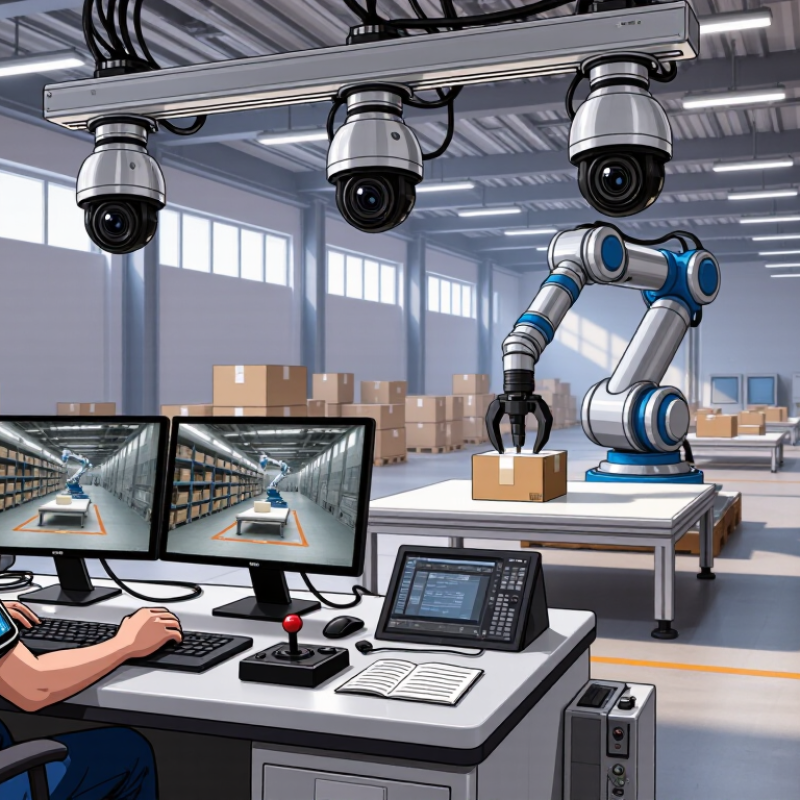
Robot Teleoperation Data Collection is the process of recording human-guided robot behavior for training, evaluation, or system improvement. An operator controls a physical or simulated robot through a console, joystick, or wearable interface. The system captures synchronized signals, such as camera frames, joint positions, gripper commands, and task outcomes. In a warehouse test, that might mean guiding an arm to pick up a foam package while overhead cameras record each movement. The result is more than a video. It is a time-aligned record of perception and action.
That sounds simple. It isn’t. Small delays, inconsistent camera views, or vague task instructions can make useful demonstrations hard to interpret. Reliable collection depends on careful calibration, clear safety limits, repeatable task definitions, and checks for missing or mislabeled data. Teams also need to document the robot setup, operating conditions, and points where tasks fail. These details support more trustworthy analysis, though they cannot guarantee success in a new setting. This guide explains how teleoperation data is gathered, what equipment and workflows are involved, and how teams assess data quality. It also explores practical trade-offs between speed, operator effort, and consistency. No setup is perfect; even experienced teams may need to revise their process after reviewing the recordings.
Definition and Purpose of Robot Teleoperation Data Collection
What Is Robot Teleoperation Data Collection?
Definition and Purpose of Robot Teleoperation Data Collection
Robot teleoperation data collection records how a person guides a robot through a task. The operator may use a joystick, handheld controller, or motion-tracking system. During each action, the system can record commands, camera images, joint positions, and task results. For example, a dataset might capture a robot arm reaching for a cup, adjusting its grip, and placing it on a shelf. The goal is to preserve both the action and the situation around it.
Researchers use these records to train or assess robotic systems, including methods that learn from human demonstrations. Clear, time-aligned data helps connect an operator’s movement with what the robot sensed and did. Repeated trials can reveal where a grasp slips or a movement takes too long. But more data is not automatically better. Poor camera views, inconsistent control, or missing timestamps can make useful-looking recordings hard to interpret. One awkward trial may teach more than ten perfect ones, though that is not always easy to measure.
Tips: Keep the workspace and task conditions consistent, and check that video and robot signals share accurate timestamps. Record failures as well as successful attempts. Review a sample before collecting a large batch; small setup problems can quietly affect every session.
Key Components of a Teleoperation Data Collection System
What Is Robot Teleoperation Data Collection?
Key Components of a Teleoperation Data Collection System
A teleoperation data collection system links an operator, a robot, and a recording pipeline. The operator uses hand controls or a screen-based interface to guide the robot through a task. Cameras capture the robot’s view, while joint sensors record arm and gripper movement. For example, a useful dataset may show a cup approaching the gripper, contact, and a successful lift.
Reliable timing matters. The system should synchronize video, control commands, and sensor readings, so each action matches the robot’s state. A data logger stores these streams with timestamps and task details, such as object type or success status. Review tools help teams flag blurred frames, dropped signals, or unclear labels before training. Small errors matter. Even a tidy dataset can hide inconsistent operator habits, so collection rules need regular review.
Tips: Test the full setup with a simple pick-and-place task. Check that video and sensor timestamps align. Keep task labels specific, but avoid adding details nobody can verify. A few imperfect recordings are normal; document why they are imperfect instead of quietly discarding them.
Step-by-Step Process for Collecting Teleoperation Data
Robot teleoperation data collection begins with a clearly defined task. Choose one action, such as lifting a blue cup from a table and placing it on a shelf. Record the starting position, success criteria, and any safety limits. Keep the setup consistent. A task that sounds simple can still hide confusing details.
Prepare the robot, controller, cameras, and recording system before each session. Check that camera views show the robot’s hands, the object, and the work surface. Confirm that robot movements and video share accurate timestamps. Then, an operator guides the robot through the task while the system records actions, sensor readings, and video. Use varied object positions and lighting, but change one condition at a time. This makes later comparisons more useful.
Review each recording soon after capture. Look for missed grasps, blocked camera views, abrupt motions, and unclear task endings. Label the action and note any unusual events. Discard unusable clips rather than treating every attempt as good training data. Repeat successful demonstrations, too; one clean example rarely shows enough variation. In practice, this review step can feel tedious, and the labels may still be imperfect. That is worth noting. Consistent checks help reveal gaps before the data is used to train or evaluate a robot.
What Is Robot Teleoperation Data Collection?
This chart shows an illustrative step-by-step workflow and estimated time for each stage of a 10-minute teleoperation recording session. Actual times vary by robot, task, and data-quality requirements.
Data collection typically includes preparing and calibrating the system, recording operator-controlled robot actions, reviewing the captured data, and adding metadata for later use.
Types of Data Captured During Robot Teleoperation
Robot teleoperation data collection records more than a robot’s final movement. It captures synchronized video, joint angles, gripper state, and control inputs as an operator guides the machine. A wrist camera may show a cup’s rim, while a room camera records the table edge and nearby objects. Timestamps matter: without them, a grasp command can appear disconnected from the image that prompted it. Some systems also log force or torque, revealing whether a handle was pushed, pulled, or unexpectedly stuck. Small details count.
Dataset scale
Dataset scale shows why these records need structure. The 2024 DROID research paper reports 76,000 demonstrations and about 350 hours of robot interaction across varied tasks and settings. The 2023 Open X-Embodiment study assembled more than one million trajectories from 22 robot embodiments. These figures describe different collections, not a universal standard. Teleoperation logs may also include operator corrections, pauses, failed grasps, and recovery attempts. Those moments are useful, though often inconsistently labeled. A brief hesitation before lifting a mug can signal uncertainty, but timing alone cannot explain the operator’s intent. Reliable datasets therefore pair sensor streams with clear task labels and careful notes about missing or noisy measurements.
How Teleoperation Data Supports Robot Learning and Evaluation
Teleoperation turns a human’s controlled movements into examples a robot can learn from. An operator guides the arm through tasks such as lifting a cup, aligning it with a shelf, or recovering after a slip. The recorded data can include camera images, joint positions, and gripper actions. These details help learning systems connect what they see with what they should do. Small variations matter: a cup’s handle may face away, or the table may be higher than expected.
The DROID dataset paper, presented at ICRA 2024, reports 76,000 demonstrations across 564 scenes and 86 tasks. That breadth gives researchers varied examples for training and testing. The 2023 Open X-Embodiment study reports one million robot trajectories across 22 robot embodiments and 21 institutions. Scale matters. More demonstrations can expose a model to different objects, workspaces, and movement styles, though quantity alone does not guarantee useful learning.
For evaluation, teams can hold back demonstrations and test whether a robot completes the same task in unfamiliar scenes. They can measure task success, completion time, or whether an object slips from the gripper. Still, data can mislead. A skilled operator may make a difficult task look easy, while repeated routes can hide weak recovery behavior. Recording failed attempts and noting scene conditions makes comparisons more informative. Researchers should also check whether training and test episodes are truly distinct; otherwise, performance may look better than it is.