
Blog

2026 Top Hex Machine Screw Types for Global Buyers?

Global buyers choosing a Hex Machine Screw in 2026 face a crowded market, but the best option depends on the joint, material, and installation conditions. A screw fastening a steel equipment cover may need a different head, thread, or coating from one used in an aluminum housing. Small details matter.

Market context helps explain the selection challenge. Grand View Research estimated the global industrial fasteners market at about USD 90.5 billion in 2023 and projected a 4.5% compound annual growth rate from 2024 to 2030. This broad category includes many fastener products; it is not a forecast for hex machine screws alone. Still, it points to sustained demand across manufacturing and construction. Standards offer a more practical starting point: ISO 4014 covers hexagon head bolts with a partially threaded shank, while ISO 4017 covers fully threaded versions. Check the applicable specification before comparing suppliers.

This guide examines common types, including fully and partially threaded screws, metric and inch-series options, and finishes suited to different environments. It also considers drive access, strength class, dimensional consistency, and documentation. A low unit price can look attractive. Yet inconsistent dimensions or unclear material records may cost more during assembly. No single type fits every job, and even careful buyers can overlook a detail. The sections ahead provide a grounded comparison, not a universal ranking.
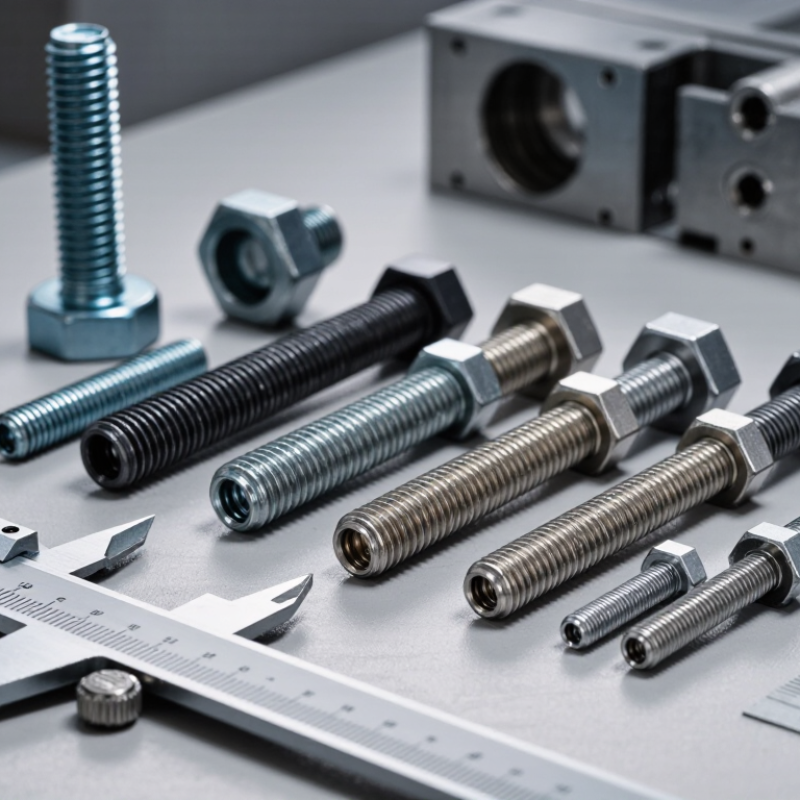
2026 Top Hex Machine Screw Types for Global Buyers?

Hex Machine Screw Scope: ISO 4017 Fully Threaded and ISO 4014 Part-Threaded

ISO 4017 and ISO 4014 hex machine screws share a familiar six-sided head, but their thread coverage differs. ISO 4017 screws are threaded along the shank, making them useful when threaded engagement is needed through most of the fastener length. ISO 4014 screws have a partially threaded shank and a smooth section beneath the head. That section can help locate parts and may place the thread outside a joint’s shear plane.

For global buyers, the distinction affects more than a product description. Check nominal diameter, pitch, length, material, property class, and applicable drawing requirements before comparing quotations. A screw’s stated length is measured differently from its threaded portion, so confirm the drawing rather than relying on a quick visual estimate. Small errors here can lead to poor fit or unexpected load behavior. It is worth noting that thread type alone does not determine joint performance.

Tips: Measure the grip length—the combined thickness of the parts being joined. For a partially threaded ISO 4014 screw, ensure the smooth shank suits that grip. For ISO 4017, confirm thread engagement and hole design. Keep samples beside the specification sheet; visual checks help, but they do not replace dimensional verification.

Head and Drive Types: Hex, Flange, and Washer-Face Designs

Hex-head, flange-head, and washer-face screws may share a hex drive, but their bearing surfaces suit different jobs. A standard hex head gives a wrench clear, familiar engagement. ISO 4017:2022 dimensional tables list an M6 hex screw with a 10 mm width across flats and a 4 mm head height. Check these dimensions against tool access and mating parts; nominal size alone does not guarantee fit. A familiar head can still be the wrong choice.

Tips: Use a flange head when its wider bearing face can spread clamp load and reduce the need for a separate washer. A washer-face design adds a defined contact surface beneath the head. Check seating on painted, slotted, or soft materials. Fit matters.

For global sourcing, compare the drawing with applicable dimensional standards, such as ISO 4162 for hexagon flange bolts, and confirm whether the design specifies a plain or serrated flange. Serrations can resist rotation, but may mark the surface. That trade-off is easy to overlook. Specify head height, across-flats size, bearing-face diameter, and drive clearance on the purchase drawing. One weak point: supplier descriptions do not always use “washer-face” consistently, so request a dimensioned drawing before approval.

2026 Top Hex Machine Screw Types for Global Buyers

Head and drive types: hex, flange, and washer-face designs

The chart shows nominal wrench sizes (width across flats) for selected ISO 4017 hex-head screws. Flange and washer-face designs may use different dimensions; check the applicable product standard and supplier drawing before specifying.

Metric Thread Selection: ISO 261 Coarse-Pitch Series and Size Range

Metric thread choice starts with nominal diameter and pitch. ISO 261 sets preferred metric thread combinations across nominal diameters from 1 to 300 mm. For common hex machine screws, coarse pitches include M3 × 0.5, M4 × 0.7, M6 × 1.0, and M8 × 1.25. The larger the diameter, generally, the wider the coarse pitch. These familiar sizes are practical for brackets, equipment covers, and metal enclosures. Fit matters. A screw’s length, head clearance, and engagement depth also affect performance.

Coarse threads are often easier to assemble and less prone to cross-threading in routine workshop use. They can also suit softer materials, where fewer, deeper threads may provide useful engagement. But “coarse” does not mean universally better. Thin sheet, repeated adjustment, or a specific mating component may call for another pitch. Check the drawing and mating nut, not just the nominal diameter. Thread tolerance and fit requirements should be confirmed separately; ISO 261 lists thread combinations, not every detail of a finished joint.

Tips: Before ordering, compare the pitch with a thread gauge or a verified sample. A small mismatch can feel almost right, then bind after a few turns. Check the full callout, such as M6 × 1.0, and confirm usable thread length. Size charts help, but they cannot replace a fit check.

Strength and Material Grades: ISO 898-1 Classes 8.8–12.9 and ISO 3506 A2/A4

For global buyers, a hex machine screw’s strength grade should match the joint, not simply sound impressive. ISO 898-1 covers carbon and alloy steel fasteners. Class 8.8 is common for general structural and machinery applications, while 10.9 and 12.9 provide higher strength for demanding, properly engineered joints. Higher is not always better. These classes can require careful control of tightening, and high-strength steel may be more vulnerable to hydrogen embrittlement in certain conditions. Check the standard’s property tables for the screw’s diameter and configuration; grade alone does not establish the full load capacity.

Stainless fasteners use a different designation under ISO 3506. A2 is widely selected for routine atmospheric exposure, while A4 generally offers improved resistance in chloride-rich environments, such as coastal installations. Neither is corrosion-proof. The suffix matters: A2-70 and A4-80 identify strength classes, so “A4” alone is incomplete purchasing information. Check the complete marking and request documentation tied to the supplied lot. Also consider mating materials and installation torque: stainless threads can gall, especially when driven quickly or dry. I have seen buyers focus on the screw’s grade and overlook the nut. That detail deserves a second look.

Global Purchasing Checks: ISO 4017 Dimensions, Coatings, and Traceability

2026 Top Hex Machine Screw Types for Global Buyers?

For global purchasing, ISO 4017 is a useful starting point: it covers hexagon head screws with full threads. Check nominal diameter, pitch, across-flats dimensions, head height, and tolerances against the specified edition. A sample that looks right may still fail a gauge check. Small details matter. Confirm the required property class separately under ISO 898-1; geometry alone does not establish strength.

Coatings deserve their own inspection plan. ISO 4042 covers electroplated coating systems, while ISO 10683 covers non-electrolytically applied zinc-flake coatings. Ask for coating type, thickness range, corrosion-test results, and evidence that coated threads still assemble correctly. For high-strength screws, discuss hydrogen-embrittlement controls when electroplating is specified. Do not assume. A recurring purchasing blind spot is accepting “zinc plated” without a defined coating system or acceptance criteria.

Traceability should link each delivery lot to material, production, coating, and inspection records. Require legible lot identification and certificates that match the shipment, not merely a generic document. The World Steel Association’s World Steel in Figures 2024 reports 1,892.2 million tonnes of crude steel production in 2023. That figure describes the wider supply chain, not fastener quality; it reinforces why source and batch records matter. One imperfect point: paperwork can be complete while sampling remains weak. Specify inspection frequency and retain representative samples where practical.