
Blog

2026 How to Choose U Channel Steel for Global Sourcing?

Choosing U Channel Steel for global sourcing requires more than comparing prices per ton. Buyers must connect structural performance, production consistency, documentation, and delivery risk. A section that looks correct in a catalog may fail a project’s needs because of incorrect thickness, poor straightness, or unsuitable steel grade.

James M. Fisher, a respected structural steel engineer and author, often emphasized a practical principle: “Reliable steel begins with clear specifications and verified quality.” This idea remains relevant in 2026. Buyers should define channel dimensions, web and flange thickness, yield strength, surface condition, and allowable tolerances before requesting quotations. Mill test certificates should match the supplied batch. Third-party inspection can reveal problems before loading.

Experience matters here.

A reliable supplier should explain how U Channel Steel is rolled, measured, bundled, protected, and traced. Ask for production samples, inspection records, coating details, and realistic lead times. Hot-dip galvanizing may support outdoor use, while painted or untreated channels may suit controlled indoor environments. Packaging also matters. Wet bundles can develop surface corrosion during ocean transport.

Global sourcing adds complexity. Standards may differ between regions, and metric dimensions may not match local design assumptions. Confirm the applicable standard with the engineer, not only the seller. Freight costs, port handling, customs documents, and delivery terms can change the real purchase price substantially.

The cheapest offer may be incomplete.

A careful buyer should compare technical compliance, supplier history, inspection access, and after-sales communication. No sourcing method is perfect. Even experienced teams sometimes overlook packaging or tolerance details. That weakness deserves review before the purchase order is signed.
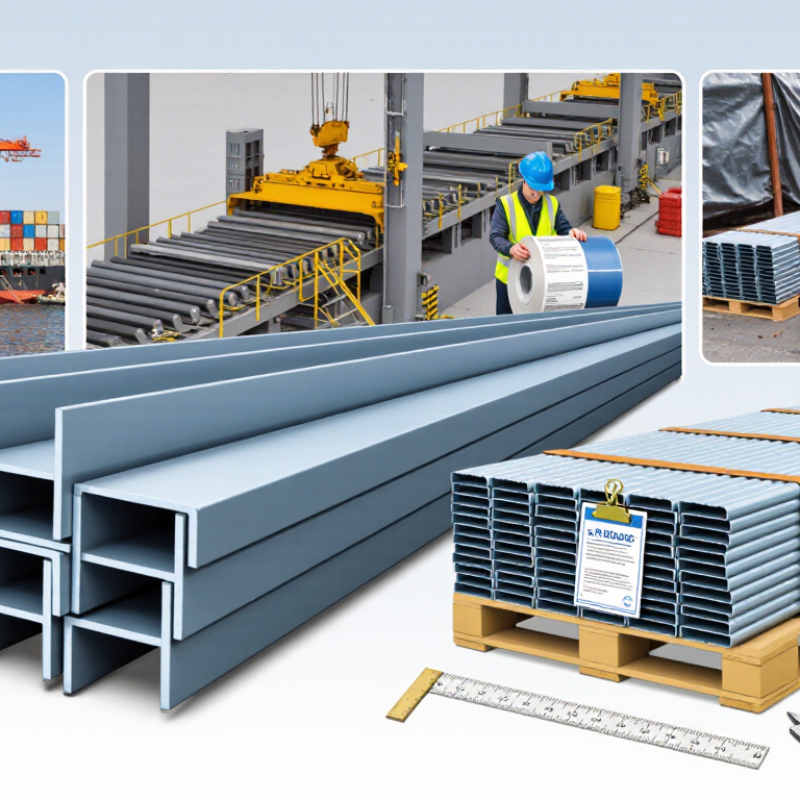
2026 How to Choose U Channel Steel for Global Sourcing?

Define U Channel Steel Types, Standards, and Essential Specifications

2026 How to Choose U Channel Steel for Global Sourcing?

U channel steel comes in hot-rolled, cold-formed, welded, and galvanized types. Hot-rolled channels suit structural frames and heavy supports. Cold-formed channels offer lighter weight and tighter profile control. Galvanized channels resist outdoor corrosion, but coating thickness must be specified. Do not compare suppliers by price alone. In 2024, global crude steel production reached about 1.88 billion tonnes, according to World Steel Association’s World Steel in Figures 2025. This scale creates many sourcing options, but also inconsistent documentation.

Define the required dimensions, thickness, length, mass, steel grade, and surface condition. Specify whether the section follows ASTM A6/A6M, EN 10025, EN 10162, or ISO 657. These standards address different products, tolerances, and testing requirements. Ask for mill test certificates showing chemical composition, yield strength, tensile strength, and impact performance. For welded channels, request weld inspection records. For galvanized products, confirm zinc coating mass and adhesion. Small differences matter.

Tips: Send a dimensioned drawing, not only a product photo. Confirm tolerances before production. Check bundle labels, straightness, and actual weighing during inspection. A third-party inspection can verify these details. I have seen buyers overlook corner radii and hole positions. That mistake caused costly rework. Also, grade names may appear similar across countries, yet their mechanical requirements can differ. Review the standard edition and acceptance criteria carefully.

2026 How to Choose U Channel Steel for Global Sourcing?

Minimum specified yield strength is a practical first filter when comparing U channel steel grades across international standards. The values below apply to common structural grades and are generally based on material thickness up to 16 mm where the standard specifies thickness-dependent limits.

Sourcing guidance: Confirm the applicable standard, steel grade, section dimensions, wall thickness, corrosion protection, tolerances, and mill test certificate before placing an order. Yield strength alone does not determine channel performance; section geometry and load conditions are also essential.

Assess Load Requirements, Dimensions, Material Grades, and Surface Treatments

2026 How to Choose U Channel Steel for Global Sourcing?

Choosing U channel steel globally starts with the load, not the catalog photograph. Define the span, support spacing, point loads, impact, and expected deflection. A 2.4-meter beam carrying shelving behaves differently from a short bracing member. Calculate bending, shear, buckling, and connection forces with a qualified engineer. Keep a safety margin. Do not guess it. In purchasing reviews, overlooked connection forces often cause more trouble than the steel section itself.

Confirm outside width, leg height, web thickness, length tolerance, straightness, and corner radius. Small radius differences can affect fit-up and weld access. Request mill test certificates, dimensional reports, and traceable heat numbers. Compare yield strength, tensile strength, elongation, and weldability before selecting a grade. Higher strength is not automatically better. A harder grade may complicate forming or repair. Specify metric dimensions clearly; mixed inch and metric drawings create avoidable disputes.

Surface treatment should match exposure, handling, and service life. For dry interiors, clean and lightly protected steel may be adequate. Outdoor or humid sites may need galvanizing, a compatible coating system, or corrosion-resistant material. Check coating thickness, preparation requirements, repair methods, and drainage details. Salt air changes the decision. I have seen buyers focus on price, then overlook scratches at bundled edges. That was a costly lesson. Even a careful specification can miss local installation habits. Ask suppliers for packaging photos, inspection records, and independent verification before shipment.

Compare Global Suppliers, Manufacturing Capabilities, and Quality Systems

Choosing U Channel Steel for Global Sourcing

When sourcing U channel steel globally, compare suppliers beyond unit price. Ask about rolling equipment, press-brake capacity, and available production lengths. A supplier making 6-meter channels may not handle custom 12-meter orders efficiently. Check material grades, wall-thickness tolerance, surface finish, and monthly capacity. My sourcing reviews have shown that attractive quotations sometimes hide longer lead times or limited tooling.

Manufacturing capability should match the project’s real demands. Request recent mill certificates, dimensional inspection reports, and sample measurements from flange to web. Reliable suppliers usually maintain traceable heat numbers and documented inspection procedures. Review their quality system, calibration records, corrective-action process, and independent audit results. Certifications such as ISO 9001 can support confidence, but they do not replace product testing. No system is perfect. I have seen excellent paperwork paired with inconsistent bundles, so physical inspection remains valuable.

Tips: Compare three suppliers using one specification sheet. Confirm tolerance standards before negotiation. Request photos of packing, marking, and storage areas. Use third-party inspection for large orders or unfamiliar factories. Check whether steel grades match the destination market’s technical requirements. Also discuss coating, rust prevention, and loading methods. A small detail matters: poorly supported channels can bend during transport. Prices change, and forecasts are imperfect, so include realistic lead-time allowances.

2026 How to Choose U Channel Steel for Global Sourcing? - Compare Global Suppliers, Manufacturing Capabilities, and Quality Systems
Supplier Market Profile Typical Manufacturing Route Common U-Channel Product Scope Typical Material Standards Manufacturing Capabilities to Verify Quality Systems and Documents Dimensional and Surface Controls Best-Fit Purchasing Scenario Key Sourcing Risks
Integrated mill or large regional mill Blast-furnace/basic-oxygen-furnace or electric-arc-furnace steelmaking, followed by hot rolling and finishing. Standard structural channels, unequal channels, cut-to-length sections, and project quantities with repeatable dimensions. EN 10025 S235JR/S275JR/S355JR;
ASTM A36/A572 Grade 50;
JIS G3101 SS400.
High-volume hot rolling;
controlled reheating;
straightening;
saw or flame cutting;
batch traceability.
ISO 9001 quality management system;
chemical and mechanical test reports;
EN 10204 Type 3.1 inspection certificate;
heat-number traceability.
Verify compliance with the specified product standard, section mass, height, flange width, web and flange thickness, straightness, and surface defect limits. Large projects and recurring orders Minimum order quantities may be higher; non-standard sizes may require a rolling schedule; lead times can depend on production planning.
Specialized structural-section producer Electric-arc-furnace steelmaking or purchased billet, followed by dedicated hot-rolling lines and finishing equipment. Structural U channels, European UPN/UPE-type sections, mining and infrastructure profiles, and medium-to-heavy sections. EN 10025 structural grades;
ASTM A36, A572, A588 where offered;
customer-approved equivalent grades only after technical review.
Section-specific rolling passes;
tighter process control for profile geometry;
automated cooling beds;
bundling and marking;
optional ultrasonic or surface inspection.
ISO 9001;
mill test certificate;
heat treatment records when applicable;
third-party inspection access;
non-conformance and corrective-action records.
Check profile designation, mass per metre, end squareness, length tolerance, twist, camber, and visible laminations or seams. Engineered structures and specification-led projects Equivalent grades can differ in yield strength, impact toughness, chemistry, or weldability; obtain written approval before substitution.
Flexible export rolling supplier Purchased billets or blooms processed through hot-rolling mills, with export-oriented cutting, packing, and documentation services. Commercial and structural channels in common sizes, mixed-size bundles, cut lengths, and containerized export orders. GB/T 700 Q235B/Q355B;
ASTM A36/A572 Grade 50;
EN 10025 S235/S355 when production is certified to the required standard.
Hot rolling;
cut-to-length;
drilling or basic fabrication through approved subcontractors;
export packing;
container loading plans.
ISO 9001 where certified;
material test certificate;
heat-number marking;
pre-shipment inspection;
packing list and certificate of origin.
Confirm actual measured dimensions, theoretical versus actual weight, bundle identification, rust-prevention method, and tolerance requirements in the purchase contract. Cost-sensitive global sourcing and mixed orders Product consistency can vary between heats or production lots; independent inspection is recommended for first orders and critical applications.
Regional service-center or stockholder Purchases hot-rolled channels from qualified mills and provides storage, cutting, processing, and local delivery. Standard stock sizes, short lengths, cut pieces, galvanized or painted options through downstream processing. Grade and certification depend on the original mill;
common references include EN 10025, ASTM A36/A572, and JIS G3101.
Inventory management;
band-saw cutting;
shot blasting or painting through approved processors;
local delivery;
small-quantity fulfillment.
Supplier approval records;
original mill certificate;
ISO 9001 may apply to the service center;
processing and coating records where applicable.
Verify that cut pieces retain heat or batch traceability and that cutting has not introduced excessive burrs, distortion, or length variation. Small quantities and urgent delivery Traceability may be weakened after cutting or bundle splitting; confirm whether the supplied certificate covers the exact material delivered.
Fabrication and coating partner Uses certified hot-rolled channels and performs drilling, coping, welding, blasting, painting, or hot-dip galvanizing. Prepared channels for frames, supports, platforms, racks, conveyor structures, and general fabrication. Base steel grade specified by the buyer;
coating requirements may reference ISO 1461 for hot-dip galvanized fabricated iron and steel products.
CNC drilling or punching;
saw cutting;
welding;
blast cleaning;
paint application;
hot-dip galvanizing through qualified facilities.
ISO 9001;
welding quality system such as ISO 3834 when applicable;
welder qualification records;
coating inspection reports;
dimensional inspection report.
Inspect hole position, cut length, weld size, coating thickness, coating appearance, distortion, and protection of threaded or machined areas. Ready-to-install fabricated assemblies Fabrication can change straightness, residual stress, coating condition, and final dimensions; approve drawings and inspection plans before production.
Specialty corrosion-resistant producer Hot rolling or cold forming of carbon steel, stainless steel, or coated steel, depending on the required corrosion environment and profile. Stainless U channels, pre-galvanized or zinc-coated channels, and formed channels for chemical, marine, food, or outdoor applications. Stainless references may include EN 10088 or ASTM A240/A276, subject to product form;
zinc-coated products require a defined coating standard and coating mass or thickness.
Cold forming or hot rolling;
solution annealing where applicable;
pickling and passivation;
coating control;
corrosion-resistant packing.
ISO 9001;
PMI or chemistry verification when required;
passivation or coating records;
EN 10204 Type 3.1 certificate;
corrosion-test documentation when specified.
Verify alloy or grade, surface finish, coating thickness, pitting or rust condition, profile geometry, and separation of dissimilar metals during packing. Corrosive, outdoor, or hygienic environments “Stainless” and “galvanized” are not complete specifications; define alloy, finish, coating thickness, environment, and service life requirements.
Buyer checklist: define the profile designation, steel grade, applicable product standard, nominal dimensions, length tolerance, quantity basis, surface condition, corrosion protection, inspection level, certificate type, packing method, delivery term, and acceptance criteria before comparing quotations. Values and capabilities shown are common industry benchmarks; the supplier’s current certificate, production route, and inspection plan should be verified for each order.

Verify Certifications, Testing Reports, Packaging, and Shipping Readiness

2026 How to Choose U Channel Steel for Global Sourcing?

When sourcing U-channel steel globally, documents deserve the same attention as section size. Request current mill certificates for every production batch. Check the producer’s legal name, material grade, heat number, and issuing date. The heat number must match the steel bundle and test report. A certificate alone is not proof. Confirm its traceability through independent verification when the order is important.

Testing reports should show chemical composition, yield strength, tensile strength, elongation, and bend results. Dimensional inspection must cover height, flange width, web thickness, and straightness. Ask for measured values, not only pass or fail statements. Photographs of calipers and marked samples can reveal useful details. I once focused too heavily on price. That was a mistake. Small thickness deviations can affect installation and structural performance.

Packaging also reflects supplier discipline. Bundles need strong steel straps, dry separators, edge protection, and readable labels. Each label should show size, grade, quantity, heat number, and destination. For ocean shipping, confirm moisture control and corrosion protection. Review the packing list before loading. Check container dimensions, bundle weight, lifting points, and cargo securing methods. Shipping readiness is often tested during loading, not during negotiation. Leave room for correction.

Evaluate Total Sourcing Cost, Trade Risks, Lead Times, and Supplier Reliability

How to Choose U Channel Steel for Global Sourcing in 2026

Choosing U channel steel globally starts with landed cost, not the mill price. Build a worksheet covering steel, forming, coating, packaging, inland transport, ocean freight, duties, inspection, finance, and rework. A 3% cheaper quote can become expensive after port storage or rejected dimensions. The World Bank’s 2023 Logistics Performance Index reports that about 85% of shipments arrive within expected delivery times. The remaining delays still matter. One missed production window can outweigh a small material saving.

Trade risk requires practical checks. Confirm the HS classification, country of origin, applicable duties, Incoterms, and document responsibilities before ordering. Request mill certificates, dimensional records, coating results, and batch traceability. UNCTAD’s Review of Maritime Transport 2024 reported 2.1% maritime trade growth in 2023 and warned that route disruptions raise transit time and costs. Around-route shipping can add weeks. Never treat an estimated sailing date as the delivery date.

Measure supplier reliability with evidence. Track on-time, in-full delivery, nonconformance rates, response time, and corrective-action closure. Ask for recent production photos, inspection samples, and a realistic rolling schedule. A capable supplier should explain tolerance limits, packing methods, and capacity constraints clearly. I would also test one pilot shipment before committing to annual volume. This adds effort. It may prevent a costly lesson. Supplier promises alone are not proof; verified records are stronger.

Sources: World Bank, Logistics Performance Index 2023; UNCTAD, Review of Maritime Transport 2024.

Article Source: