2026 Top Brackish Water RO Systems for Global Buyers
For global buyers, choosing a Brackish Water Ro System is a practical decision about feedwater, operating conditions, and the water quality required at the outlet. Brackish sources can differ sharply in salinity, temperature, and suspended solids. A system that performs well at one site may need different pretreatment or membrane capacity at another.
In a 2011 Science paper coauthored by membrane scientist Menachem Elimelech, the authors wrote, “The demand for fresh water is increasing rapidly.” That demand makes careful system selection important. Buyers should compare recovery rate, energy use, membrane availability, controls, and supplier support—not just advertised capacity. Ask for performance data tied to stated feedwater conditions. Check what happens when those conditions change. Details matter.
A good comparison starts with the water analysis. Then it examines pretreatment, pump specifications, service access, and replacement costs. For a remote facility, even a routine membrane change can become a major logistical task. And one uncomfortable truth: the lowest purchase price may not mean the lowest lifetime cost. Product claims also deserve scrutiny; test results without clear operating conditions tell only part of the story. This guide introduces leading systems for different buyer priorities, while recognizing that no single model fits every site. Some choices remain uncertain until local water data and operating needs are reviewed.
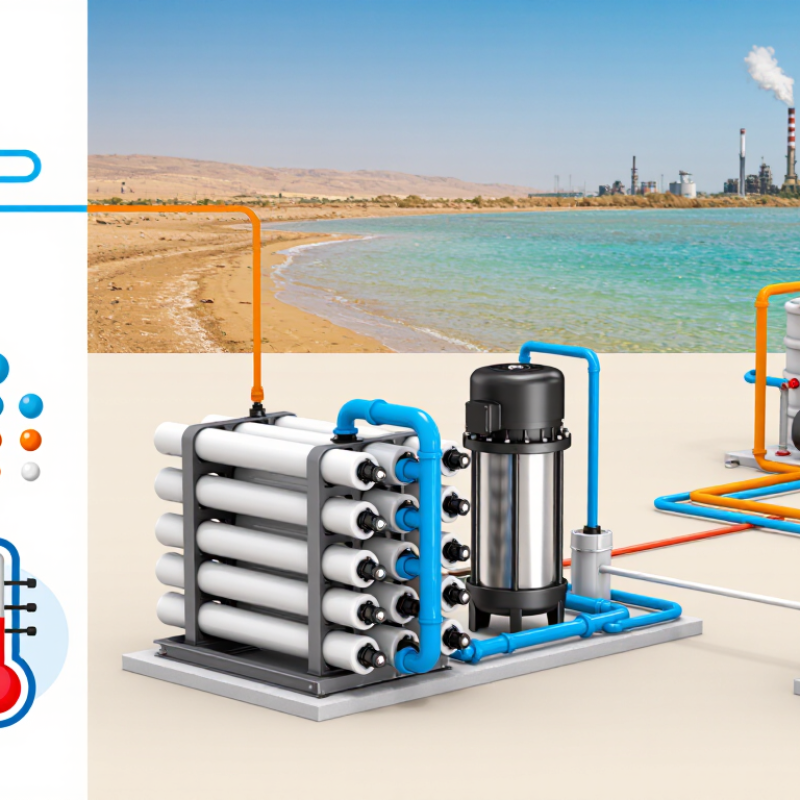
Understanding Brackish Water and Its Treatment Needs
Brackish water contains more dissolved salts than fresh water, but usually far less than seawater. Its salinity can vary widely between wells, seasons, and nearby locations. That variation affects the pressure and recovery rate a reverse osmosis system can sustain. Small changes matter. A useful assessment begins with laboratory results for conductivity, hardness, silica, iron, and key ions. One sample can miss seasonal swings, so treat it as a starting point, not the whole picture.
Before choosing a system, check suspended solids and scaling risk; these shape filtration and antiscalant needs. Poor pretreatment can foul membranes, raise energy use, and shorten cleaning intervals. RO separates much of the dissolved salt, but it does not make every source-water problem disappear. The concentrate stream also needs a practical handling plan suited to site conditions. Not always obvious. Operators should track feed pressure, permeate conductivity, flow, and pressure drop during routine operation. A design that looks efficient on paper may underperform when source water shifts or maintenance is delayed.
How Brackish Water Reverse Osmosis Systems Work
How Brackish Water Reverse Osmosis Systems Work
Brackish water contains more dissolved salts than freshwater, but usually less than seawater. A reverse osmosis system uses pressure to push this water through a semipermeable membrane. The membrane allows water molecules through while rejecting much of the dissolved salt and other impurities. Pressure matters.
Before the membrane, pretreatment filters remove particles that could clog its surface. Depending on the source, this may include sediment filtration, scale control, or other treatment. A feed pump then supplies the pressure needed for separation. The system produces two streams: treated permeate and concentrated reject water. Their flow rates affect water quality and recovery.
Operators monitor pressure, flow, conductivity, and temperature to spot changes early. For example, rising pressure or falling permeate flow may indicate fouling or scaling. Small changes matter. The right operating settings depend on feedwater chemistry, temperature, and daily demand; a setup that works at one well may not suit another. Even a clear-looking source can contain minerals that gradually damage membranes, so testing the water before equipment selection is essential. Regular checks help identify problems, though they cannot replace sound system design.
Core Components and Performance Specifications
2026 Top Brackish Water RO Systems for Global Buyers
Core Components and Performance Specifications
A brackish-water RO system is only as reliable as its pretreatment. A multimedia filter reduces suspended solids, while cartridge filters, often rated near 5 microns, catch finer particles before they reach the membranes. Feedwater testing should check salinity, hardness, iron, and temperature. Small details matter.
The high-pressure pump supplies the force needed to push water through the membrane array. For many brackish-water applications, operating pressures may fall around 8–25 bar, but feed salinity and temperature can shift this range. Recovery often sits near 50–80%; pushing it higher may increase scaling risk. A neat datasheet can still mislead if test conditions are missing.
Buyers should compare permeate flow, salt rejection, recovery, and energy use under stated conditions—not just headline capacity. Instruments for pressure, conductivity, and flow help operators spot changes early. A conductivity reading at the outlet gives a quick check on salt passage. Not always enough. Regular laboratory testing can confirm product-water quality, especially when the source changes seasonally. Membrane life also depends on cleaning intervals and proper dosing, so claimed service life should be treated as an estimate, not a promise.
2026 Top Brackish Water RO Systems for Global Buyers — Core Components and Performance Specifications
Representative performance ranges for brackish-water reverse osmosis (RO) system design
How to read this chart: System recovery is the share of feed water converted to product water; salt rejection indicates the share of dissolved salts retained by the membrane. Actual results vary with feed-water chemistry, temperature, membrane selection, and system design.
Core components: Pretreatment (such as media filtration and cartridge filtration), high-pressure pump, RO membrane elements and pressure vessels, instrumentation and controls, and post-treatment. The ranges shown are representative engineering figures, not guaranteed specifications for every system.
Comparing Brackish Water RO System Types in 2026
Brackish-water RO systems differ in layout, capacity, and flexibility. Skid-mounted units arrive assembled and suit sites with steady feedwater and limited installation time. Their compact footprint is useful, but crowded pipework can make maintenance awkward. Containerized systems protect equipment outdoors and simplify transport between sites. They need space for access, ventilation, and pretreatment equipment. Modular systems allow capacity to grow in stages, though added trains can complicate controls and balancing.
System choice depends on salinity, flow demand, and operating conditions. Smaller packaged units may serve facilities with modest, predictable needs. Larger multi-train designs can handle changing demand, but require careful coordination of pumps and membranes. Recovery rate should not be selected from capacity figures alone; scaling risk and feedwater chemistry matter. A laboratory water analysis is a sound starting point. Pilot testing may reveal issues that a specification sheet misses.
Tips: Compare total installed footprint, pretreatment needs, and maintenance access—not just rated output. Ask for operating data under feedwater conditions close to yours. Leave room for uncertainty; source water can vary seasonally, and forecasts are not always right.
How Global Buyers Evaluate and Select a System
Global buyers should compare brackish-water RO systems against a site’s actual feed-water analysis, not a catalogue rating. Test seasonal salinity, hardness, silica, iron, and turbidity; a clear sample from one week may not represent the dry season. The World Bank’s 2019 report, The Role of Desalination in an Increasingly Water-Scarce World, places modern seawater RO energy use at roughly 3–4 kWh per cubic meter. That figure is a useful reference, not a reliable forecast for a brackish-water plant, where salinity and operating conditions differ.
Ask suppliers to state expected recovery, product-water quality, energy use, and membrane replacement assumptions under your own feed-water conditions. Check what pretreatment is included: a small cartridge filter cannot compensate for every scaling or fouling risk. Small details matter. For example, a system recovering more water may also concentrate salts further, increasing cleaning needs or complicating concentrate management. Request a mass-balance calculation and review the stated operating range with an independent water-treatment engineer.
Compare lifecycle costs, not just purchase prices. Include pumps, chemicals, energy, replacement membranes, operator training, and local spare-parts access. The International Desalination Association’s industry reporting can help buyers understand sector trends, but project quotations should still be verified against site data. A useful proposal identifies test methods and assumptions clearly. Some forecasts will still miss real-world variation; that deserves scrutiny, not a neat spreadsheet footnote.